
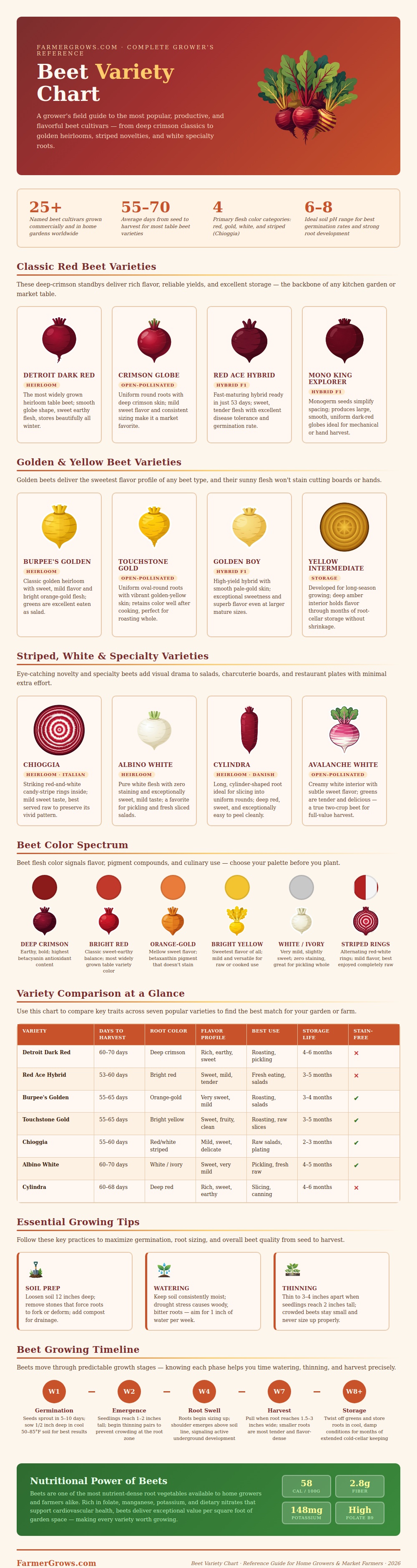
If you think beets are all about the dirt flavor… And turning everything they touch pink, you probably wouldn’t grow any, since most people stops at that stereotype. But today there’s a beet for every palate, so you can pick the variety that’s best for your actualy taste buds. Dozens of varieties is available, each bred for certain color or texture. Generally, you can divide them into these four types: striped, white, gold, and red. Here’s what to do with each.
If you want to store some of your harvest in the root cellar, select red kinds such as Detroit Dark Red, which also keep well all winter long. Why? Betacyanin compounds in skin are antioxidants. The compounds also make them strongly purple-staining (which is why they might not be so good for roasting big batches of homefries). If you plan to store roots for months, or just want to have something available during a period when other crops aren’t in full production, those would of the ones to use. The taste is milder and sweeter.
Types of Beets
Varieties like Burpee’s Golden is missing the pigments that cause staining. They look better especially in recipes where presentation is important. Their brightness stands out against dark greens, staying strong when eaten raw in a salad or stay bright when cooked without staining other foods.
Candy-stripe Chioggias are striped beets with rings of red and white that look like candy stripes. Their beauty is great for garnish such as on a charcuterie board. But the beauty doesn’t last: Unlike darker types, these don’t keeps well at all. And you can ruin their texture and look if overcooked.
White (Albino) beets are completely ivory with an even milder taste. When pickled, they stays that pale hue without staining the brine (which would make any red beet’s brine go muddy). Perfect for such brined beets!
The first step is to get ground ready, because a good start means success. Beets like good loose soil that has been broken up to a depth of at least a foot, free of stones. Why? Otherwise they forks and are hard to get clean. Thin the seedlings heavily (again, to avoid crowding). Space them three or four inches apart; give them room to stretch out and do their thing.
Keep them well watered; stress from lack of moisture result in bitterness and woody texture. Keep the soil healthy to ensure your beets stays tender. Beets come in handy, with most varieties ready to pick in about 55 to 70 days. To ensure an ongoing crop, sow every couple of weeks; this will avoid having to deal with a heap of beet all at once and risking that they goes bad.
Even the tops of beets… The leafy green bits aboveground… Is nourishing and edible. With the right choice of variety based off your intended use, growing beets becomes a treat rather than a task. Choose seeds based on your purpose: varieties for fresh salads now, or ones meant to store through the winter.