Elephant Garlic Growth Time Calculator
Estimate elephant garlic timing for large cloves, single rounds, fall or spring planting, vernalization, scapes, divided bulb odds, harvest, curing, and spacing.
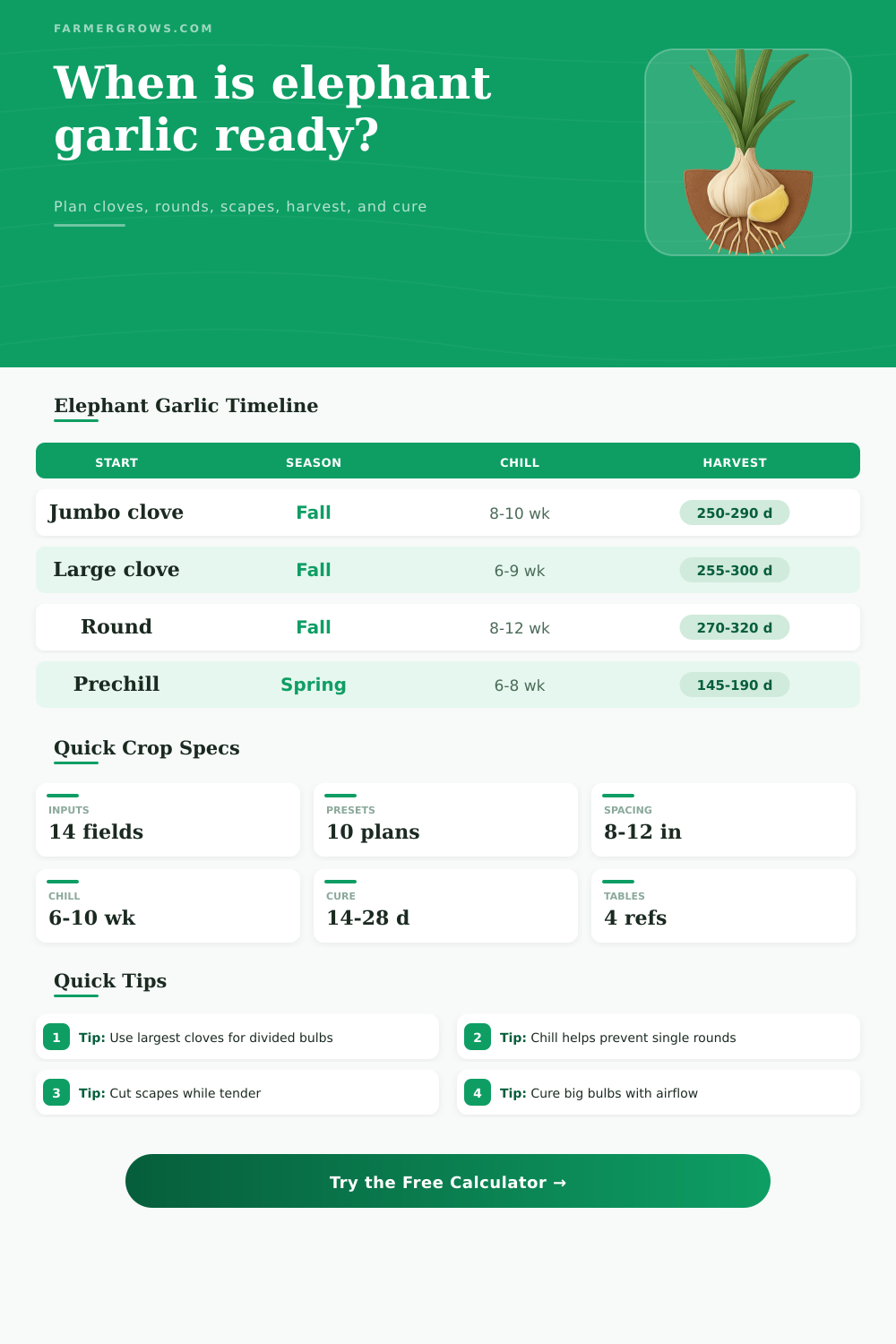
Use this planner for elephant garlic, the large mild Allium that behaves more like a leek than standard garlic. It separates jumbo cloves from rounds, because round planting often changes the season goal from instant harvest to building a divided bulb.
Elephant Garlic Timeline Results
The estimate will update after calculation.
| Zone band | Fall planting target | Spring option | Vernalization note | Harvest clue |
|---|---|---|---|---|
| Zones 4 to 5 | Late Sep to mid Oct | Very early spring with prechilled cloves | Usually enough outdoor chill, but mulch against heaving. | Often mid to late summer. |
| Zones 6 to 7 | Mid Oct to mid Nov | Early spring if soil can be worked | Reliable winter chill for large divided bulbs. | Late June through July in many gardens. |
| Zones 8 to 9 | Nov to Dec | Late winter to early spring | Prechill seed stock if winter is mild. | Late spring to early summer. |
| Zone 10 | Dec to Jan trial crop | Use refrigerated cloves or rounds | Short chill raises single-round risk. | Scout early, because heat can finish plants fast. |
| Starting piece | Best spacing | Typical crop result | Timing effect | Elephant garlic note |
|---|---|---|---|---|
| Jumbo outer clove | 10 to 12 inches | Largest divided bulb potential | Slightly earlier finish | Best seed-stock choice when cloves are firm and disease-free. |
| Large clove | 8 to 10 inches | Good divided bulb crop | Baseline timing | Common kitchen-bed starting material. |
| Small inner clove | 6 to 8 inches | Smaller bulb or round risk | Later sizing | Useful for eating crop, less ideal for seed saving. |
| Single round | 8 to 10 inches | May become a divided bulb after chill | Later, wider window | Rounds are a normal elephant garlic stage, not a failure. |
| Stage | When it appears | What to do | What it means |
|---|---|---|---|
| Fall roots | 2 to 8 weeks after fall planting | Keep soil evenly moist, then mulch after cooling. | Rooting before winter supports spring bulb size. |
| Spring leaf push | After soil warms | Pull dense mulch back and avoid waterlogged beds. | Fast leaf growth drives large cloves and wrappers. |
| Tall scapes | About 35 to 50 days before harvest | Cut tender scapes unless saving flowers or bulbils. | Scapes are expected on elephant garlic. |
| Harvest leaves | Late spring to summer | Lift when lower leaves brown and upper leaves remain partly green. | Waiting too long can split wrappers and expose cloves. |
| Curing step | Target condition | Duration | Large-bulb caution |
|---|---|---|---|
| Lift and clean | Dry day, soil brushed off | Same day as harvest | Do not wash if bulbs are intended for storage. |
| Primary cure | Shade, airflow, 60 to 80°F | 14 to 28 days | Huge bulbs need space between plants, not tight piles. |
| Trim and grade | Necks dry, wrappers papery | After cure | Save firm, largest divided bulbs for planting stock. |
| Storage | Cool, dry, ventilated | About 3 to 6 months | Use damaged or split bulbs first. |
Round management: A single round can be useful planting stock. Give it enough chill and wide spacing, then judge success by whether it forms a divided bulb at harvest.
Spacing and cure: Elephant garlic bulbs are bulky. Crowding reduces clove size, and tight curing piles trap moisture around the thick necks.
Treat elephant garlic as different than ordinary garlic, because it will be too big if planted like an ordinary one (and more likely to yield only one round or very small bulbs). Elephant garlic is actualy more like a leek.
Plan accordingly with timing; and that doesn’t mean dig some holes and hope for the best! Learn how to time things right, not just plant but then also replant cloves of your harvested heads, and plan accordingly: Know how long to expect each phase to take based off whether you are planting in the fall or spring; use my planting-calculation tool on this page to see when to do what in your zone.
How to Grow Elephant Garlic
Elephant garlic need some cold weather; it only divides into cloves after being exposed to a few cold weeks, or at least that is how it works in warmer zones (eight or nine). If you don’t have sufficient chill where you grow elephant, the bulbs won’t segment and you’ll end up with one big solid bulb, a typical surprise come harvesting day, unless you anticipated that possibility. The calculator tells whether you’re getting enough naturaly chill over winter, or need to prechill the cloves first in the fridge, then plant them in springtime soil.
As with all these plants, when you decide when to plant them, you also choose the size of the outer clove. Bulbs gets bigger from big ones than from small inner ones (or even singles). You can see that in reference tables; jumbo cloves will divide into bulbs faster than small ones, whether they are round or from inner cloves.
For building a seed stock, go with those big outer segments. Small ones mean you may end up with just rounds or small bulbs that need an extra season to grow and rest to get back to normal. That’s your long game in the garden, and it depends on this decision.
Elephant garlic bulbs are huge compared to ordinary ones, so planters tend to be stingy with space. Crowded conditions results in poor-size bulbs, as each plant compete for nutrients. To get an idea of your capacity in terms of number of plants that won’t compromise their own final size, the calculator takes into account bed length and row spacing.
If you’re harvesting based off weight, aim for at least a foot between plants; bigger is better. Invest in some extra garden real estate now for big bulbs later.
Harvesting is fickle because there is no clear signal. With regular garlic, you know when it’s ready when all the tops go totally brown. Not so with asparagus-type types. Watch for bottom few leaves to turn brown and yellow, but the top ones should still be half-green or even mostly so. The computer’s calendar help determine the approximate window by entering your location and when you planted.
Another aspect is that you have to cut off scapes (flower stalks) in early summer. That forces the plant to channel its energy into producing a bigger, stronger bulb. Leave them too late, and it just goes to seed, wasting its energy.
When you dig the bulbs, though, it’s critical to cure them for storing. Because the big heads contain more water, they must be allowed to dry thoroughly (yet not rot) with good air circulation. Two or three weeks in a well-ventilated but shady location will tighten up their base and make the skins papery-tight. If you rush things here, you’ll have bulbs going bad in a month too.
As part of the process, the tool estimates when the bulbs should of been cured enough to go into long-term storage, giving you an idea about when your crop is really finished curing and ready to be tucked away. Better storage comes from patience at the end of the line.
A little planning goes a long way to making it less of an iffy experiment, and more of a reliable crop. Adjusting for bulb size, spacing, and chilling requirements removes much of the guesswork. Always aim to divide bulbs with firm, flavor-filled cloves. These should store well over winter.
Timing’s everything: Get it right, and instead of only a couple of precious weeks in high summer, you’ll have fresh elephant garlic year-round. It begins with choosing the right plants in the fall, following their growth through the spring, and ending with a perfect harvest that cures properly. Repeat; but each season should be a little simpler as you come to know exactly what your climate and soil require.
Best elephant garlic? In gardens where the gardener honors the plant’s biological timetable. Not merely the one on the wall calendar.