Cilantro Seed Germination Time Calculator
Estimate when cilantro or coriander seed will sprout, how densely to sow it, when leaves should be ready, and how much warm weather may shorten the crop.
Cilantro seed is a dry split fruit, often sold as round coriander seed balls. Splitting or scarifying exposes the two true seeds inside, and cool, steady moisture usually matters more than pushing heat.
Cilantro Germination Estimate
Your cilantro sowing plan will appear here after calculation.
| Average Soil Temperature | Expected Cilantro Germination | Stand Quality | Management Note |
|---|---|---|---|
| Below 45 F / 7 C | Often 21+ days or uneven | Poor to unreliable | Wait, protect the bed, or sow under cover. |
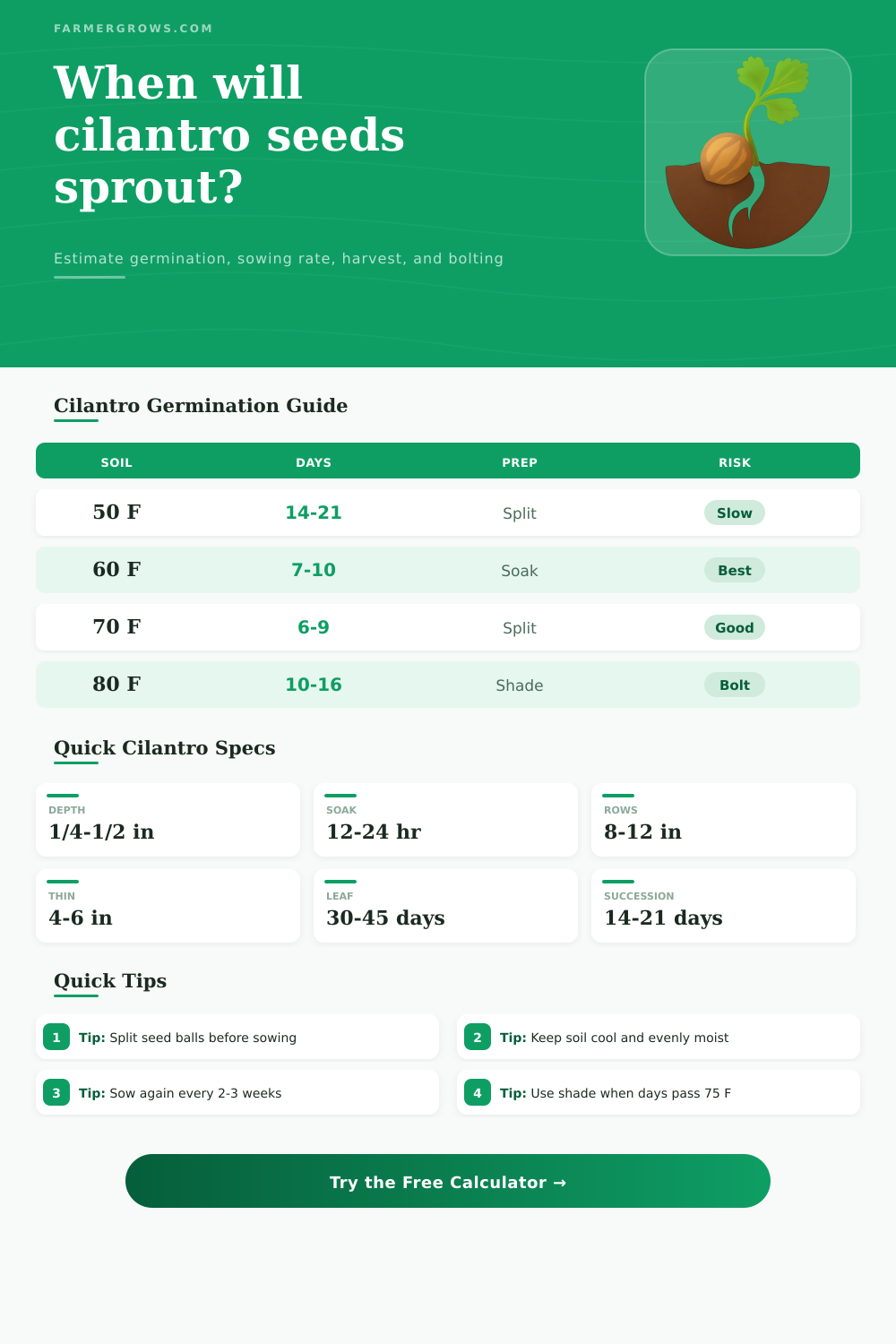
| 45 to 49 F / 7 to 9 C | 14 to 21 days | Slow but possible | Use split seed and keep surface from crusting. |
| 50 to 54 F / 10 to 12 C | 10 to 16 days | Moderate | Good early-spring range if moisture is steady. |
| 55 to 64 F / 13 to 18 C | 7 to 10 days | Excellent | Best balance of speed, stand, and low bolt pressure. |
| 65 to 70 F / 18 to 21 C | 6 to 9 days | Good | Fast emergence, but monitor warm afternoons. |
| 71 to 75 F / 22 to 24 C | 8 to 12 days | Fair | Shade cloth and frequent water help protect seedlings. |
| 76 to 80 F / 24 to 27 C | 10 to 16 days | Uneven | Heat stress and bolting risk rise quickly. |
| Seed Preparation | Time Effect | Stand Effect | Best Use |
|---|---|---|---|
| Whole coriander seed, dry | Adds about 3 to 5 days | More uneven | Low-labor broad sowing where perfect rows matter less. |
| Split seed balls | Baseline timing | More uniform | Most garden beds and market bunching rows. |
| Split and soaked 12 to 24 hr | Often 1 to 2 days faster | Better in dry soil | Spring, fall, and container sowings watered after planting. |
| Light scarification plus soak | Often 2 to 3 days faster | Best with old seed | Older lots or urgent succession gaps. |
| Older whole seed, not split | Adds 5+ days | Lower final stand | Only when seed supply is limited and sowing thickly is acceptable. |
| Cilantro Use | Common Seed Density | Spacing After Emergence | Sowing Depth |
|---|---|---|---|
| Baby leaf cilantro | 18 to 30 seeds per foot | Usually not thinned heavily | 1/4 to 3/8 inch |
| Fresh bunch leaf | 12 to 20 seeds per foot | Thin to 2 to 4 inches if crowded | 1/4 to 1/2 inch |
| Cut-and-come-again leaf | 10 to 16 seeds per foot | Thin to 4 to 6 inches | 1/4 to 1/2 inch |
| Coriander seed crop | 6 to 10 seeds per foot | Thin to 6 to 8 inches | 1/2 inch in loose soil |
| Micro cilantro tray | Dense broadcast over tray | No thinning | Light cover or pressed into media |
| Target Crop | Typical Harvest Timing | Bolting Sensitivity | Succession Strategy |
|---|---|---|---|
| Micro cilantro | 10 to 20 days after sowing | Low because crop is very young | Sow trays weekly for steady supply. |
| Baby leaf | 25 to 35 days after sowing | Moderate in hot spells | Sow every 10 to 14 days in warm weather. |
| Fresh bunch leaf | 30 to 45 days after sowing | High once highs exceed 75 F | Sow every 14 to 21 days in spring and fall. |
| Cut-and-come-again | 35 to 60 days after sowing | Moderate if kept cool | Use slow-bolt varieties and harvest before stems stretch. |
| Coriander seed | 90 to 120 days after sowing | Bolting is the crop phase | Allow umbels to dry tan before final seed harvest. |
Split the seed ball first: A round coriander "seed" usually contains two mericarps. Gently rolling or cracking it before soaking gives a faster, more even cilantro stand.
Plan the next sowing before harvest: Cilantro bolts fast in lengthening, warm days, so short succession intervals keep leaves coming after the first bed stretches.
Most of us just toss coriander seeds in garden and hope for the best. The truth? Not so fast. Germination is tied to factors that home growers may not consider; then again, it all goes to flower and bolt long before you have chopped your first leaf. Here’s why, and how to calculate your chances via a handy-dandy calculator (based off seed prep and temperature of your soil).
Don’t plant whole coriander seeds, by the way; split them first. Each one of those seemingly rounded seeds is actualy made up of two separate seeds, called mericarps. They is held together by a dry fruit with a hard exterior that slows the intake of moisture. This results in uneven growth: some seeds will be the first to pop up, while others will rot. Simply roll each seed ball back and forth between your hands or crush it gently between palms. This expose the inner seeds to the soil and allows the embryo within to drink up freely. This often reduces germination time by half.
How to Grow Cilantro Successfully
Another critical variable is soil temperature, which affects how cilantro acts different than in cool versus warm conditions. If the soil is fifty-five to sixty-eight degrees Fahrenheit, seeds will all come up in about a week to ten days, with good, even germination. Seedlings is colorful and vigorous. When the soil is cooler (say, below fifty), germination can be erratic, taking longer, and some of the seeds may remain dormant for three weeks.
This herb hate heat more then cold. As soon as the days reach seventy-five degrees F or warmer, the plant senses the final phase of its life cycle has arrived and bolts pretty much at once. “It knows summer’s over and needs to reproduce,” so it makes flowers rather than leaves. Because of this heat sensitivity, planting in stages are required for ongoing harvest. It’s not like sowing one big patch in April and having food through November: By June, the crop would of bolted. Sow little amounts every couple of weeks during both spring and fall months… So that while one batch is stretching up toward flower, you’ve got another tender, younger batch ready to eat.
Here again, spacing counts. If you plant too close together, the stems becomes weak and give in to their own weight. Give them space to grow strong root system by thinning your seedlings to about four or six inches apart. Cilantro also dries out more easily when crowded. The plants competes for nutrients, which stresses them and causes them to bolt prematurely (even when weather is reasonably cool).
There is also a slight but definite influence of seed age on success. Seeds packaged this season and fresh from last fall’s harvest will have better germination and get off to a stronger start than older ones, which deteriorate fast in damp basements (or even worse, warm garages). When the calculator estimate how many to sow, it factors in seed age. But another factor: If the seeds are old, soak them first, for a dozen to two dozen hours, to wet the embryo and help weaklings absorbs enough water to overcome dormancy and get going.
This little bit of work makes for more compact stands. You want healthy, full foliage, not bare spots where weeds can grow or nothing grows at all. So what is the main point? Cilantro isn’t really a how-to-plant-it story; it’s a when-to-plan-it story. It’s all about managing the timing: beating the heat, avoiding longer days. Prepare the seed correctly, get to know your soil, and adjust things accordingly, and suddenly, you’re no longer just wishing for germination, you’re anticipating it.
Constantly re-sowing and keeping plant growing conditions cool helps prevent plants from bolting. Keep sowing, but in small amounts; split those seeds; watch the thermometers. Because you’ll be getting an endless series of fresh herbs instead of a single flurry followed by weeks of despair, every bit of care you pay them show on your harvest. That’s why this can go from a maddening crop to a dependable kitchen staple.