Zinnia Seed Germination Time Calculator
Estimate zinnia sprout dates, transplant readiness, first pinch timing, and likely first bloom from real seed-starting conditions.
Zinnias germinate fast when the seed is fresh, the mix is warm, and moisture stays even. This planner adjusts the calendar for cool soil, older seed, deep planting, poor light after emergence, humidity, and whether you are tray-starting or direct sowing.
Your Zinnia Calendar
Dates will update from the seed-starting conditions above.
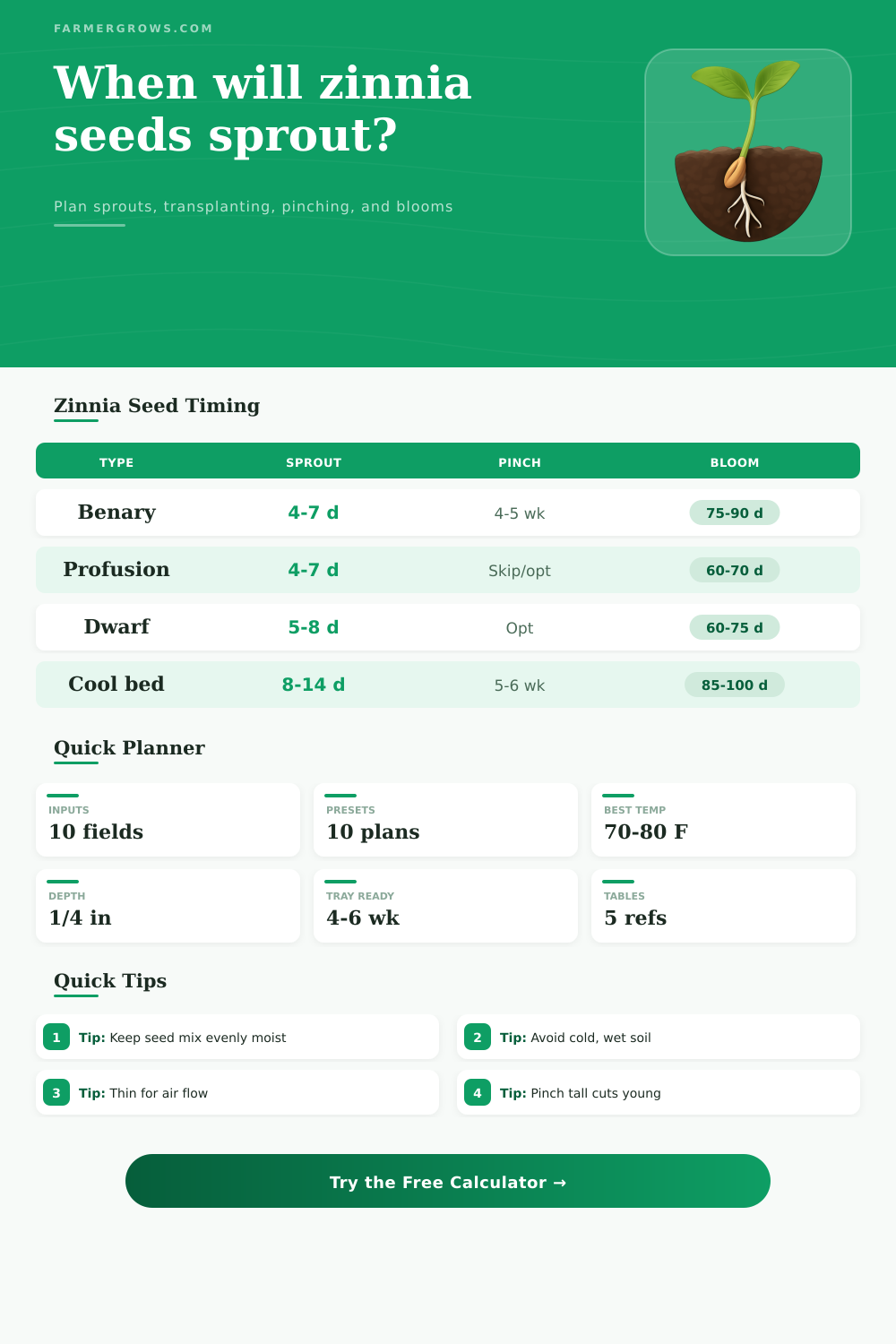
| Zinnia type | Typical use | Sprout range | Seed to first bloom |
|---|---|---|---|
| Benary Giant / dahlia-flowered | Cut flowers, long stems | 4-7 days warm | 75-90 days |
| State Fair / tall garden mix | Large garden display | 5-8 days warm | 75-90 days |
| Profusion / Zahara bedding | Mass bedding, edging | 4-7 days warm | 60-70 days |
| Dwarf pot zinnia | Containers and borders | 5-8 days warm | 60-75 days |
| Cactus or scabiosa types | Specialty cuts | 5-9 days warm | 75-95 days |
| Media temperature | Expected sprout pace | Stand risk | Planner adjustment |
|---|---|---|---|
| Below 60°F | Slow, often uneven | Rot and gaps increase | Add 5-8 days |
| 60-64°F | Slow but possible | Cool wet soil risk | Add 3-5 days |
| 65-69°F | Moderate | Usually workable | Add 1-2 days |
| 70-80°F | Fast and even | Best range | No penalty |
| 81-86°F | Fast if moist | Dries quickly | Add 0-1 day |
| Above 86°F | Stress-prone | Dry crust or heat | Add 2-4 days |
| Planting style | In-row spacing | Row or bed spacing | Best use |
|---|---|---|---|
| Cut-flower tall zinnias | 9-12 inches | 12-18 inches | Straight stems, harvest lanes |
| Large garden types | 12-18 inches | 18-24 inches | Air flow and big plants |
| Profusion / Zahara bedding | 8-12 inches | 10-15 inches | Mass color blocks |
| Dwarf pots and borders | 6-10 inches | 8-12 inches | Compact edging |
| Humid climates | 12-18 inches | 18-24 inches | Reduce mildew pressure |
| Scenario | First bloom window | Pinch effect | Calendar note |
|---|---|---|---|
| Tray-started tall cuts | 70-90 days from sowing | Adds 5-10 days | Earlier than direct sow if planted on time |
| Direct-sown warm bed | 8-12 weeks from sowing | Optional for branching | Best after frost and warm soil |
| Profusion bedding | 60-70 days from sowing | Usually skip | Flowers young and branches naturally |
| Cool spring bed | 85-100 days from sowing | Delay likely | Slow roots before heat arrives |
| Zone 9 fall sowing | 65-85 days from sowing | Light pinch only | Watch shortening days and frost-free window |
Long stems, large blooms, best pinched at 8-12 inches tall for cut-flower branching.
Classic tall garden zinnia with big flowers; leave room for air circulation.
Compact bedding hybrid that usually flowers early without pinching.
Heat-friendly bedding type with tidy branching and strong landscape performance.
Dwarf pot choice; use shallower containers only if drainage is steady.
Smaller cut blooms, productive stems, and good succession-sowing fit.
Specialty color cut type; give warm starts and avoid wet leaves.
Quilled petals and showy blooms; timing is often slightly slower than bedding types.
Warmth tip: If garden soil is below 65°F, start zinnias in trays or wait. Cold, wet soil slows emergence and makes old seed look worse than it is.
Calendar tip: For tall cut flowers, pinch when plants are about 8-12 inches tall with several leaf sets. Expect the first bloom a little later, but with more usable stems.
ZINNIA: Scatter their seed in open ground as soon as it can be worked, and then…nothing. Nothing, just wait, wait. Stare at the bare ground, hoping your July plans will come to bloom. Guessing doesn’t make it any easier, that’s when I understand why they wait, and it makes the waiting more tolerable.
If you know what conditions you’re starting with, this calculator transforms guesswork into actual scheduling. It also takes into account things most gardeners don’t think about until it’s too late. How old is that seed? You’d never know looking at it (and maybe that’s why you forgot when you stashed that three-year-old packet): A packet that’s only a couple of years old looks perfectly good on the shelf, but its ability to grow are already diminished. If conditions is perfect, it will sprout in four days. With older seed, it might grow in only two days, or it may simply sit and rot.
How to Grow Zinnias Perfectly
That’s why this tool accounts for loss of viability… Not wanting anyone getting blind-sided by a small tray. It tells you whether to go ahead and plant what you’ve got or to rush out for fresh packet. And that makes all the difference in saving weeks of wasted work in the spring.
The other big variable is temperature. Plain and simple, zinnias are heat lovers. If you have cool soil left over from a winter chill in your garden, the seeds will basically go into dormancy until it warm up. Root systems reacts to what’s going on in the soil around them… Not the air right overhead, and so the calculator factors in temperature of the soil as a way to predict speed. For rapid action, you want the soil to reach at least seventy degrees. Things slow way, way down below sixty-five.
And no, it isn’t all about patience: Cold wet soil equals rot…even before there are any sprout to speak of. A warmish, dryish mix keeps it from happening. This prevents the fungal slump that kills off young plants faster then drought could ever do.
What comes next. After those green tips breach the surface (is also affected by light). Seedlings will do their best to stretch out and reach for all the light they can get, even when sown with perfect care, if exposed to low light levels. But this stretching result in leggier seedlings whose stems aren’t strong enough to survive until transplant time outdoors. That lighting data will help gauge how much longer those earliest seedlings should of spend under indoor grow lights before being ready to hold up well outside. More weeks may be required if your space is dim. Failing to adjust could mean setting down delicate plant in beds that knock them over from sun or wind.
This is not a matter of timing, but one of structure. Tall varieties such as Benary Giants get a change: pinch to force them to branch when young, and they will have more flowers eventually. But you’re waiting a week or two for each stem you pinch so you delay getting vertical for a bit. The timing tool factors all of that in: Do you want a little later but more bouquets, or an earlier single stem? That’s the tradeoff you make with these guys every year. Don’t prune plants that don’t need it, and don’t forget to pinch the ones that do. Compact bedding types like Profusion usually already branch out naturaly, no pinching required. Know whose strategy matches your plant.
Everything ties together on spacing, long term. For example, crowded zinnias holds humidity next to their foliage… The powdery mildly perfect storm. White, powdery mess defeats the blooms quicker than insects can. The calculator will include how much space you intend between each plant as part of the disease pressure assessment. Plan on wide spacing, and enjoy continuous blooms along with healthier plants, even though it costs more bed space. Wider spacing cost you extra bed space, but rewards you with longer-lasting plants. Square-footage investment for longevity.
Germination isn’t just one thing; it’s a process. Moisture consistency, warmth of the soil, even the quality of the available light all impact when it happens, and so does the storage history of the seed itself. That means each variable shifts the calendar, seemingly at random, till you get to know how they interact.
When you do, gardening becomes less about hoping than about managing, beginning with fresh seed and warm moist soil, then following the math to determine what comes next. Those little sprouts don’t happen magically; they unfold according to design.