
The Christmas cactus gets the same treatment most of us give it. We water it sparingly, like it’s a desert plant that shouldn’t get wet. Then we just let it sit on a windowsill baking away for weeks on end, as if we’re expecting flowers in return for neglecting it. No wonder so many plants looks shriveled and miserable come December.
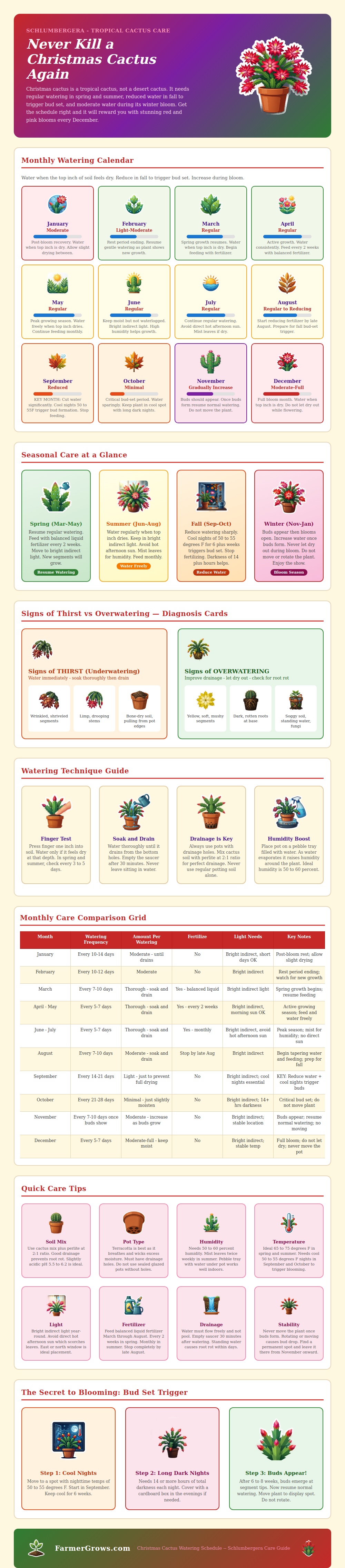
Here’s the truth: It’s not actualy a desert cactus. Far from it. In fact, it’s a rainforest creature, something that clings to tree trunks where the growing-season soil never fully dries out and air is loaded with humidity. Here’s how watering requirements changes drastically throughout the year (above).
How to Care for Your Christmas Cactus
Keep that soil nice and moist in the spring and summer; the top inch might dry out between waterings, but roots beneath are constantly working. Feed it then as well, new sections forms each couple of days. It sounds counterintuitive to make sure a succulent gets regular watering, as if it were a thirsty houseplant, but that’s what biology calls for. Starve it when it wants to grow, and you’ve got sparse foliage and weak link.
It is September. And this is when most folks drop the ball. Now there must be some clear indication to the plant that it’s time to stop producing leaves (vegetative tissue) and begin forming flower buds. Indicate that by allowing the soil to become noticeably dry, and also by having some cooler nights, perhaps in the 50ish degree range. For several weeks, don’t give the thing any water, yes, cruel. It do require a little stress to trigger a hormone change, and then it will bloom.
Watering again regularly through October means you’ll just see more lush green growth; the plant figures it’s still in growing mode. You should also consider light management in this window. Bud set requires long dark nights. What if the lights in your livig room don’t go off till midnight? The cactus won’t know its nighttime. To help trick it into thinking there are short days as it does in nature, simply put it in a dark hall or cover it with a box.
When those little buds form (you’ll see them first at the tips of the segments), you can return it to light again and water moderately. Don’t move the plant after that point. Any movement is bad for emerging cacti. The slightest shift of position, turning the plant a bit, even repositioning it, can result in loss of all its buds, which fall sadly to the ground in a heap. Keep the growing medium just moist (never soggy; no standing water) and avoid moving or rotating the pot once buds appears.
It’s a fine line; root rot will kill them, not drought. Always use a pot that has holes in the bottom, and drain the saucer within half an hour of watering. The best growing medium is a perlite-cactus-soil mix, which let water out fast but still holds together.
Early diagnosis = saved plant: Is it thirsty? It will have wrinkled, shrunken parts. Soak it well until water drips from the bottom of the pot. Is it overwatered? Its segments will be yellow and mushy. Let it dry right out and watch for rot around its base. Usually there’s some small clue to which is which that can make all the differance. One needs watering now, while the other need less water and maybe better drainage.
The blooms go by in February, and the plant goes dormant for a while. Back off the feed (a little), and reduce moisture so it could of recovered from all that flower-producing work. In March, repeat with more consistent watering again and bring up the lights. Repeat repeat repeat… That’s how it works, a predictably repeating rhythm.
You just have to learn to listen to the plant and give it what it wants, when it wants it. Respect its naturaly cycle, and before long the flowers are yours, year after year. Less vigilante, more routine: Feed, water heavily, then cut way back in fall and repeat.