
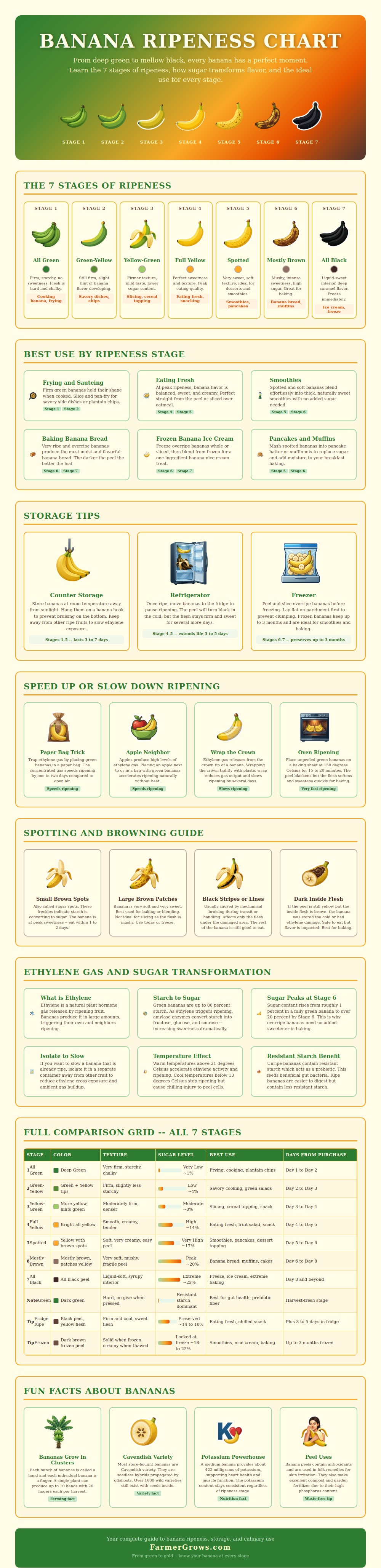
Once you get home from the grocery store with your bananas in hand, they are easy to put out of mind. Bananas becomes increasingly brown in a matter of days. What’s happening? Starches converts to sugars due to naturaly enzyme activity.
When they’re still yellow, bananas is better for eating different than cooking. But as they turn brown, the banana become softer and sweeter. Fry up some green bananas! Or slice them thinly into chips, as the green variety hold its shape.
How to Use Bananas at Different Stages
When your banana has brown spots on the skin: it has reached peak sweetness for eating raw. Time to eat! Enjoy these creamier, sweeter fruits raw or mix them in oatmeal (no need for added sugar).
The best time for using bananas in baking is when they’re almost completely black. By that point, their sugar content are at its highest. Not only does this sweetener come from nature, but those darker fruit also retain more moisture than unripe ones. Mashed black bananas is perfect ingredients for muffins and breads; there’s no need to add too many extra sugars to your recipe. They has tender flesh that blends smoothly into batter and help cut back on quantity of other fats in the mix.
Even when the skin has gone black, the actual banana still retains its yellow color and firmness (it will keep like this in the fridge for a few days). That means you don’t have to rush to eat your over-ripe fruit. You should of eaten it sooner if you wanted. For longer storage, just peel them and pop them in the freezer. Frozen bananas work well as a base for nice cream or smoothies… No need to ice cream makers or dairy!
If you want sweet fruit now, all faster, go ahead and speed up the ripening process. Wrap the stem end in plastic wrap to slow the escape of the ethylene gas. Or, put unripe green bananas in a brown paper bag along with an apple. The apple emits ethylene gas, which makes the other fruit ripen faster. It will happen in a day or so. Once you understand how this works, you’ll be able to control speed of the ripening process.
Every stage of ripeness have its own culinary use, whether it’s ready for baking or for frying. There is no such thing as a bad banana; just one without its proper use yet. When the skin turns dark, it’s time to cook with it. And get the more concentrated flavors inside.