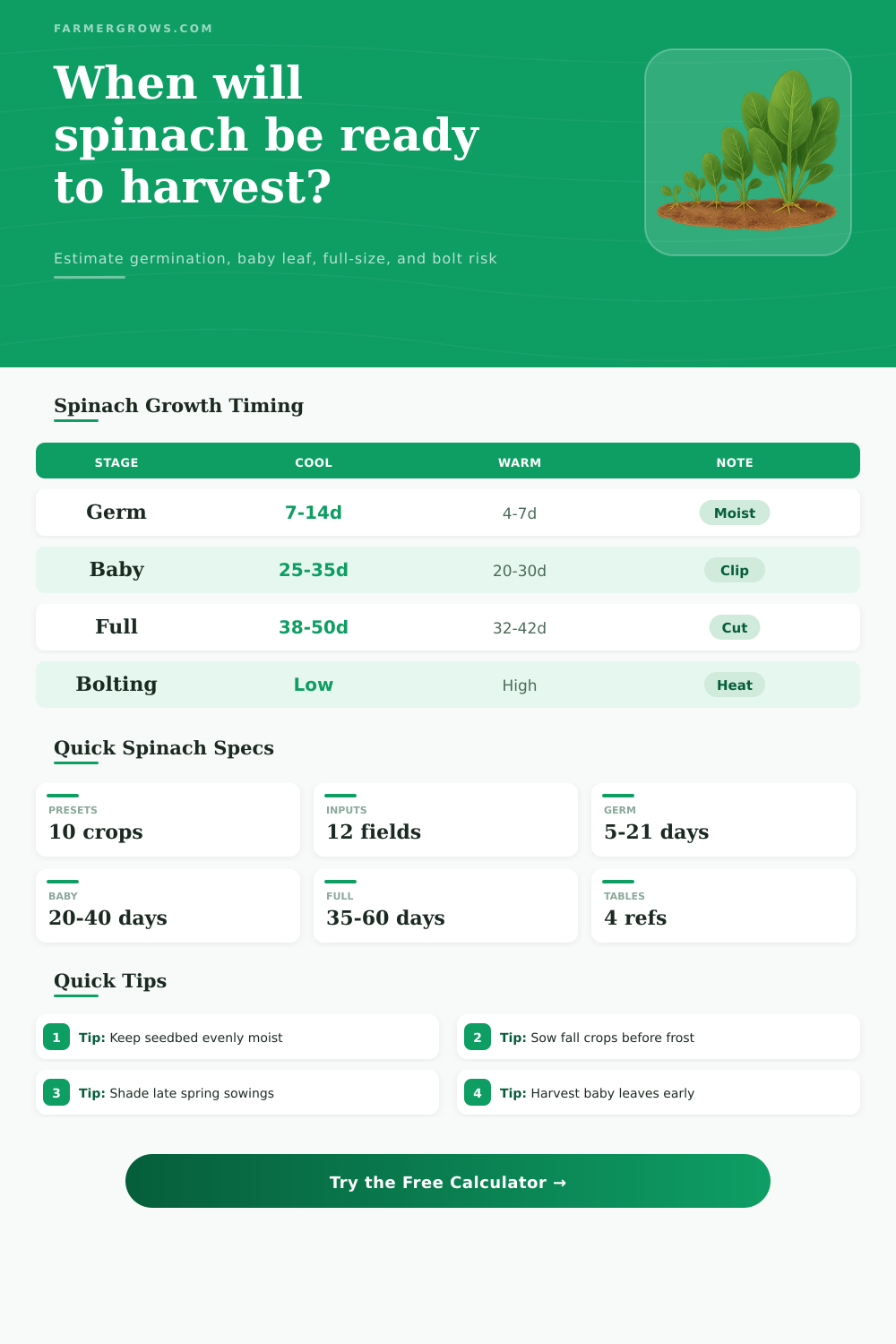
Spinach Growth Time Calculator
Estimate germination, baby leaf harvest, full-size harvest, heat risk, and succession timing for spring, fall, greenhouse, container, and overwintered spinach crops.
Spinach timing shifts sharply with soil temperature, long days, warm nights, moisture stress, and harvest size. Use this planner for direct-sown crops; transplant schedules usually run 7 to 14 days faster after setting out.
Spinach Growth Schedule
Windows include germination temperature, variety pace, season pressure, spacing, sun, moisture, and frost or heat stress.
| Soil temperature | Expected germination | Stand reliability | Spinach timing note |
|---|---|---|---|
| 35°F to 40°F | 14 to 28 days | Slow and uneven | Useful for very early sowings if the seedbed stays moist. |
| 41°F to 50°F | 9 to 18 days | Good cool-soil start | Often the best balance for spring outdoor planting. |
| 51°F to 68°F | 5 to 10 days | Fast and reliable | Keep moisture steady because shallow seed dries quickly. |
| 69°F to 75°F | 5 to 12 days | Fair but declining | Shade, pre-soaking, or evening sowing helps late crops. |
| Above 75°F | Patchy or failed | Low | Use fall timing, shade cloth, or wait for cooler soil. |
| Variety or type | Leaf type | Baby leaf days | Full-size days | Best use |
|---|---|---|---|---|
| Bloomsdale Long Standing | Savoy | 28 to 35 | 42 to 50 | Spring and fall bunching |
| Space | Smooth | 25 to 32 | 38 to 45 | Fall crop, tunnel, easy washing |
| Baby leaf mix | Mixed | 21 to 30 | 35 to 43 | Dense cut-and-come-again beds |
| Giant Winter | Semi-savoy | 32 to 42 | 50 to 60 | Overwintered or cold-frame crops |
| Tyee | Semi-savoy | 28 to 36 | 43 to 52 | Cold tolerance and bolting resistance |
| Regiment | Semi-savoy | 24 to 32 | 37 to 45 | Uniform early spring leaves |
| Planting style | Plant spacing | Row spacing | Expected harvest | Yield note |
|---|---|---|---|---|
| Baby leaf broadcast or bands | 1 to 2 in | 2 to 4 in bands | Small leaves, one or two cuts | High leaf count, shorter crop life |
| Baby leaf rows | 2 to 3 in | 6 to 10 in | Cut at 3 to 5 in tall | Good airflow and easier cutting |
| Bunching leaves | 4 to 6 in | 10 to 14 in | Large individual leaves | Balanced size and plant count |
| Whole plant harvest | 5 to 8 in | 12 to 18 in | Rosettes or pulled plants | More space improves final crown size |
| Container spinach | 3 to 5 in | Grid planting | Baby to medium leaves | Needs steady moisture in limited soil |
| USDA zone band | Spring sowing window | Fall sowing window | Overwinter note | Season warning |
|---|---|---|---|---|
| Zones 3 to 4 | 4 to 6 weeks before last frost | 6 to 8 weeks before first frost | Needs strong protection | Short fall window |
| Zones 5 to 6 | 4 to 8 weeks before last frost | 6 to 10 weeks before first frost | Possible with tunnel or mulch | Late spring bolts quickly |
| Zone 7 | February to March | Late August to October | Good overwinter potential | Watch long warm springs |
| Zones 8 to 9 | Late winter to early spring | September to November | Often easiest as winter crop | Summer sowing is risky |
| Zone 10 | Coolest winter weeks | Late fall to winter | Use shade and fast baby harvest | Heat limits full-size crops |
For faster stands: Water the row before sowing, cover seed shallowly, and keep the top half inch moist until emergence. Dry surface soil can add a week to spinach germination.
For longer harvests: Treat late spring spinach as a baby leaf crop, use shade cloth when afternoons climb, and start the next sowing before the first cut.
When is it time for spinach? Seems easy enough… Plant a bed of spinach late spring, and all you get are tough stems by the time of picking. Why? How do we go from tender leaf to bitter stem?
Spacing, moisture, day length and temperature matters, and this calculator predicts the date windows for you so that you don’t have to guess about when your first cut will be ready. The rate of growth is dependent on each input: The faster the soil temperature, the quicker seed germinates; the longer the days (which you set via the season), the sooner they’ll flower; the closer the spacing, the more quickly foliage fills in; and the greater the stress (heat wave or frost) the higher their stress level.
How to Use the Spinach Calculator
Adjust those inputs, and it output a window for both full-size leaves and baby leaf cuts. It also provides a bolting risk score, which tell you if you need to re-sow every week or two.
Many gardeners don’t appreciate that spinach is one of those crops most responsive to heat once it has true leaves. What looked great in cool April can be all woody come mid-May, if the nights are mild but the soil heat up. The calculator look at how much different varieties can handle, along with sun hours and seasonal pressure, to flag this potential and help you decide whether to grow fast baby-leaf crops or move the next sowing into shade.
If you are planting in the fall, you might need an extra day or two even if air temperature is mild. This is because growth slows down after germination when there are shorter days and cooler nights. The adjustments in the last windows account for moisture and row spacings. Row spacings too wide save no time from first cut, but waste space. A wet bed or a dry surface crust delay germination, even when calendars suggest it’s time.
None of this is obvious or intuitive. The dates you see represent actualy conditions on your bed, not “ideal” textbook numbers. It is good for comparing how changing the time between sowings affects the chance of bolting. The calculator says, for example, if you expect high heat pressure, don’t wait as long before next sowing, because then maybe you won’t miss your crop entirely as it flowers instead.
That’s sometimes the difference between a lackluster spring and an extended harvest: one tweak that would of being based off the prediction. No additional varieties required; no need for more bed. When you think of the dates not as promises but as points on a plan that may change, that’s where it gets good.
Spinach likes growers who pay attention to what weather is doing now and sow to match, not by some other calender. Take what comes, make that your first planting, and the second one after that, and follow along with the crops to see whether they signal that a third round should of being moved up or back. That way, you’ll have spinach in steady supply spring into fall.