
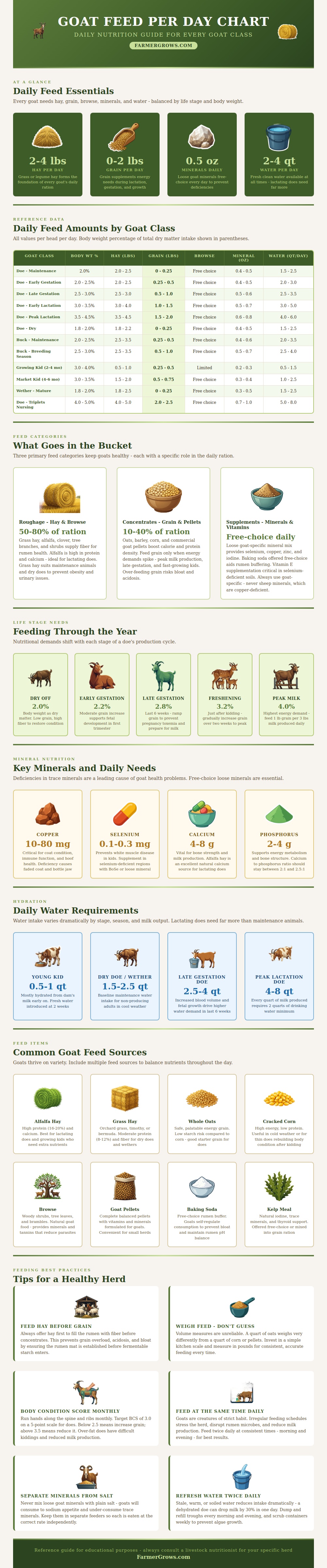
Goats requires different types of nutrition depending on the life stage of the goat. For example, a dry doe or a wether will have lower requirements for nutrition than a doe in peak lactation. Since a dry doe or a wether dont need to perform the tasks of a lactating doe, they do not require as many food to fulfill their nutritional needs.
However, does in peak lactation will require more nutrients to produce the milk necessary to feed their kids. Since milk is mostly water and nutrients, the doe will require more food and more water than a dry doe to replace the nutrients that the milk being produced is removing from the body of the doe. Hay is the primary source of nutrition for the goat, as hay provides the long fiber that is required to aid in the proper function of the rumen of the goat.
How to Feed Your Goats
The rumen must consume fiber to properly functioning; if a goat does not consume enough fiber, its rumen will slow in its functioning. As a result, the goat may develop issues like bloat or acidosis if it consumes grain. Grass hay is good for maintenance goats, dry does, but alfalfa hay is more better for does in peak lactation and growing kids because alfalfa hay has more protein and calcium.
It is important to always ensure that the goat has enough hay to fill its rumen prior to feeding the goat any grain. Grain is a type of concentrate feed for goats, but if you provide it in excess it can be harmful to the animal. Grain is useful for does in late gestation, does in early lactation, and kids that are rapidly growing.
However, grain should not be the primary food to feed to a goat. If you feed too much grain to a goat outside of these time periods, the excess starch in the grain will disrupt the normal balance of the rumen of the goat. Use grain for goats only when their energy needs increases, and only in limited amount so as to not upset the digestion of the goat.
Minerals are required to complete the diet of a goat, and a goat cant thrive on hay and grain alone. Minerals contain trace elements, such as copper and selenium, which impact the quality of the goats coat and the strength of its immune system. If goats diets lack minerals, there may be a low viability of kids born by does.
Furthermore, a deficiency of minerals is gradual rather than sudden. Provide loose minerals for goats free choice to eat as much as they desires. Ensure that the goats have access to minerals at all times to maintain their health.
A goat requires water as one of the essential components of its diet. The amount of water a goat requires will differ depending on its activity. For example, a maintenance goat will require approximately two quarts of water each day.
However, a doe that is nursing twins will require more water. Does require water to produce milk, so if they produce more milk, they require more water for hydration. Ensure that the water troughs for the goats are always clean and well-filled with fresh water.
If the goats do not drink water, the goats milk production will drop. Body condition scoring can be used to determine if the food provided to the goat is correct. By feeling the goat along its spine and ribs, you can determine if the goat has too much or too little fat.
If a goat does not have enough fat, it will produce less milk and have a weaker immune system. If a goat has too much fat, it may have trouble during birth and may not have as much fertility. Score each goats body condition once each month to adjust the diet of the goat to maintain the goats health.
Providing food to goats at the same times each day is important for the health of the goat. Providing food at irregular times can stress the rumen of the goat. Always feed hay prior to grain to the goat.
Additionally, weigh the feed in pounds rather than scoops to provide the goat with the amount of food that is needed. By providing food to goats according to their life stage and by monitoring their body condition, the goats will remain healthy and produce milk at a steady rate.