Egg Production Calculator
Estimate hen and duck egg output from flock count, breed, age, daylight, season, protein, molt, lay rate, cracks, losses, and collection days.
Use this calculator for backyard, homestead, and small market flocks. It starts with your entered lay rate, then adjusts for breed type, bird age, daylight, season, molt pressure, feed protein, and expected crack or loss percentage.
Your Egg Production Estimate
Enter flock details and calculate to see expected production.
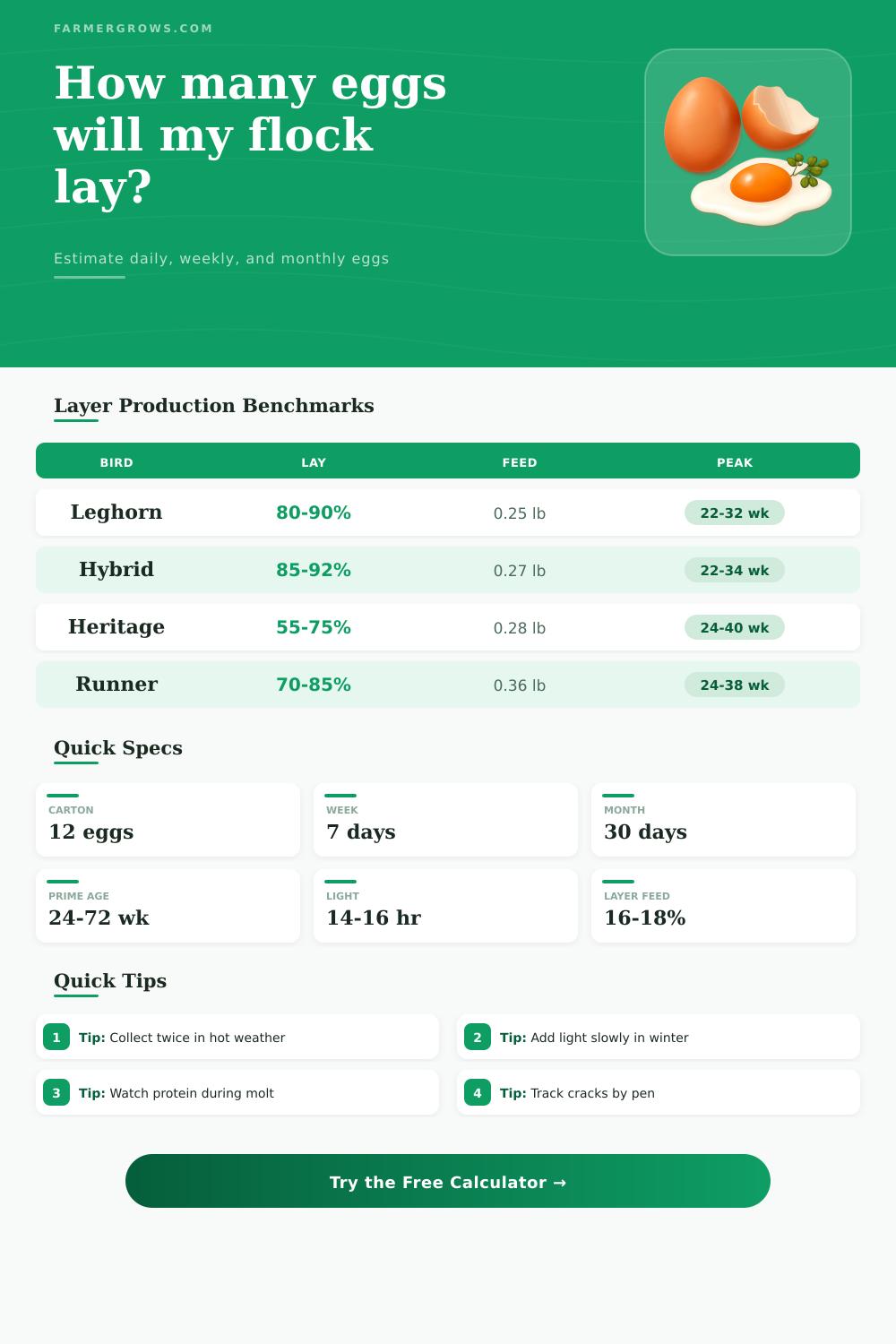
| Flock type | Typical lay rate | Feed per bird/day | Best age range |
|---|---|---|---|
| Commercial hybrid chicken | 85% to 92% at peak | 0.25 to 0.30 lb | 24 to 72 weeks |
| White Leghorn chicken | 80% to 90% at peak | 0.23 to 0.28 lb | 22 to 72 weeks |
| Heritage dual-purpose chicken | 55% to 75% at peak | 0.27 to 0.34 lb | 26 to 90 weeks |
| Khaki Campbell or Runner duck | 70% to 88% at peak | 0.34 to 0.42 lb | 24 to 80 weeks |
| Condition | Common effect | Management note | Calculator impact |
|---|---|---|---|
| Spring flush | Rising output | Increase nest checks as pace climbs. | Small positive season factor |
| Summer heat | Water-driven dips | Shade and cool water protect intake. | Moderate heat reduction |
| Fall slowdown | Natural decline | Watch molt and shorter days together. | Noticeable seasonal reduction |
| Winter short days | Lower lay rate | Use steady 14 to 16 hour light if desired. | Largest light-season reduction |
| Output level | Eggs per bird/week | Feed per dozen context | What it may mean |
|---|---|---|---|
| Excellent | 5.6 to 6.5 eggs | 2.3 to 3.0 lb/dozen | Peak flock, good feed intake, low loss. |
| Good | 4.5 to 5.5 eggs | 3.0 to 3.8 lb/dozen | Normal mixed flock or mild seasonal drag. |
| Moderate | 3.0 to 4.4 eggs | 3.8 to 5.5 lb/dozen | Older birds, winter, molt, or breed limits. |
| Low | Under 3 eggs | Over 5.5 lb/dozen | Check age, health, light, protein, pests, and hidden nests. |
| Collection plan | Best use | Carton math | Risk to watch |
|---|---|---|---|
| Daily collection | Hot, cold, or high-output pens | Daily eggs divided by 12 | Less cracking and fewer dirty eggs. |
| Twice daily collection | Market flocks and duck houses | Morning plus afternoon totals | More labor, better quality control. |
| Weekly planning | Family use and subscriptions | Weekly eggs divided by 12 | Match cartons to actual packable eggs. |
| Monthly planning | Feed budgeting and flock records | 30-day eggs divided by 12 | Season shifts can change fast. |
Record eggs by pen: A simple daily count catches sudden drops from molt, heat stress, predators, hidden nests, frozen eggs, or feed changes before the whole month looks wrong.
Manage light and protein gently: Layers respond best to steady routines. Add winter light gradually, keep clean water available, and use adequate protein during molt recovery.
An egg production calculator can help individual to determine how many eggs they will recieve from there flock of chickens or duck. The calculator utilize a number of different variables to determine how many eggs an individual will produce. These variable include the breed of the flock, the age of the flock, the light levels in which the flock is kept, and the seasonal change to those lights and climates.
The breed of chickens or ducks that an individual keep can have a significant impact on there egg production level. For example, the majority of commercial hybrid breed will produce the most egg during there first year of laying those eggs. In comparison, heritage breeds will lay more fewer eggs due to the fact that breeders bred these breeds to be more hardy in there environments than to produce large amount of eggs.
How an Egg Production Calculator Works
Breeds of ducks, such as the Khaki Campbells can produce large amounts of egg. However, duck breeds require access to water in which for them to produce there egg. The age of the flock will impact the number of egg that each flock member can produce.
For instance, birds tend to produce the most egg when they are young, but their production of eggs slow over time as they age. Thus, egg production calculator include the age of the flock as one of the variables that must be accounted for when calculating the number of eggs that the flock will produce. Additionally, egg laying birds require between 14-16 hours of light each day to produce there egg.
If there isnt enough light to these birds each day, there egg production will decrease. The amount of light that these birds receive will change with the changing of the seasons, which is why egg production slow during the winter months. High temperature, which are common during the summer months, will also impact egg production for these birds.
Thus, the individual owner accounts for these seasonal changes in egg production calculators. The protein level within the feed provided to these birds is also another variable that may impact egg production. The protein is necessary to produce the eggs and there shell.
Another factor to account for in calculating egg production is the molt cycle and broody behavior of the flock. During the molt period, these birds will naturaly shed some of their feather which can lead to a decrease in the number of eggs that the flock produces. Additionally, broody behavior is when a flock member will begin to sit upon there egg in order to incubate them which will also lead to a decrease in the number of eggs that the flock produces.
Another consideration regarding the number of eggs that a flock can produce is the percentage of the eggs that may become dirty or crack. The producer cant sell these type of eggs in a carton. Thus, another variable to account for in the egg production calculator is the percentage of the total eggs that may be lost due to these factor.
Another consideration with using the egg production calculator is in relation to the feed that is used. If an individual know how many eggs their flock will produce, they can calculate the amount of feed that those egg will require. The price of feed will change over time.
Thus, if an individual uses the egg production calculator to determine the cost of the feed that they will have to purchase for their flock to produce the amount of egg that they will sell, they can compare that cost to the cost of feed for other farm to determine if it is profitable to continue to raise these older bird that lay the egg. Additionally, if an individual is utilizing the egg production calculator to manage there flock, any difference between the number of eggs that are actually collected from the flock versus the number that the calculator predicted can reveal issue with the flock. For instance, if there are fewer egg than those that were calculated, an individual might investigate the flock to determine whether any change have occurred in the amount of light that the flock see, changes in the type of feed that is provided to the flock, or the number of predator in the area that may have stolen some of the eggs.
Although an egg production calculator is a management tool for farmer or egg producers, it isnt a fixed number that will always be accurate for each flock. An individual should of use the calculator to create a plan for how many egg will be produced, and in how the flock will be managed. Additionally, if an individual calculates how many egg the flock will naturaly produce with the calculator, and then compares that figure to the actual number of eggs that were collected from the flock over a two-week period, the individual can ensure that there variable are correct.
If the number of egg that were collected is similar to the number of eggs that the calculator calculated, the variable are accurate. However, if the numbers are different, the individual will have to investigate there variable. Overall, though, by utilizing the egg production calculator over and over again, an individual will develop a plan to manage the flock and the sale of there eggs.