
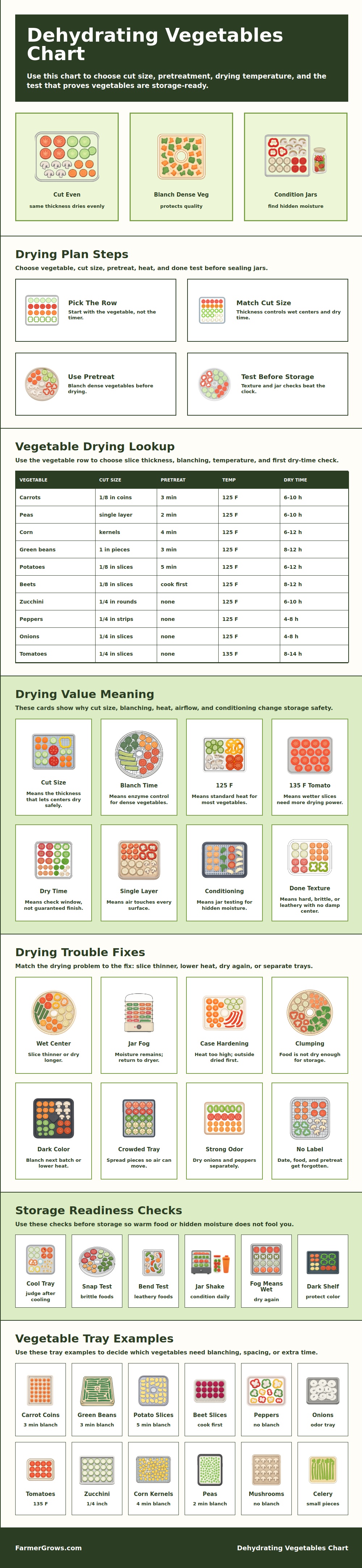
Dehydration is a method that can be used to remove water from vegetables. Additionally, dehydration is a method that can be used to prevent vegetable from decaying. By removing the water from the vegetables, the vegetables will contain enough moisture to last for a longer period of time in you pantry.
You can use dehydration to store any surplus vegetable that you may grow in your garden, however, you must use this method correctly in order to ensure that the vegetables will not decay while they is being stored. If you do not remove enough water from the vegetables, mold will grow on the vegetables and make those vegetables unsafe to eat. However, if you remove too much water from the vegetables, the vegetables may begin to char and lose there nutritional value.
How to Dehydrate Vegetables
Preparation is one of the first step that you will take in the dehydration process. In order to prepare the vegetables for dehydration, you will need to cut the vegetables into uniform piece. You must ensure that all of the vegetable pieces is the same size in order to ensure that they will dry equally during the dehydration process.
If some vegetables are dried while others are not because of the size of the vegetables, then some of the vegetables may be charred while others are not. Some vegetables require blanching prior to dehydration. Blanching is the process of placing the vegetables in boiling water for short period of time, followed by placing the vegetables in an ice bath.
Blanching vegetables stop the enzymes in the vegetables that can lead to the vegetables losing their flavor and color. Vegetables that are dense to the touch, like corn and peas, contain enzymes that cause them to lose their vibrant color when exposed to these enzymes. Additionally, vegetables like beets is also dense and require a full cooking process prior to dehydration since the air cannot penetrate the raw vegetables.
Temperature is another variable that you can control during the dehydration of vegetables. Most vegetables will require a steady, moderate temperature to dry. However vegetables that contain high amounts of moisture, like tomatoes, may require higher temperatures to extract the moisture at a faster rate.
Temperatures that are too high during the dehydration process, however, can lead to case hardening; the drying of the vegetables outside causes the vegetables to harden, trapping moisture within the vegetables and causing them to decay. In addition to avoid relying on the vegetables to tell you when the dehydration process is complete, there are some tests that you can perform to ensure that the vegetables have dried. Hard vegetables can be snapped to test the texture of the vegetables to ensure they are dry, while soft vegetables can be bent to check for dryness.
Additionally, the vegetables should not be warm to the touch while dehydration is occurring. If the vegetables are warm, they will release steam and condensation on the jar in which the vegetables are place. If condensation is present on the jar, you should place the vegetables back into the dehydrator to continue the dehydration process.
The last step in the dehydration process is storage. Prior to storage, you should condition the vegetables; this means placing the vegetables into a jar and shaking the jar periodically over several days. By shaking the jar containing the vegetables, you can ensure that the vegetables are dry by observing the sides of the jar.
If the sides of the jar remains clear, the vegetables are dry. However, if the sides of the jar appear to be cloudy, the vegetables still contain moisture. At this point, you can store the vegetables into the pantry, and once you rehydrate them by adding them to a soup or stew, they can be eaten throughout the winter month.