
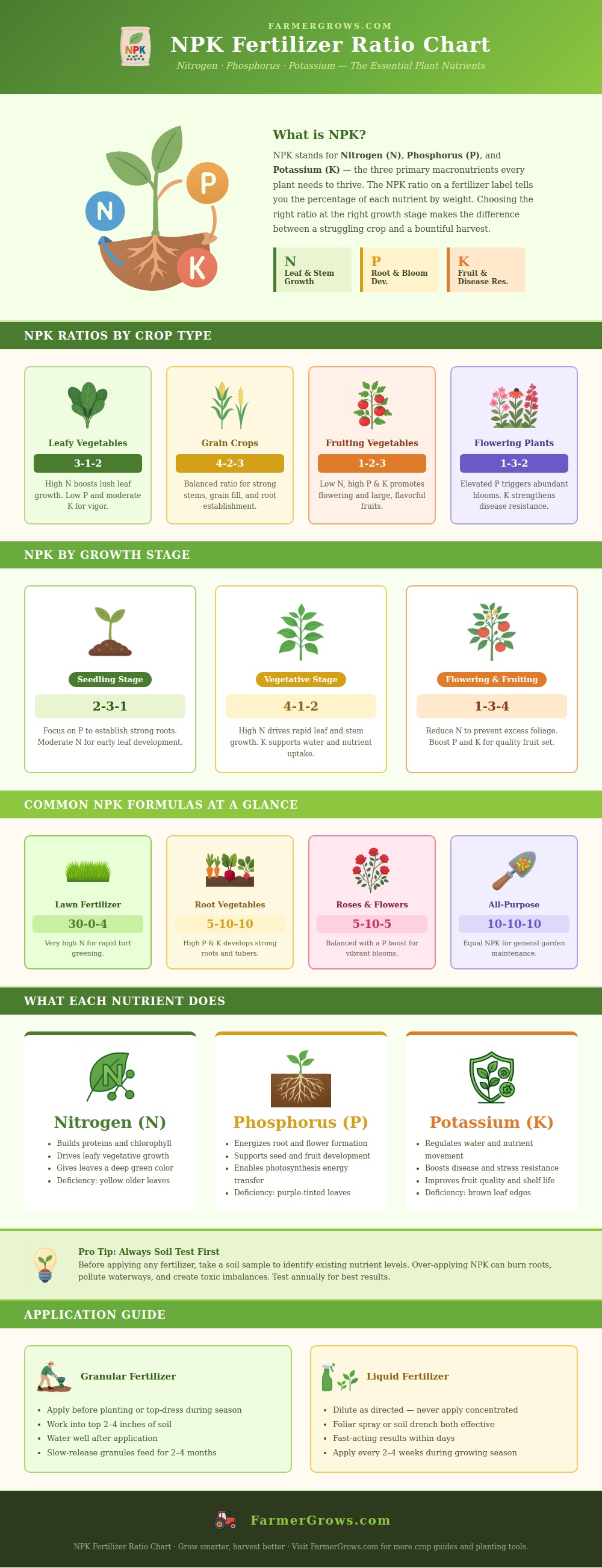
Every fertilizer label gives information about its N-P-K content. That is the amount of nitrogen, phosphorus, and potassium, always listed in that order. The numbers show the percentage of each nutrient by weight in that particular fertilizer blend.
So a fertilizer with an N-P-K ratio of 2-2-4 contains 2% nitrogen, 2% phosphate (which contains phosphorus), and 4% potash (which contains potassium). A 16-16-16 fertilizer contains 16% nitrogen, 16% phosphorus, and 16% potassium. A fertilizer that is 6-4-4 contains 6% nitrogen, 4% phosphorus, and 4% potassium in its concentrated form.
What NPK Numbers Mean and How to Choose Fertilizer
If a 100-pound bag has an N-P-K ratio of 5-7-4, it contains 5 pounds of nitrogen, 7 pounds of phosphate, 4 pounds of potash, and 84 pounds of filler
NPK ratios are simply a by-weight ratio. So every 100 grams of a 1-1-1 fertilizer has 1 gram of N, P, and K in it. The difference between a 1-1-1 fertilizer and a 5-5-5 is that the ratio of nutrients in both is exactly the same, 1-1-1.
An NPK value of 20-10-10 has twice as much nitrogen as phosphorus or potassium, so the ratio is 2:1:1. To get the ratio, divide all three numbers on the label by the smallest number.
A 3-1-2 ratio is considered ideal for most plants. Research has shown that all plants use the major elements in a 3:1:2 ratio. The Miracle-Gro Water Soluble All Purpose Plant Food has a ratio of 24-8-16, which fits into studies that found the ideal nutrient ratio for flowering plants is 3-1-2.
The Expert Gardener All-Purpose Water Soluble Plant Food also has an NPK of 24-8-16. The ideal NPK for citrus is 5-1-3.
Selecting the right ratio depends on what plant is being fertilized. Different plants need different amounts of nitrogen, phosphorus, and potassium. To encourage plants to root, a fertilizer higher in phosphorus works best.
High-potassium fertilizer is vital during flowering and fruiting stages. Using potassium in the correct ratios strengthens water-use efficiency and helps plants recover from drought or temperature stress.
A balanced fertilizer like 10-10-10 works for routine maintenance. High-nitrogen formulas help with leafy growth, and higher phosphorus or potassium blends work for root or reproductive stages. The ratio of ammoniacal nitrogen to nitrate nitrogen in a fertilizer also affects growth characteristics.
Whether NPK sources are synthetically derived or organically derived can affect growth and timing of nutrient delivery too.
For previously fertilized gardening soil, nitrogen is often the main thing needed. Getting a soil test helps confirm what is actually required. Long-term granulated fertilizer used according to the instructions is what gardeners really need in terms of NPK fertilization.
Actual healthy soil may have these nutrients in merely hundreds of parts per million, so spreading fertilizer greatly dilutes the potency