
Square foot gardening shares the garden in little one-foot squares. In each of them you plant separate crop according to planned intervals for best growth This method Mel Bartholomew created in the 1980s, planting different vegetables in separate squares.
It works especially for cities, where lacks enough plant-space. The principle itself is easy: you share raised bed in one-foot sections and arrange plants according to advised distances. Like this you ease the planning, avoid space waste and control maintenence, which mostly helps newcomers.
Easy Square Foot Gardening
Arrange the garden square, no rows. Use 4×4-foot areas for good plan. Build boxes for keep soil above ground, and space them in 3 feet for paths.
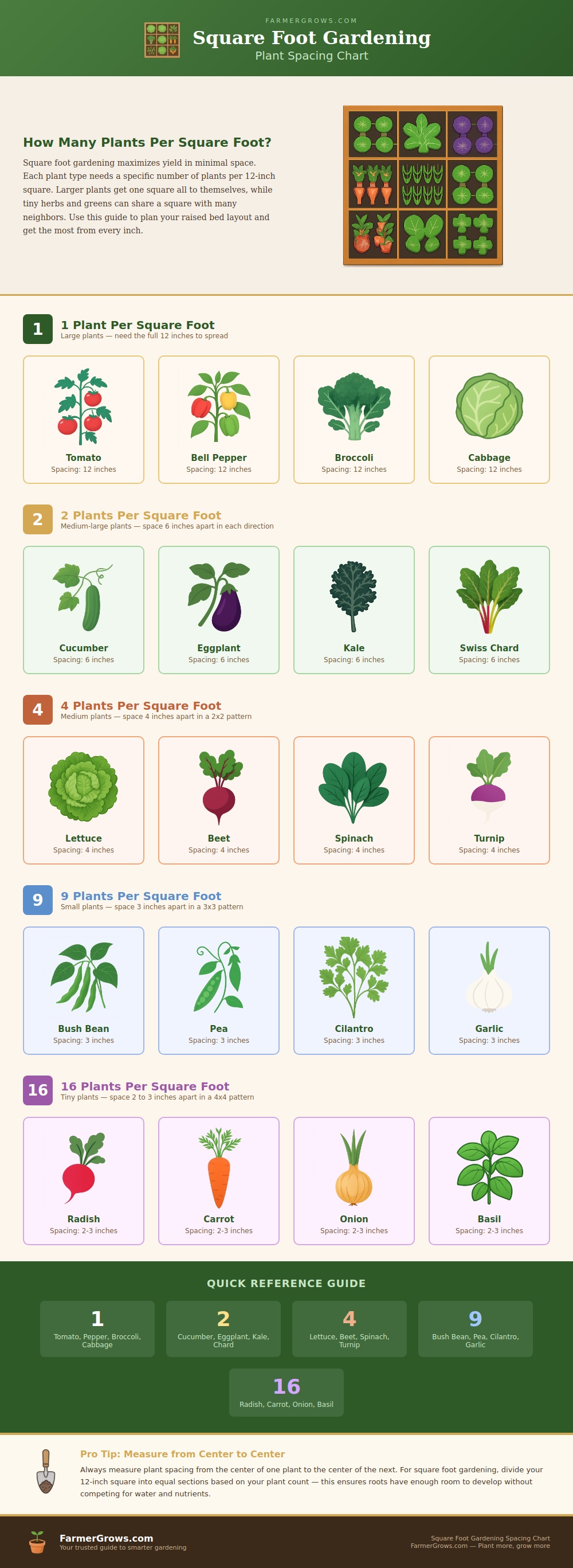
Than measure rows and guess distances, you share squares according to how many plants fit one foot area comfortably. Use simple rule for intervals: 1, 4, 9 or 16 plants for square according to size. One square receives 1 very big vegetable, 4 big, 9 medium and 16 little.
Big plants require a lot of space for good growth, so only one fits for foot square.
In 3-inch distance, until 16 plants enter in one square. Guidelines on seed packets point spaces between plants. For instance, for onions with 8-inch label, leave only 8 inches around each instead of more between rows.
Tomatoes receive one square, because they require around 18 inches. Plant herbs as basil in adjacent squares around tomatoes. Dwarf ‘Tiny Tim’ tomato requires one foot area, but 4 dwarf tomatoes in four squares give richer weekly harvest.
One advantage is control of diseases. Pathogens, that attack tomatoes, less probably destroy everything, when tomatoes stand between non-tomatoes and isolated in separate squares several feet apart. This operates more effectively than traditional gardens with whole group of tomatoes in one area.
Fertile soil with plenty of compost is needed. Water it regularly and remove yellow or falling leaves for control mold. Cucumbers receive powdery mildew if too wet.
Consider size and growth habits of plants, so that big do not shade little. For maximum harvest from little area, plan harvesttimes of squares.