
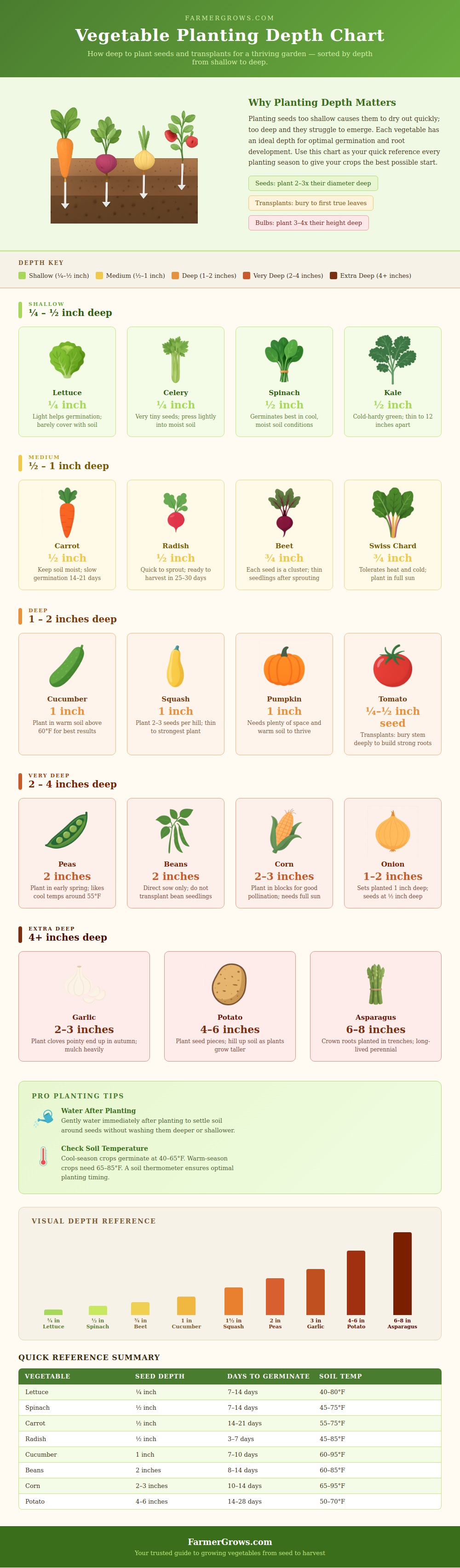
Getting the planting depth right can truly make the whole success of your harvest. Seeds planted too shallow stay dry, suffer wind or never form strong roots. If you go too deep, you risk rot, slow germination or plants that waste energy only to reach the surface.
Many gardeners do not talk a lot about that but it is one of those early factors that matters more than you think.
How Deep to Plant Seeds and Roots
Each vegetable seed requires its ideal depth for planting. The usual advice is planting them three times the size of the seed in the ground. Although double also works well for many.
Note that too deep planting commonly slows germination and wastes energy that seedlings could use for growth.
For root depth, most vegetables do well in the upper 6 to 12 inches of ground. Even so plants that go a bit more down commonly give better results. Around 6 to 8 inches is the zone where happens the main root activity for typical crops.
Carrots, big root vegetables, benefit from bigger depth, but almost all roots (95 percent) stay in that upper layer, so 6 inches are a popular standrad among gardeners.
Plants with shallow roots as chives and radishes work perfectly for tins and window gardens, they do not require much ground. Pumpkins? Entirely other cause.
For shallow-rooted vegetables you will want tins at least 6 inches deep. Lettuce, spinach, peppers, pea, basil and coriander all did well in my 8-inch window boxes.
For raised beds the usual advice is start with 6 to 12 inches. Root vegetables as carrots or potatoes like more, near 12 to 18 inches. Many gardeners aim for at least 12 inches for general use.
For heavy eaters, deep-rooted plants or crops sensitive to drought, go to 18 to 24 inches. No need for two-foot beds, but 18 inches open more possibilities for growing.
Here the interesting part: given chance, roots push down between 2 to 6 feet. Commonly the maximum depth matches or surpasses the height of the plant in full size. A strong tomato plant can send roots three feet down and side ways.
Most vegetables would go more than a foot down if they could, but they do not require that for good yields.
For deep-rooted crops I had success starting with 8 inches of raised bed soil, later adding 12 inches or more natural soil below, roots then can keep growing. Tilling and turning stops the soil life, what inhibits good yields and water holding. Healthy ground gives healthy plants.
Cover of 1 to 2 inches organic mulch help against weeds, and rotation of crops each season keep pests away.