🐄 Cattle Age Calculator
Determine cattle age from birth date or estimate from teeth — includes life stage and productive years
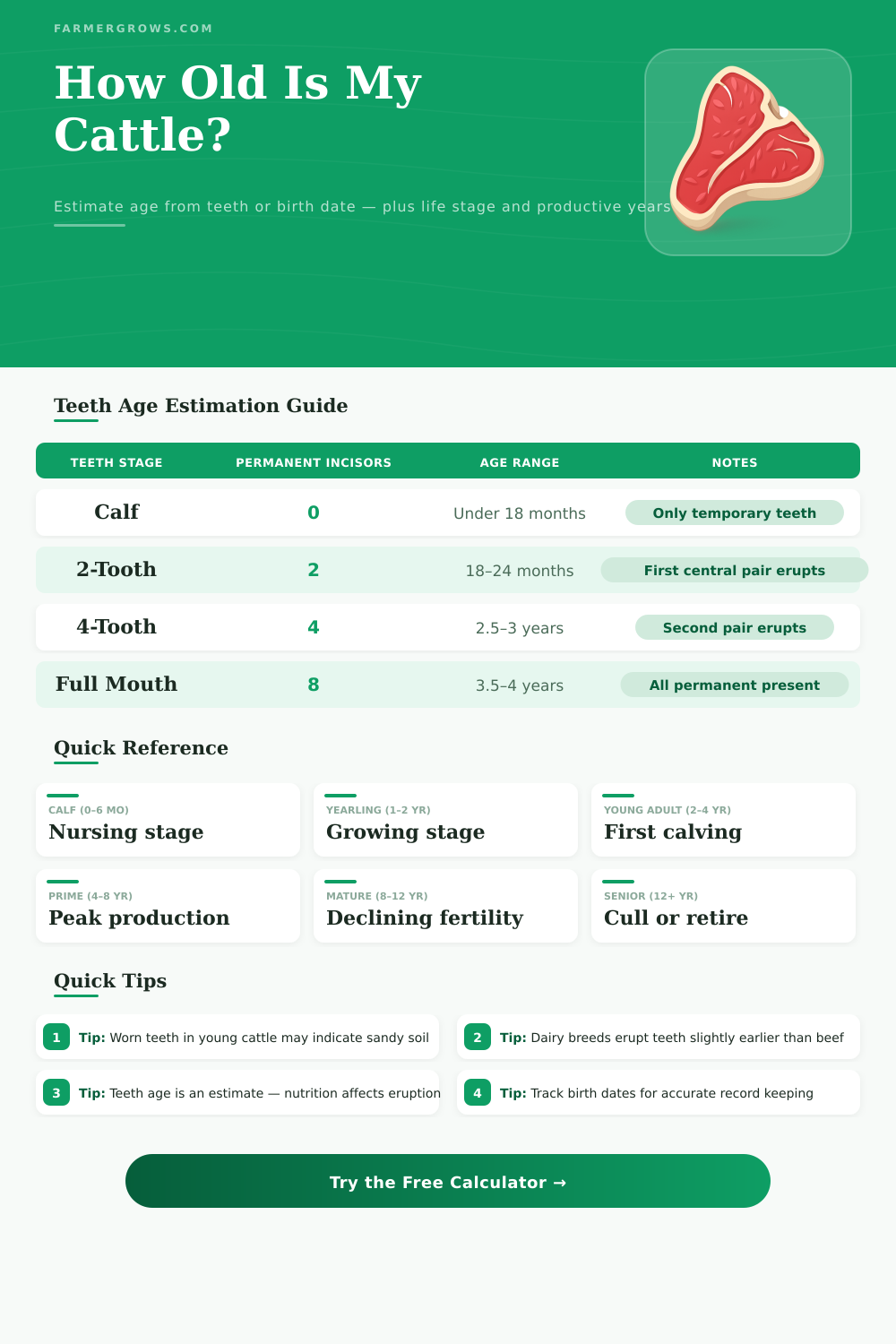
| Teeth Stage | Permanent Incisors | Age Range | Notes |
|---|---|---|---|
| Calf | 0 | Under 18 months | All temporary milk teeth present |
| 2-Tooth | 2 | 18–24 months | First central pair erupts |
| 4-Tooth | 4 | 2.5–3 years | Second pair of permanent incisors erupts |
| 6-Tooth | 6 | 3–3.5 years | Third pair erupts, laterals |
| Full Mouth | 8 | 3.5–4+ years | All permanent incisors present, then wear adds age |
| Full Mouth Light Wear | 8 (light) | 4–5 years | Slight flattening of enamel |
| Full Mouth Moderate Wear | 8 (moderate) | 5–7 years | Noticeable wear surfaces visible |
| Full Mouth Heavy Wear | 8 (heavy) | 7–9 years | Significant wear, teeth shortening |
| Full Mouth Very Heavy | 8 (very heavy) | 9+ years | Teeth worn to gum level, breaking |
| Life Stage | Age Range | Weight Range (Beef) | Management Notes |
|---|---|---|---|
| Calf | 0–6 months | 80–500 lbs | Nursing, creep feed, vaccinations |
| Weaning | 6–8 months | 400–600 lbs | Weaning stress, stocker or backgrounding |
| Yearling | 1–2 years | 600–1000 lbs | Growing phase, first breeding heifers |
| Young Adult | 2–4 years | 900–1300 lbs | First calving, reaching mature frame |
| Prime | 4–8 years | 1100–1500 lbs | Peak production, optimal fertility |
| Mature | 8–12 years | 1000–1400 lbs | Declining fertility, evaluate culling |
| Senior | 12+ years | Varies | Reduced production, cull or pasture retire |
| Age | Reproductive Milestone | Management Action |
|---|---|---|
| 0–3 months | Nursing calf | Vaccinate, tag, record birth |
| 6–8 months | Weaning | Wean, backgrounder or feedlot entry |
| 14–15 months | First estrus cycle in heifers | Expose to bull or sync for breeding |
| 24 months | First calf born (heifers) | Extra monitoring, assistance if needed |
| 3–8 years | Peak reproductive efficiency | Maintain BCS 5–6, annual preg check |
| 8–10 years | Reproductive decline begins | Evaluate production, consider culling |
| 12+ years | Significantly reduced fertility | Cull or retire to low-input pasture |
Knowing cattle age helps in management and marketing. The value of replacement and market cows usually sinks when they age. Records about birth of cattle should be kept and moved together with the animals during their pass from one farm to another
Cattle under 11 months are calves. They leave the mothers when they weigh 450 to 700 pounds. Around a third of female calves stay on the farm to grow and become new mother cows.
Why Knowing Cattle Age Is Important
Male calves can enter the beef production cycle as steers or stay as bulls for future breeding.
In 2 years cattle are fully grown. Then most females bear first, if used for farming. Normally heifers are bred in 15 months for most breeds, except Brahman and Brahman-type cattle, that should not be bred until 18 months.
Most heifers are ready in 15 months or 65% of mature weight. Heifers with first calves in 2 years have longer productivity than those at a older age. Although heifers reach different percentages of mature weight, they must have 85% to 90% of it when they bear the first calf in around 2 years.
In United States beef cattle are commonly processed between 18 and 30 months. This range ensures wanted size and maturity for meat. After 30 months parts of the body require special treatment because of BSE risk material.
Age in the body is estimated according to skeletal maturity of tips or buttons in thoracic vertebrae.
Older animals are widely tougher than youngsters. They exercise more and connective tissues harden and toughen. Bulls show age differences, because hormones of mature males mark the meat.
You estimate age of a cow according to tooth wear in the mouth. After 4 to 5 years you use guesses instead of accuracy. It varies according to food.
Old cattle commonly seem thin when teeth wear out, painful joints make them limp, eyes are dull, cheeks droop and wrinkles appear.
Good cows can produce for more than 20 years. Dairy cows live average 5 to 6 years, although not rare those passing 10 years stay productive. At 12 years reproductive impact drops sharply.
Reproduction depends on age, space and health ofanimals.