🌶 Pepper Plant Sun Requirements Calculator
Find out if your garden gets enough sun for your pepper variety — with yield, heat, and suitability ratings by climate
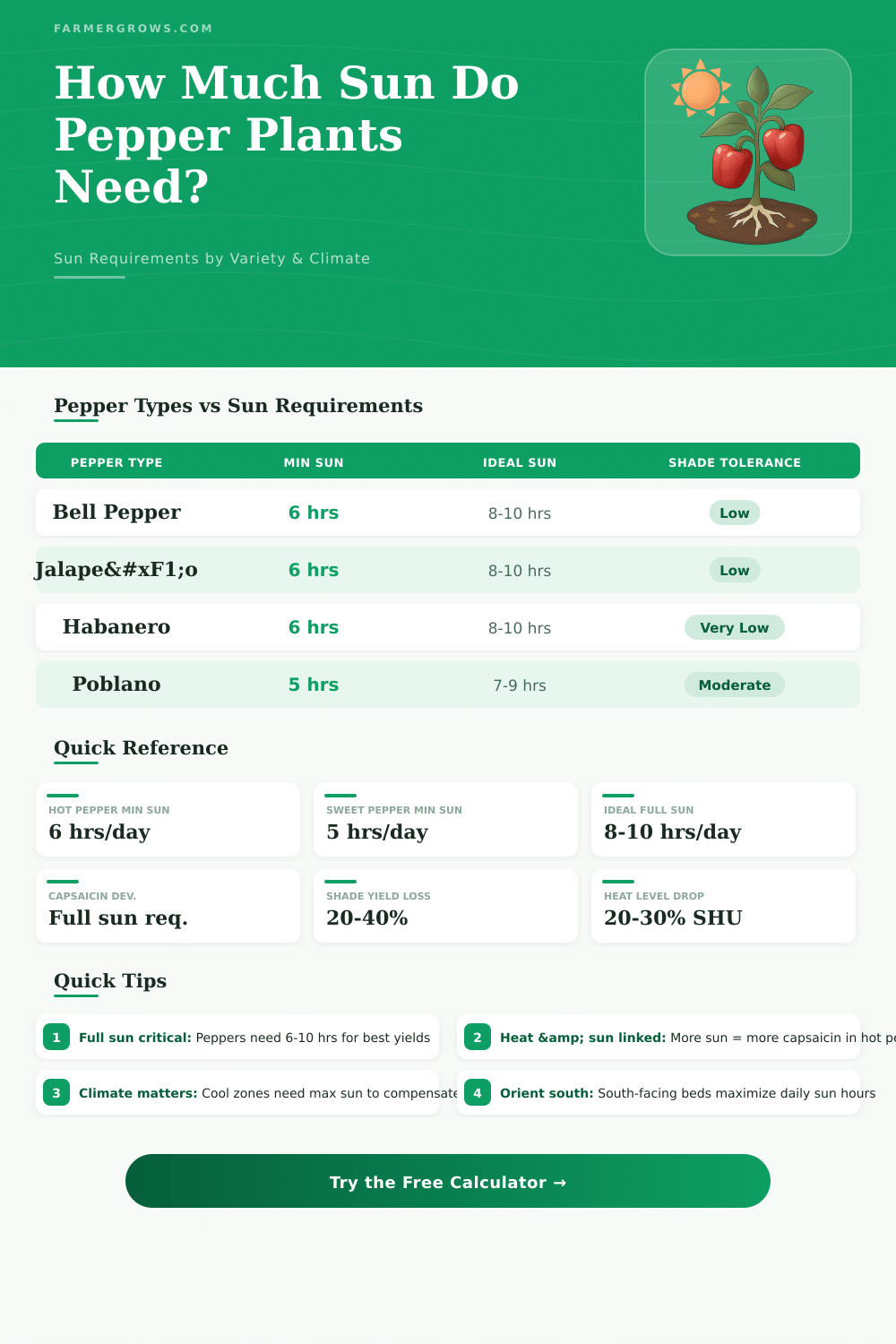
| Pepper | Min Sun | Ideal Sun | Shade Tolerance | Heat Level | Yield Impact in Shade |
|---|---|---|---|---|---|
| Bell Pepper | 6 hrs | 8–10 hrs | Low | None (sweet) | Fewer, smaller fruits |
| Jalapeño | 6 hrs | 8–10 hrs | Low | Medium (2,500–8,000 SHU) | Reduced yield & heat |
| Serrano | 6 hrs | 8–10 hrs | Low | High (10,000–23,000 SHU) | Significant yield drop |
| Cayenne | 6 hrs | 8–10 hrs | Low | High (30,000–50,000 SHU) | Lower heat & yield |
| Habanero | 6 hrs | 8–10 hrs | Very Low | Very High (100,000–350,000 SHU) | Major heat & yield loss |
| Banana Pepper | 5 hrs | 7–9 hrs | Moderate | None–Mild (0–500 SHU) | Moderate yield drop |
| Poblano | 5 hrs | 7–9 hrs | Moderate | Low–Medium (1,000–2,000 SHU) | Moderate yield drop |
| Sweet Frying | 5 hrs | 7–9 hrs | Moderate | None (sweet) | Smaller, fewer fruits |
| Thai / Bird’s Eye | 6 hrs | 8–10 hrs | Low | Very High (50,000–100,000 SHU) | Major heat & yield loss |
| Orientation | Avg Daily Sun | Sun Type | Pepper Suitability | Best Varieties |
|---|---|---|---|---|
| South-Facing | 8–12 hrs | Full Sun | Excellent | All types; ideal for habanero & cayenne |
| West-Facing | 5–8 hrs | Full–Partial Sun | Good | Bell, jalapeño, banana, poblano |
| East-Facing | 4–6 hrs | Partial Sun | Adequate–Marginal | Banana pepper, poblano, sweet frying |
| North-Facing | 2–4 hrs | Partial–Full Shade | Poor | Not recommended for peppers |
| South Wall / Reflective | 10–14 hrs | Full Sun + Radiant | Outstanding | Habanero, Thai, cayenne, serrano |
| Zone | Season Length | Effective Sun | Recommended Types | Notes |
|---|---|---|---|---|
| Cool (Zones 4–5) | Short (90–120 days) | 88% of actual hrs | Bell, banana, poblano | Maximize sun; use reflective mulch & row covers |
| Moderate (Zones 6–7) | Medium (130–160 days) | 100% of actual hrs | All types work well | Standard baseline; most varieties suitable |
| Warm (Zones 8–9) | Long (170–200 days) | 105% effective | All types; hot peppers excel | Longer season amplifies sun benefit |
| Hot / Tropical (Zones 10+) | Year-round | 110% effective | Habanero, Thai, cayenne, serrano | Ideal for tropical hot peppers; watch for heat stress |
Peppers simply benefit from sunshine, because like this they work naturally. But here it becomes difficult: how much exactly they need, and what happens if they get too much or too little? The answer depends mainly on the kind of peppers that you grow, and on your growing surroundings.
The most many types of pepper plants benefit best with around six to eight hours of direct sun daily. That amount of light gives them the needed energy for growing strong and healthy. If the light drops under six hours the harvest will drop clearly.
How Much Sun Do Pepper Plants Need?
Many gardeners aim for eight to twelve hours of direct sun, especially to reach top output. The reason is simple: the sun drives the growth process and the forming of roots and fruits, which is key for reaching good amounts of production.
If pepper plants do not get enough direct sun, their intake of water slows down. That causes crashes in the ground airflow and reduces the whole water loss. But really, the main problem is the lack of energy…
The plant does not have enough to work at full force. That leads to weak roots, low yield and general problems for teh whole plant. Even so, a bit of production is possible even with limited light.
Say, a balcony gets only two to three hours of direct sun? It still can give peppers, although the results range a lot. One plant maybe gives only some peppers, while another outside produces thirty or more during the whole season.
Black pepper plants work differently. They favour partial sun, around three to six hours of direct light daily works well. If you put them in heavy, strong sun, the leaves can burn; if you limit the light too much, the growth becomes slow, and the yield drops.
Here something unlikely: shade fabric really is useful in some cases. When scientists tested black plastic shade, the shaded pepper plants grew taller, formed thicker leaves with bigger sheets and gave bigger amounts of fruits, plus they had fewer damages. In very warm regions, where the temperatures reach the middle of ninety degrees or more, peppers like morning sun with a bit of afternoon shade rest.
Forty percent shade cloth becomes your best friend during burning hot summers, if the plants stay well watered.
Another important problem is the sunburn, that you must watch. It happens, when strong sunshine hurts the tender plant fabric. Young leaves and exposed fruits are most in danger.
Strong light together with fast growth can cause it, if the fruits are not right shaded.
Plants that are not used to direct sun, need slow change first. Young plants are ready for outside move, after they grew at least six good sets of leaves. Light tree-shade works well for the change phase.
During strong UV-days, plants not used to sun can burn in only fifteen minutes, no lie. Red and blue wavelengths show to be especially useful for their growth. If natural light lacks, grow lights can help and fill those gaps.
The winning recipe? Six hours of sun, the right light range and a bit of closetuning keep pepper plants happy.