🌱 Pea Watering Calculator
Find out exactly how much water your pea plants need based on type, growth stage, soil, and climate conditions
| Growth Stage | Water Per Week | Frequency | Notes |
|---|---|---|---|
| Seedling (1–3 wk) | 0.5 in (13 mm) | Light, daily | Keep soil moist but not waterlogged |
| Vegetative (3–6 wk) | 0.75–1 in (19–25 mm) | Every 2–3 days | Encourage deep root growth |
| Flowering (6–8 wk) | 1–1.5 in (25–38 mm) | Every 2 days | Critical period – do not var dry out |
| Pod Development (8–10 wk) | 1–1.5 in (25–38 mm) | Every 2 days | Consistent moisture for plump pods |
| Mature / Harvest (10+ wk) | 0.5–0.75 in (13–19 mm) | Every 3–4 days | Reduce watering as plants decline |
| Soil Type | Drainage Speed | Water Retention | Watering Adjustment |
|---|---|---|---|
| Sandy | Fast | Low | +30% more water, more frequent |
| Loamy | Moderate | Good | Baseline – no adjustment |
| Clay | Slow | High | -20% less water, less frequent |
| Silty | Moderate–Slow | Good–High | -10% less water |
| Symptom | Over Watering | Under Watering | Action |
|---|---|---|---|
| Leaves | Yellowing, wilting | Curling, crispy edges | Adjust frequency and amount |
| Stems | Soft, mushy base | Thin, woody early | Check soil drainage |
| Flowers | Blossom drop | Few or no flowers | Consistent moisture at flowering |
| Pods | Rot, mildew | Flat, tough pods | Water deeply at soil level |
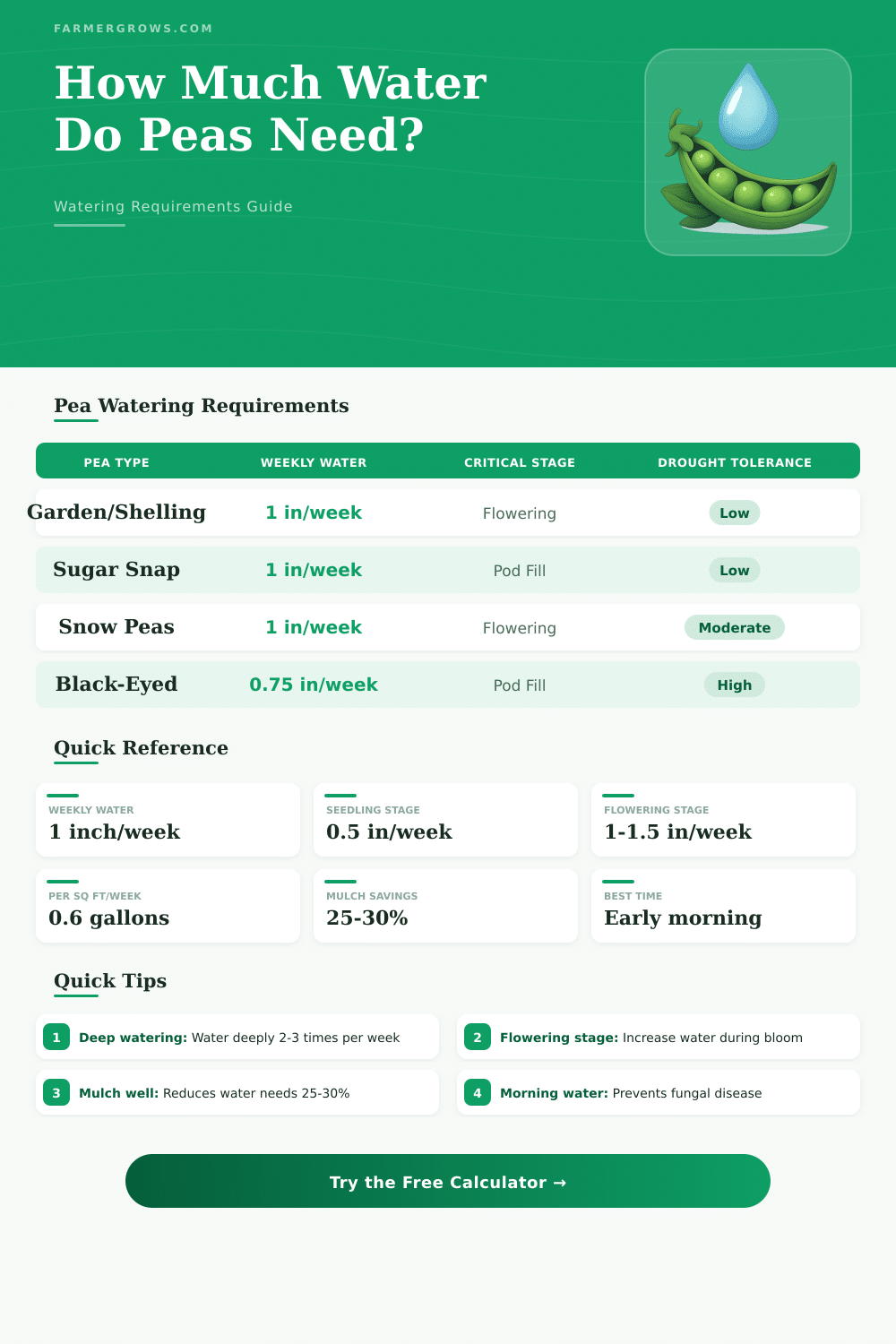
Peas do not require a lot of Water but finding the right amount requires more attention than one thinks. Many growers notice that around one inch per week, counting rain. Is enough to keep the Peas happy.
The time of watering is equally important. If you Water in the early morning, the plants have time to dry before the night, which stops molds and other funguses.
How to Water Peas
For Peas in jars that stand in partial light inside small tins, I found that almost half a cup each nine days works well. Peas in field or sweet types in similar setups follow the same pattern. Even so, growing in tins has its own rhythm compared to ground beds.
The heat speeds up drying quickly, so Peas in jars maybe require watering more often during hot days, to avoid that they dry entirely.
Too much Water? Here is the most common mistake among folks. The roots rot soon when Peas drain too much, and seeds of Peas are especially sensitive to too much moisture.
The most reliable way is to wait before you Water, until the ground surface feels dry to touch. Too much Water brings mold and fungus problems, that spread quickly. When funguses exist and grow, they require only half an inch per week to stay under control.
The kind of soil matters a lot hear. Sandy soil requires more frequent watering, because it does not hold moisture. On the other hand, all seeds require enough moisture to sprout, so it is a balanced task.
Adding rotting material or other organic stuff strengthens the ability of soil to hold Water well. A thick layer of mulch… Say three or four inches, from grasses or straw helps to keep moisture and also stops unwanted grasses.
Steady watering is important when Peas start to grow. Wait until almost half of the available moisture is used, then Water again. The need becomes even more key during the flowering and when the pods form, then they thirst most.
If you skip watering during warm and dry period of flowering? The leaves will become pale, and you will get fewer flowers, which shrinks your harvest. When the temperatures climb, deep watering almost daily becomes needed.
Remember, Peas are season crops for cool periods, so they get stressed when real summer heat comes. Drooping plants that seem tired usually only need a good drink.
Several ways of watering work well depending on your setup. A regular garden hose with a spray head gives flexibility and control over the flow. Drip watering is another good option.
It directs Water directly to roots and reduces loss from drying. Any method you choose, keep the spray lightweight and aim at the soil around thebase instead of flooding the leaves. Dry leaves stop diseases and help grow stronger roots.
One extra tip: soak seeds a bit before planting can boost the sprouting and give your plants a good start.