
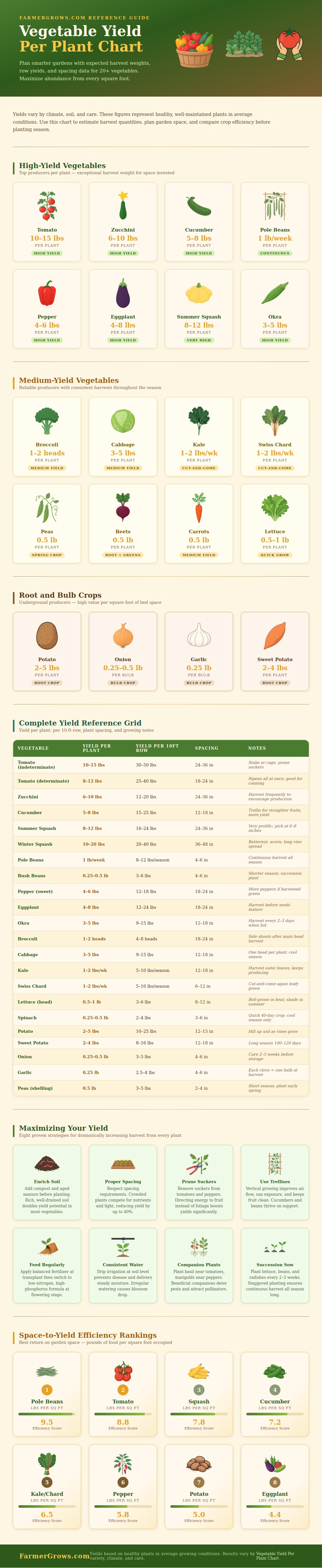
Yield per plant is a measurement of how much food that a specific plant will produce within a specific amount of space. In order to increase the amount of food that you grow in your garden, you should select plants that has high yields per plant. High yields per plant means that the plant will produce many pound of food relative to the square footage of the plant within the garden plot.
Some plants that produce a large amount of food include plants like zucchini and cucumbers. These two plants grows on vines, and each of these vines will produce many pounds of produce during the gardening season. Additionally, you should harvest these plants frequent to encourage them to continue producing food for the garden; if the gardener does not harvest them, they will produce less food during that season.
How to get more food from each plant
Plants like kale and Swiss chard will produce food for the gardener, as well. These plants grows leafy greens that you can harvest by snipping the leaves that are growing outward from the plant. By snipping these leaves, the kale and Swiss chard plants will continue to grow more leaf.
Thus, food can be harvested without having to replant these plants. While the amount of food that is harvested from these two plants at once may not appear to be large, the total amount of food that is produced throughout the growing season will increase. Plants like potatoes and sweet potatoes require that their roots grow underground into the soil.
Because of this, they are an efficient crop to grow within small plots or beds within the garden. Additionally, plants like onions and garlic also have their roots grow underground. Furthermore, these two plants require very little space within the garden plots, as.
They also produce reliable yields throughout the season, producing their food both early in the season as well as late in the season. In addition to the type of plants that are grown within the garden plots, there are other factors that will impact the yield per plant within those plots. For instance, plants like tomatoes require that the plants have enough space within the garden to allow for the plants to circulate air and to expose the plants to the sunlight that they require in order to produce tomatoes.
If the plants are planted too close together within the plots, the tomato plants will compete for air and sunlight, which will reduce the yield of the plants. Plants like beans, however, grow vertically. Thus, beans can be planted along a trellis in the garden plots, which will allow the beans to grow vertical rather than take up much of the ground space within the plots.
Efficiency rankings can be established for the crops that are to be grown within the plots. For instance, beans that grow vertically may have high rankings in efficiency because they produce food continuously, as well as do not take up much of the space within the plot. Tomatoes may rank high on the efficiency scale, as well.
However, they require more space and more maintenance for their growth than vertical beans. Plants like squash and cucumbers also have high yields of food, but require more space to grow their roots. Beyond these efficiency rankings for various plants, there are other environmental factors that may impact the amount of food that is produced by those plants.
For instance, the climate within the region where the plants are grown will impact the yields of those plants. Plants like okra and peppers is grown best in hot climates. In contrast, plants like peas and lettuce grow best in cool climates.
The soil within the plots in which the plants are grown will also impact the yields of those plants. For instance, you can add compost to the soil to provide nutrients to the plants. If the soil does not contain the nutrients that the plants require for growth, the plants will produce less food.
Finally, the plots should also be watered consistent. If the plants are not watered consistently, they will drop their blossom. Thus, watering the roots of the plants will encourage them to produce more fruit.
Succession planting is another technique that can be implemented into the garden to increase the amount of food that is produced for humans to eat. Succession planting involve planting the seeds for plants like beans at different times during the growing season. Instead of planting all of the seeds for beans at once, the gardener may only plant enough beans to last for several weeks, and then planting more beans after several weeks have passed.
Thus, there will be a steady supply of plants without any significant decrease in the yields of those specific type of plants throughout the growing season. Other methods of increasing the yields of plants within the garden include pruning and fertilizing. For instance, you can prune tomato plants to remove the small shoots that grow out from the tomato plants; these shoots will not produce tomatoes, so their removal will allow the tomato plants to focus upon producing tomatoes.
Additionally, you can plant cucumbers along a trellis so that they will remain clean and can be exposed to more sunlight. Finally, fertilizers can be used to help the plants grow. However, you should use the correct type of fertilizer at the correct time.
For instance, nitrogen will encourage the plants to produce more leaves; phosphorus, however, will encourage the plants to produce blossoms and fruits. Using too much nitrogen during the later parts of the growing season will cause the plants to produce many leaves, but not enough fruits to provide the garden with much food. Beyond using correct methods for planting, growing, and harvesting plants, there are other steps that gardeners who wish to maximize their food production can take.
One such step is to create a plan of the garden layout on paper prior to beginning to plant the seeds. A plan of the garden layout should take into account which plants will grow vertically, which plants will be root crops, and which plants will be sprawling plants. Additionally, you can track the food yields from each of the plants to prepare for the following years garden layout.