
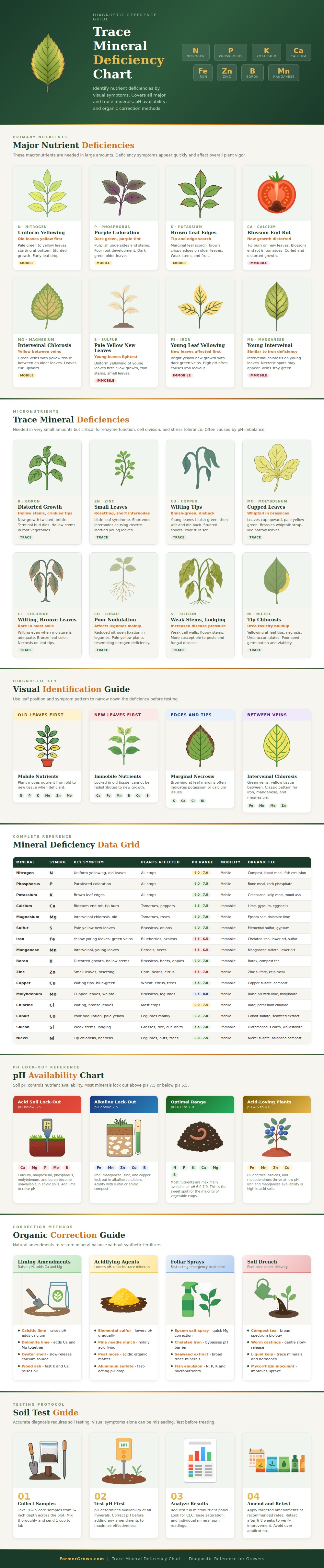
Tomato plants often has yellow leaves at base of the plant that indicate a trace mineral deficiency in the plants. These trace minerals is required for the tomato plants from the soil. Observing the leaves, stems, and fruits of the tomato plant can identify the signs of trace mineral deficiencies in the tomatoes.
By identifying these signs, you can determine the types of trace minerals that are lacking in the soil. The mobility of the nutrients can dictate the way that nutrient deficiency show up on the plant. Some nutrients is mobile, meaning that they move from the older leaves of the tomato plant to the new growth of the plant.
Signs of Missing Minerals in Tomato Plants
The movement of these nutrients allow the tomato plant to utilize the nutrients where it needs them most. If the older leaves of the tomato plant start to developing yellowing of the leaves from bottom to top, this means that the plant is deficient in nitrogen, as nitrogen is a mobile nutrient. However, some nutrients are immobility.
If the new tips of the leaves of the tomato plant start to turn white while the rest of the plant remains green, the tomato plant is likely deficient in an immobile nutrient like iron or boron. This can help dictate whether you should apply fertilizers to the roots or leaves of the tomato plant. Potassium is a nutrient that help to regulate the water and enzyme action of the tomato plant.
If the plant is deficient in potassium, the older leaves of the tomato plant will start to develop brown and scorched edge. This is because the plant sacrifice the nutrients in the edges of the leaves to keep the center of the leaves alive. A potassium deficiency also make the stems of the plant weak.
This is due to the role of potassium in the regulation of water and enzyme action in the plant. The pH of the soil will dictate how much of a trace mineral that the plant can absorb from the soil. If the pH of the soil is too alkaline, the iron becomes unavailable for the tomato plant to absorb.
A deficiency in iron will cause the young leaves of the tomato plant to turn yellow between the veins of the leaves. However, if the pH of the soil becomes too acid, the calcium becomes unavailable to the tomato plant. A calcium deficiency cause blossom end rot in the tomato plants, which results in black sunken spots on the tomato fruits.
Most vegetables grow best in soil with a pH between 6 and 7, as this pH level allow minerals like nitrogen and sulfur to flow freely into the tomato plant. Therefore, you should test the soil pH before you attempt to fix the mineral deficiency in the plant. Tomato plants require a variety of minerals in the soil in small amount.
These trace elements include boron, zinc, and silicon. A boron deficiency will cause the cells in the new growth of the tomato plant to be brittle and twisted. A zinc deficiency causes the leaves of the plant to shrink and the internodes to not grew.
If the plant does not receive enough silicon, the stems of the plant will be floppy and more susceptibility to developing diseases. To diagnose the mineral deficiency in the plant, you should begin with visually inspecting the plant and ending with a soil test. Collect soil samples from various spot in the planting area, mix the samples together, and test the soil.
First, test the pH of the soil. This will allow the soil test to reveal the parts per million of the various mineral in the soil. Add foliar sprays or soil drenches to the plant to address the deficiency quick.
For instance, use Epsom salts to provide magnesium to the soil, or use chelated iron to add iron to the soil if the pH of the soil is high. After treating the plant with mineral-based sprays or drenches, retest the soil after two month to ensure that you have not overcorrected the deficiency for that soil. Avoid adding minerals to the soil without considering the rest of the soil system.
If you add nitrogen to the soil but the pH of the soil is preventing the plant from absorbing the phosphorus, the addition of nitrogen will have no benefit for the plant. Instead, use compost to the soil to encourage the soil biology to chelate the minerals for the plant. Use visual guide to form a hypothesis about the minerals in the soil, but always test the soil to confirm the hypothesis of a mineral deficiency in the soil.