
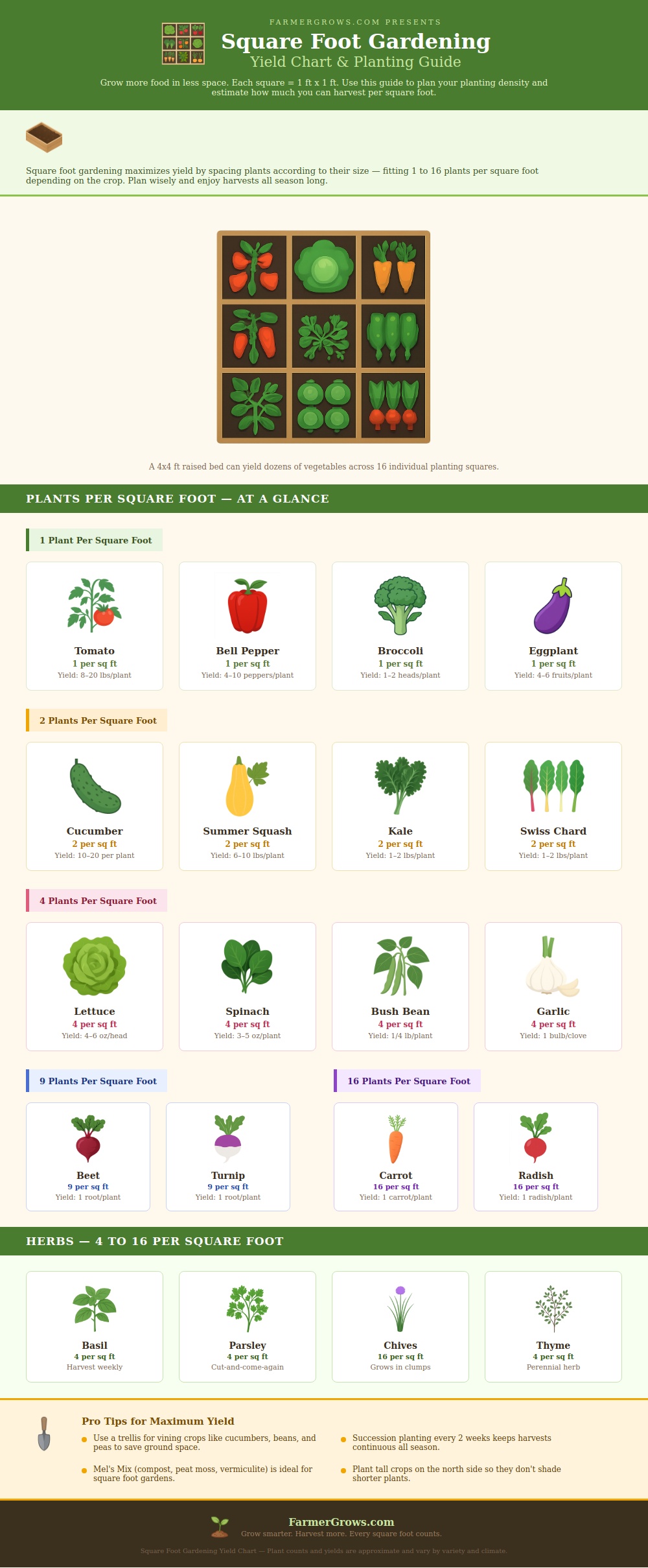
Square foot gardening divides the areas into one-foot squares. Mel Bartholomew popularized it in his book, where he shows how to easily grow tons of food in a small area. With that system you can get a good amount of harvest and big variety for small gardeners
Research shows that square foot gardens give five times more product per square foot than traditional gardens, while they use 80% less soil, 90% less water and require only 50% of work. The Square Foot Gardening Method costs 50% less, uses 20% less space and requires only 2% of the work compared to single row gardens. That is a great advantge for all who want the most product in a small area.
Square Foot Gardening: Grow More Food in a Small Space
Square foot gardening works best with raised beds for high amounts of harvest. In raised beds the soil has good drainage, air and nutrients, which helps to better results. Rich soil supports many plants in a small space.
Deep, rich soil means you plant vegetables closer, so you need less area for a bigger amount of food.
The Square Foot Gardening Foundation points the ideal number of plants for every crop in one square. One tomato is planted per square. Carrots are six per square.
Leafy salads can be sixteen in one square. For tiny vegetables like carrots, salads or radishes, up to 16 plants per square foot gives maximum product. For basil two to four plants per square work well.
One square foot can give up to 16 different crops.
Plants like corn, pumpkins and watermelons require more space than one square. They can crowd the grid or lower the amounts if not planned carefully. Tall plants like tomatoes go north of the bed, medium like peppers in the center and fast low vegetables along the south edge.
Fill the rest with valuable tiny plants like salad, basil or scallions.
The total yield ranges from 0.4 to 1.0 pound per square foot for many vegetables and fruits, including spring, summer and fall harvests. For example, the square foot garden of Rosalind Creasy gave more than 235 pounds in one summer season. With spring and fall crops you can reach triple that amount or more.
In tight space resources compete, so amount per plant can be lower. Following the books carefully helps maximize the product for a given area with minimal upkeep.