💧 Sprayer Nozzle Calculator
Calculate the correct nozzle flow rate, application volume, and nozzle size for any spray job
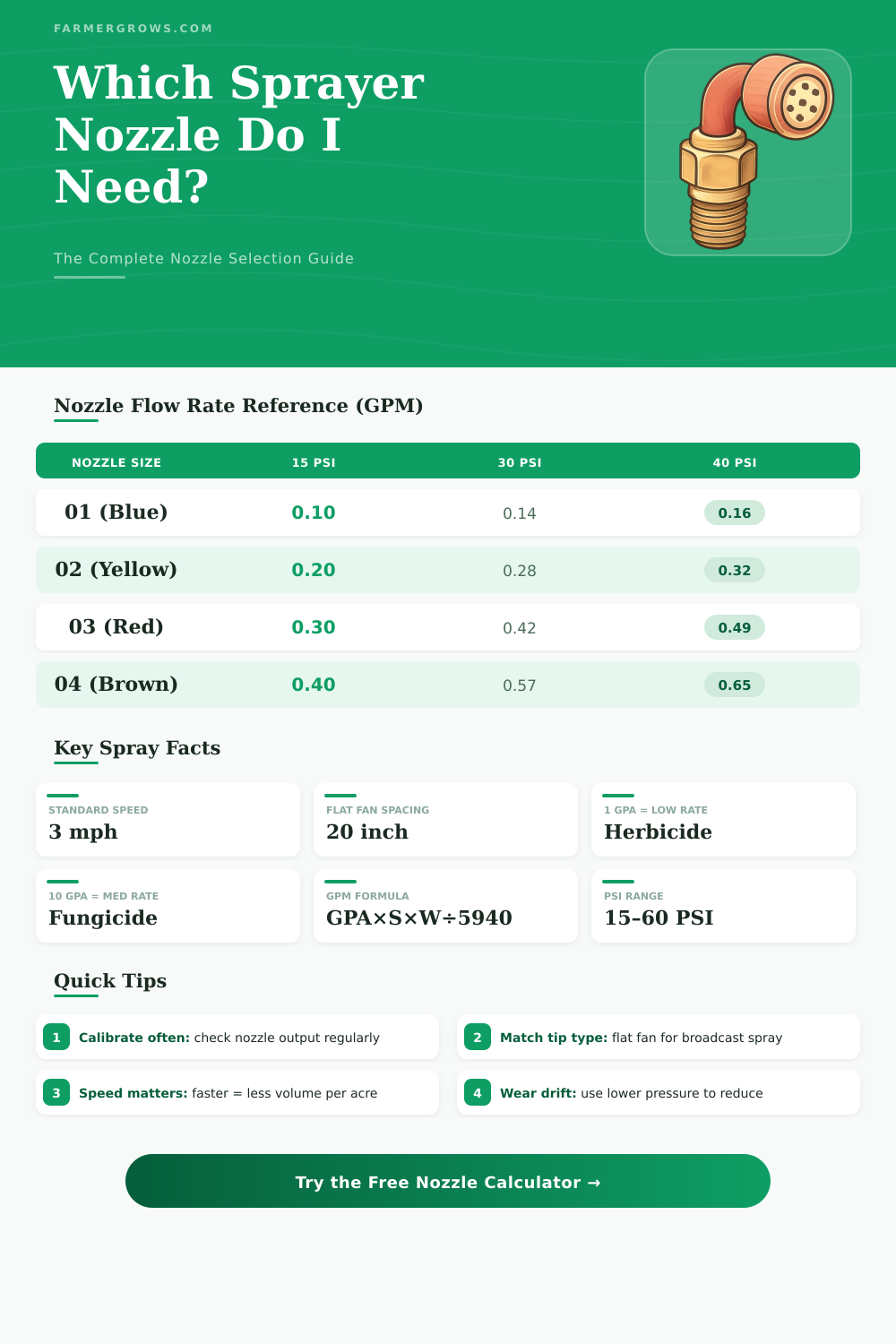
ISO color-coded nozzles rated at 40 PSI (2.76 bar). Output doubles when pressure quadruples.
| Nozzle Size | 15 PSI | 20 PSI | 30 PSI | 40 PSI | 60 PSI |
|---|---|---|---|---|---|
| 01 (Orange) | 0.077 | 0.089 | 0.110 | 0.126 | 0.155 |
| 015 (Lt Blue) | 0.116 | 0.134 | 0.164 | 0.189 | 0.232 |
| 02 (Yellow) | 0.155 | 0.179 | 0.219 | 0.253 | 0.309 |
| 025 (Purple) | 0.193 | 0.224 | 0.274 | 0.316 | 0.387 |
| 03 (Red) | 0.232 | 0.268 | 0.328 | 0.379 | 0.464 |
| 04 (Brown) | 0.309 | 0.357 | 0.437 | 0.505 | 0.619 |
| 05 (Gray) | 0.387 | 0.447 | 0.547 | 0.632 | 0.774 |
| 06 (White) | 0.464 | 0.536 | 0.656 | 0.758 | 0.928 |
At 20-inch nozzle spacing and 30 PSI. Formula: GPA = (GPM × 5940) ÷ (Speed mph × Spacing in)
| Speed (mph) | Size 02 (Yellow) | Size 03 (Red) | Size 04 (Brown) | Size 05 (Gray) |
|---|---|---|---|---|
| 3 mph | 21.7 GPA | 32.5 GPA | 43.4 GPA | 54.2 GPA |
| 4 mph | 16.3 GPA | 24.4 GPA | 32.5 GPA | 40.7 GPA |
| 5 mph | 13.0 GPA | 19.5 GPA | 26.0 GPA | 32.5 GPA |
| 6 mph | 10.8 GPA | 16.3 GPA | 21.7 GPA | 27.1 GPA |
| 8 mph | 8.1 GPA | 12.2 GPA | 16.3 GPA | 20.3 GPA |
| 10 mph | 6.5 GPA | 9.8 GPA | 13.0 GPA | 16.3 GPA |
| Metric Value | Metric Unit | Imperial Value | Imperial Unit |
|---|---|---|---|
| 1 | L/min (LPM) | 0.2642 | GPM |
| 1 | GPM | 3.785 | L/min |
| 1 | bar | 14.504 | PSI |
| 1 | PSI | 0.0689 | bar |
| 1 | L/ha | 0.107 | GPA |
| 1 | GPA | 9.354 | L/ha |
| 1 | km/h | 0.6214 | mph |
| 1 | mph | 1.6093 | km/h |
| 1 | ha | 2.471 | acres |
| 1 | acre | 0.4047 | ha |
| Spray Application | Typical GPA | Speed (mph) | Pressure (PSI) | Suggested Nozzle |
|---|---|---|---|---|
| Broadcast Herbicide | 10–20 | 5–7 | 20–40 | Size 02–03 |
| Pre-Emerge Herbicide | 15–30 | 4–6 | 25–40 | Size 03–04 |
| Liquid Fertilizer | 5–15 | 6–10 | 15–30 | Size 02–03 |
| Fungicide | 10–25 | 4–6 | 30–50 | Size 02–04 |
| Insecticide | 5–15 | 5–8 | 25–40 | Size 02–03 |
| Orchard / Airblast | 50–200 | 2–4 | 100–250 | Hollow Cone |
| Spot Spray | Variable | Walking | 20–40 | Size 015–02 |
Choosing the size of the sprayer nozzle matters a lot in farming and field spraying. To find the right nozzle size, first estimate the gallons per minute that the nozzle must give and then choose one that in the suggested pressure range delivers this flow. Do not trust the “gallons per acre” ratings that some makers give for their nozzles
Knowing the amount of gallons per minute for the outflow, you can look at charts for nozzle sizes and find the ideal for your particular sprayer. Also many online calculators for nozzle sizes automatically determnie the best.
How to Choose the Right Sprayer Nozzle
All sprayer nozzles follow standard ISO sizes. They usually mark by numbers printed on the nozzle itself and the color. These standards ensure that nozzles of different brands and kinds are comparable.
Simply said, a yellow “02” nozzle in one series has the same flow as a yellow nozzle of another brand or sprayer series. Nozzles are truly universal if you use the standard size.
To choose the right nozzle size, you need three pieces of information, including the travel speed of the sprayer in miles per hour. Usually 3 to 7 MPH work for ground sprayers. Do not trust only speedometers for precise ground speed, especially on old tractors.
Slipping and tire changes can cause errors of 30% or more. Also determine the effective spray width of the nozzle in inches.
Changes in field conditions as tilled, untilled, grassy, wet or dry ground, together with flat or sloping terrain, alter the ground speed… This is one of the factors for the right nozzle size. Nozzle holes wear out over time, so flow grows and spray patterns change compared to new.
Catalog flow rates count only for water. Thicker solutions than water alter the flow at the same pressure. Because of that calibrate sprayers often, especially when conditions alter.
The labels of insecticides point out the nozzle type, application rate, required droplet size, nozzle spacing and environmental rules. If drift risks, use low-drift spray nozzles. Choose a nozzle in the middle of the working range for easy changes.
The size, form and direction of the exit forms the spray pattern and droplets. The right nozzle according to angle and pattern shape is needed for good pest and disease control, best plant growth and little environmentalimpact.