Propane Tank Fill Calculator
Estimate gallons to add from current gauge percent, tank size, target fill, propane temperature, delivery minimum, outage reserve, and optional delivered price while keeping the normal 80 percent fill ceiling visible.
●Named refill presets
Pick a refill situation, then adjust the gauge reading, target, temperature, delivery minimum, reserve days, and optional price field for your tank.
●Tank, gauge, and refill inputs
Portable cylinder shell gallons are based on water capacity, so an 80 percent fill matches the familiar pound rating.
Used only when the tank size menu is set to custom.
Use the dial reading on the tank. A full delivery normally stops near 80 percent, not 100 percent.
The calculator caps the target at 80 percent to preserve vapor space for liquid expansion.
Temperature changes liquid density and the estimated weight of gallons added.
Subtract a small cushion from the target for gauge lag, hose blowdown, and delivery shutoff.
Set to 0 for cylinder fills or suppliers without a minimum drop.
Use recent average use for heat, generator, brooder, greenhouse, dryer, or shop load.
Leave at 0 to hide the optional ticket estimate from the breakdown.
Used for the expected gross weight at stop. Large tank tare is an estimate unless the data plate gives a value.
Shows the approximate gauge level if liquid volume expands toward this warmer condition.
●Gauge and fill comparison grid
This grid updates with your tank size to compare low call levels, current gauge, reserve level, target fill, and the maximum 80 percent planning ceiling.
●Propane fill reference cards
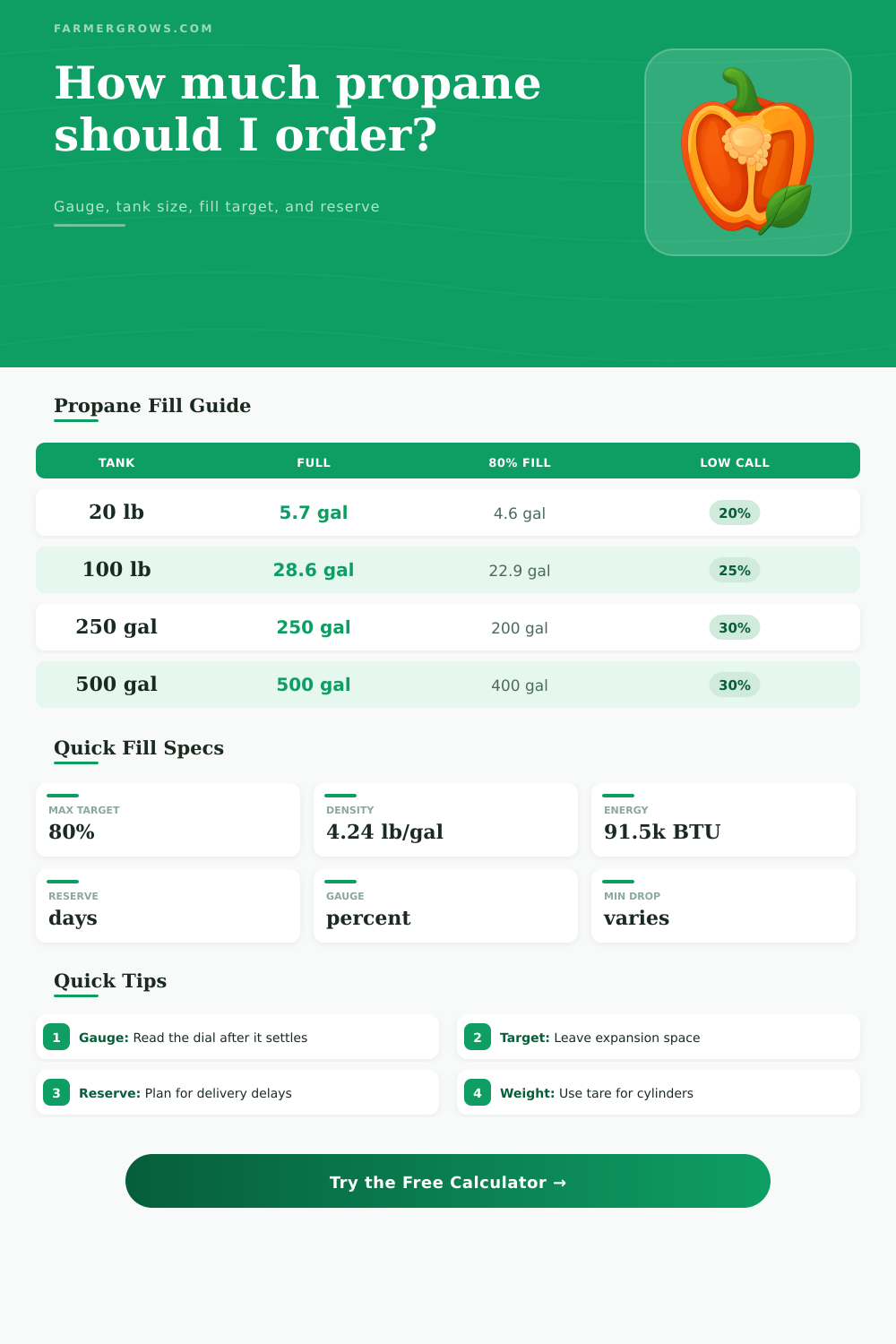
●Common tank fill table
| Tank or cylinder | Shell capacity used | 80% liquid fill | Approx propane weight at 60 F |
|---|---|---|---|
| 20 lb grill cylinder | 5.7 gal | 4.6 gal | About 19.3 lb |
| 30 lb RV cylinder | 8.6 gal | 6.9 gal | About 29.2 lb |
| 40 lb service cylinder | 11.4 gal | 9.1 gal | About 38.7 lb |
| 100 lb cylinder | 28.6 gal | 22.9 gal | About 97.0 lb |
| 120 gal ASME tank | 120 gal | 96 gal | About 407 lb |
| 250 gal ASME tank | 250 gal | 200 gal | About 848 lb |
| 500 gal ASME tank | 500 gal | 400 gal | About 1696 lb |
| 1000 gal ASME tank | 1000 gal | 800 gal | About 3392 lb |
●Temperature correction table
| Propane temperature | Density used | 10 gal added weight | Calculator effect |
|---|---|---|---|
| -20 F | About 4.75 lb/gal | 47.5 lb | Cold liquid weighs more per metered gallon. |
| 20 F | About 4.43 lb/gal | 44.3 lb | Winter fills show higher added weight. |
| 60 F | About 4.24 lb/gal | 42.4 lb | Standard planning density for many estimates. |
| 80 F | About 4.15 lb/gal | 41.5 lb | Warm liquid weighs less per gallon. |
| 100 F | About 4.05 lb/gal | 40.5 lb | Warm-up check helps protect expansion space. |
●Gauge level planning table
| Gauge reading | 500 gal tank gallons | Delivery meaning | Reserve note |
|---|---|---|---|
| 10% | 50 gal | Very low | Delivery should be urgent for heating loads. |
| 20% | 100 gal | Common reorder point | About 25 winter days at 4 gal/day. |
| 30% | 150 gal | Early call level | Often easier to meet delivery minimums. |
| 50% | 250 gal | Mid tank | Top-off may be below large-route minimums. |
| 80% | 400 gal | Normal full stop | Leaves about 20 percent vapor space. |
●Delivery minimum and reserve table
| Situation | Typical minimum | Calculator check | Planning response |
|---|---|---|---|
| Portable cylinder refill | 0 to 5 gal | Minimum can be set to 0 | Fill by cylinder weight and stop at legal target. |
| Small residential top-off | 75 to 100 gal | Compares gallons to add against minimum | Delay, combine tanks, or request will-call terms. |
| Winter route delivery | 100 to 150 gal | Shows gallons short of minimum | Call earlier if cold weather demand is rising. |
| Farm or shop bulk tank | 150 to 250 gal | Reserve days help set reorder point | Keep enough fuel for storms, dryers, and outages. |
●Propane fill tips
A propane tank fill calculator allow a person to calculate the amount of propane they need to order. The calculator use specific measurements to calculate the number of gallons of propane that a person needs to add to there propane tank. In order to use the calculator accurately, a person must account for there tank size and the current gauge reading on there propane tank.
The tank size and the gauge reading will tell a person how many gallon of propane are currently in there propane tank. Additionally, a person must also account for the temperature of their propane tank and the minimum delivery requirement for there propane tank. The capacity of the propane tank that a person own is the first measurement that a person will use in the calculation of the amount of propane they need to order.
How to Use a Propane Tank Fill Calculator
The capacity of the propane tank will determine the total number of gallons that a propane tank can hold. For instance, a 20-pound propane cylinder used for camping holds 5.7 gallon of propane. Residential propane tanks can hold as many as 500 gallons.
The propane tank fill calculator will use the capacity of the propane tank to calculate how many gallons of propane is in the tank based off the gauge reading. Additionally, many propane tank fill calculators will automatically limit the amount of propane that should be added to 80% of the tank capacity. This is to leave 20% of the propane tank empty to account for the expansion of the propane if the temperature of the propane tank rises to too high levels.
If not, the propane tank may be unable to release the built up pressure from the expanded propane. The gauge reading on the propane tank will tell a person the percentage of propane that is currently in there tank. For example, if a person has a 500-gallon tank and the gauge reads 25%, they have 125 gallons of propane in their tank.
Additionally, the gauge reading can help a person to estimate how many days of propane they have left by multiplying the number of gallons of propane they have left by the number of gallon that they consume each day. If they consume four gallons of propane per day, then they will have enough propane for 31 days. A propane tank fill calculator will allow a person to input these two variable to calculate the total number of gallons of propane that they should order for there propane tank.
The calculator will also provide for the subtraction of a small amount of gallons for the lag in the gauge reading for accuracy in the calculations that are provided to the user. The temperature of the propane tank is another measurement that a person will account for when using the propane tank fill calculator. The density of propane can change based on the temperature of the propane tank.
Propane becomes heavier when measured per gallon when the temperature is 20 degrees Fahrenheit. Propane becomes lighter when measured per gallon when the temperature is 100 degrees Fahrenheit. The propane tank fill calculator accounts for this variable so that the total weight of the propane that will be delivered to the customer is accurate based on the current weather condition.
This is especially important for propane suppliers that base the propane deliveries on the weight of the propane that is delivered. Many propane company have minimum delivery requirements for propane tanks. These minimum requirements state that the propane company will not deliver propane to the customer if the customer needs less than the minimum amount of propane.
For example, the minimum amount of propane that one company will deliver is 100 gallons. If the propane tank fill calculator calculates that the customer needs 50 gallons of propane to last them for a particular period, then they have not reach the delivery minimum for there propane supplier. The customer can either adjust the time when they will order propane for them to meet the minimum requirement or they can combine their propane order with their neighbor propane order to reach the required minimum.
The propane tank fill calculator will alert the customer if the number of gallons of propane that they calculate that they need is less than the minimum delivery amount of propane. Another variable that a propane tank fill calculator can account for is the outage reserve. An outage reserve is the number of days of propane that a customer choose to maintain in their tank in case of storms or delivery delays.
For example, a customer might want to maintain a propane reserve that will allow them to run there propane appliances for at least ten days of propane based on the number of gallons that they use each day. The propane tank fill calculator will show a customer how many days of propane they will have after they order the amount of propane that the calculator indicate. Additionally, if the propane that is calculated for order would not provide them with enough days of propane to maintain there outage reserve, they will receive a warning from the calculator.
For propane tanks that hold portable propane cylinders, the size of the cylinder is measured in weight. In order to use the propane tank fill calculator for these tanks, the customer must know the tare weight of the propane cylinder. The tare weight is the weight of the propane cylinder when it is empty of propane.
The weight that is calculated for these tanks is the weight that will be added to this tare weight when propane is added to the tank. This total calculated weight can be used by the customer to ensure that the propane delivery driver correctly fill the propane tank to the amount required by the customer. The gauge on a propane tank does not indicate the amount of energy that the propane contains in the tank.
Instead, the gauge indicate the percentage of propane in the tank. When it is cold outside, propane contract and takes up less volume in the tank. This means that a propane tank may have a low gauge reading in the winter when the temperatures are low.
Propane tank fill calculators can provide customers with information regarding the number of gallons and days of propane that there tank contain based on these gauge readings. This provides clarity for customers on the amount of propane that they should order prior to there tank becoming empty.