
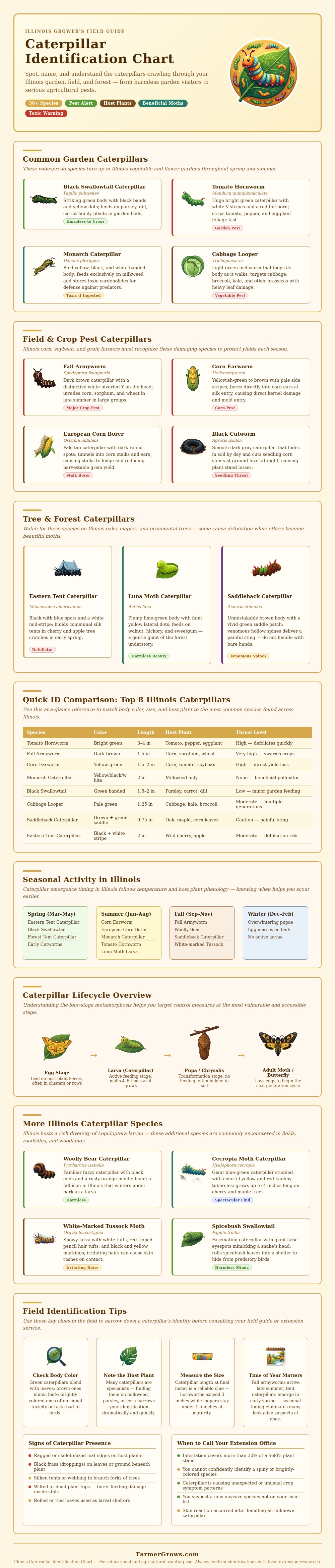
Know your garden insects, both how they look, and what they do. Not all insect are pests; most aren’t. Learn which ones actualy harm things and which are harmless or even helpful. This will save you time and save your good pollinator. Learn how to tell the bad guys from the good guys.
For instance, the black swallowtail caterpillar: Its all-green (with yellow spots) body is harmless; it’s just eating dill and parsley, then morphing into a lovely butterfly come August. In a small space, it will devour your herb with abandon, but help you support nature and protect your primary crops. Others need prompt attention.
How to Tell Good Bugs from Bad Bugs
The tomato hornworm‘s red tail and white stripes camouflage it from view. It feed on foliage rapidly and can makes the plant limp by the time you spot it. Look especially in eggplants and peppers, which are also favorite hosts of the hornworm. They’re green, so don’t think everything green is OK. This guy do some serious damage.
The farmer’s larger issue is corn pest. Fall armyworms and the European corn borer takes a serious toll on yield. You can tell if it’s a fall armyworm by looking at its head (detail shown). Look for an upside-down Y marking there; otherwise, you risk leaving the pest infestation intact. Those two pests bore into ears and stalks of the corn, causing structural failure and promoting mold. By then, surface sprays wouldn’t of cure the existing damage.
What’s appropriate varies by season, too. In March, there is no reason to check for corn borers, but in late summer, armyworms will be marching through the field. Apple trees gets a visit from their own tent caterpillar in springtime. October isn’t even tent-caterpillar month. Get familiar with your area’s time line and much of the guessing are gone.
Not all bug pose a threat to humans; some keep their secrets well. Meet the saddleback caterpillar; stingy! Its hollow spines deliver a whammy. Touch him at your own peril. Look closely and you’ll see he’s a brown rug with a green spot. Other larvae look scary: Like what? Some is hairy.
Put on gloves if you must handle something unfamiliar to avoid any pain, or worse, going to the doctor. Monarch larvae (above) are loaded with toxins from the milkweed they consume. They are perfectly fine to observe even though birds don’t eat them.
Killing all insects isn’t necessary. Think about your garden as an ecosystem and try for a balance between it and your food source. Know that pests has life cycles. Learn where they lay eggs (on particular plant called hosts). By removing these leaves with eggs, for example you interrupt the cycle. Also, trap their pupae in the ground. Observe first: When? What? Where? Knowing this will help you work with nature rather then against it.