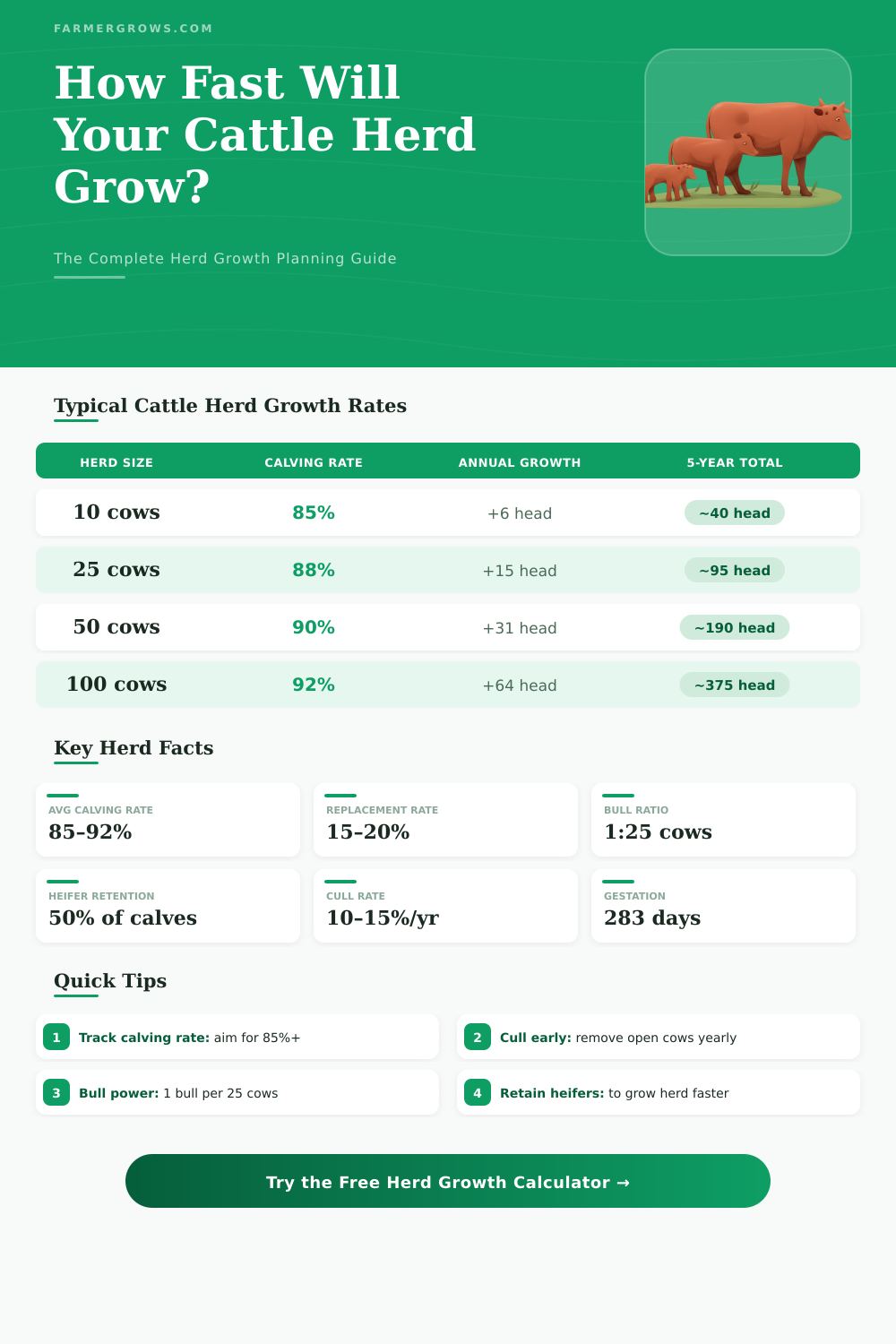
🐄 Cattle Herd Growth Calculator
Project your herd size over time using calving rates, culling, and heifer retention data
| Starting Cows | 80% Calving | 85% Calving | 90% Calving | 95% Calving |
|---|---|---|---|---|
| 10 cows | +4 head/yr | +5 head/yr | +5 head/yr | +6 head/yr |
| 25 cows | +10 head/yr | +12 head/yr | +13 head/yr | +14 head/yr |
| 50 cows | +20 head/yr | +23 head/yr | +25 head/yr | +27 head/yr |
| 100 cows | +40 head/yr | +43 head/yr | +50 head/yr | +55 head/yr |
| 200 cows | +80 head/yr | +85 head/yr | +100 head/yr | +110 head/yr |
| 500 cows | +200 head/yr | +213 head/yr | +250 head/yr | +275 head/yr |
| Herd Type | Calving Rate | Cull Rate | Heifer Retention | Net Annual Growth | 5-Yr Multiplier |
|---|---|---|---|---|---|
| Beef – Cow-Calf | 88% | 15% | 50% | ~7–9% | ~1.4x |
| Beef – Stocker | 90% | 20% | 55% | ~8–10% | ~1.5x |
| Dairy | 92% | 25% | 60% | ~5–7% | ~1.35x |
| Dual-Purpose | 87% | 18% | 50% | ~6–8% | ~1.4x |
| Seedstock/Purebred | 90% | 12% | 65% | ~10–14% | ~1.65x |
| Breeding Cows | Bulls Needed (1:25) | Bulls Needed (1:30) | Annual Replacement (4-yr service) |
|---|---|---|---|
| 10 cows | 1 bull | 1 bull | 0.25 bulls/yr |
| 25 cows | 1 bull | 1 bull | 0.25 bulls/yr |
| 50 cows | 2 bulls | 2 bulls | 0.5 bulls/yr |
| 100 cows | 4 bulls | 3–4 bulls | 1 bull/yr |
| 200 cows | 8 bulls | 6–7 bulls | 2 bulls/yr |
| 500 cows | 20 bulls | 16–17 bulls | 5 bulls/yr |
| Heifer Retention % | Heifers Kept (per 100 calves) | Net Effect on Herd | Best Used For |
|---|---|---|---|
| 30% | 15 heifers | Slow growth / stable | Selling stockers |
| 40% | 20 heifers | Moderate growth | Balanced operations |
| 50% | 25 heifers | Standard growth rate | Typical cow-calf |
| 60% | 30 heifers | Accelerated growth | Expanding herds |
| 75% | 37–38 heifers | Rapid expansion | New herd building |
| 90% | 45 heifers | Maximum growth | Seedstock producers |
Cattle herd growth follows a pattern known as the cattle cycle. It describes time, usually 8 to 12 years, when the national cattle herd starts to expand after decline. After some years of increase, the herd size reaches a peak and later declines In the United States happen ten years of expansion and contraction based on profits.
Currently we are in the 12th year of the cycle and in the 7th year of cattle herd contraction.
How cattle herds grow and shrink
High prices in the market tell ranchers to expand their herds, although that takes some years. Producers grow the national herd keeping female breeding calves instead of selling them for slaughter. It takes around three years, and a lot of heifers are being sold hrer.
The first step in such expansion is increasing profits in the cow-calf sector, so cattle prices must rise, costs fall or both.
North American cattle herds stay at their smallest size of decades. Supply will stay tight for a bit of time, which slows the increase of numbers. In the United States cattle were culled because of problems with feed, processing and Covid management, which caused a drop in values.
Higher interest rates deter investments in expansion, as well as ongoing drought. One main reason of the decline is the high price of beef cows.
Although numbers of beef cattle decline, dairy cattle stay stable. So dairy calves will involve a bigger part of the calf crops in the coming years. Data about heifers on feed show that the beef cow herd at the beginning of 2026 will be a bit bigger than at the beginning of 2025.
Most American cow-calf farms are relatively small with less than fifty cows, although some are huge with more than a thousand. On such farms calves are born, grow and weaned on site. Most move directly to feedlots after weaning, or stay on the farm to add weight before sale to them.
After weaning, cattle continuously grow and thrive grazing on grass in pastures, while farmers provide extra feed with vitamins and minerals.
Crossbreeding helps producers combine strengths and good traits, such as carcass characteristics, growth rates and reproductive performance. Hybrid vigor increases production in growth, fertility and longevity by breeding genetically different animals. A producer can build a herd of 100 cows in around four years using a careful replacement process.
A good rule says one bull for every 20 cows, and mature bulls be more than threeyears old.