
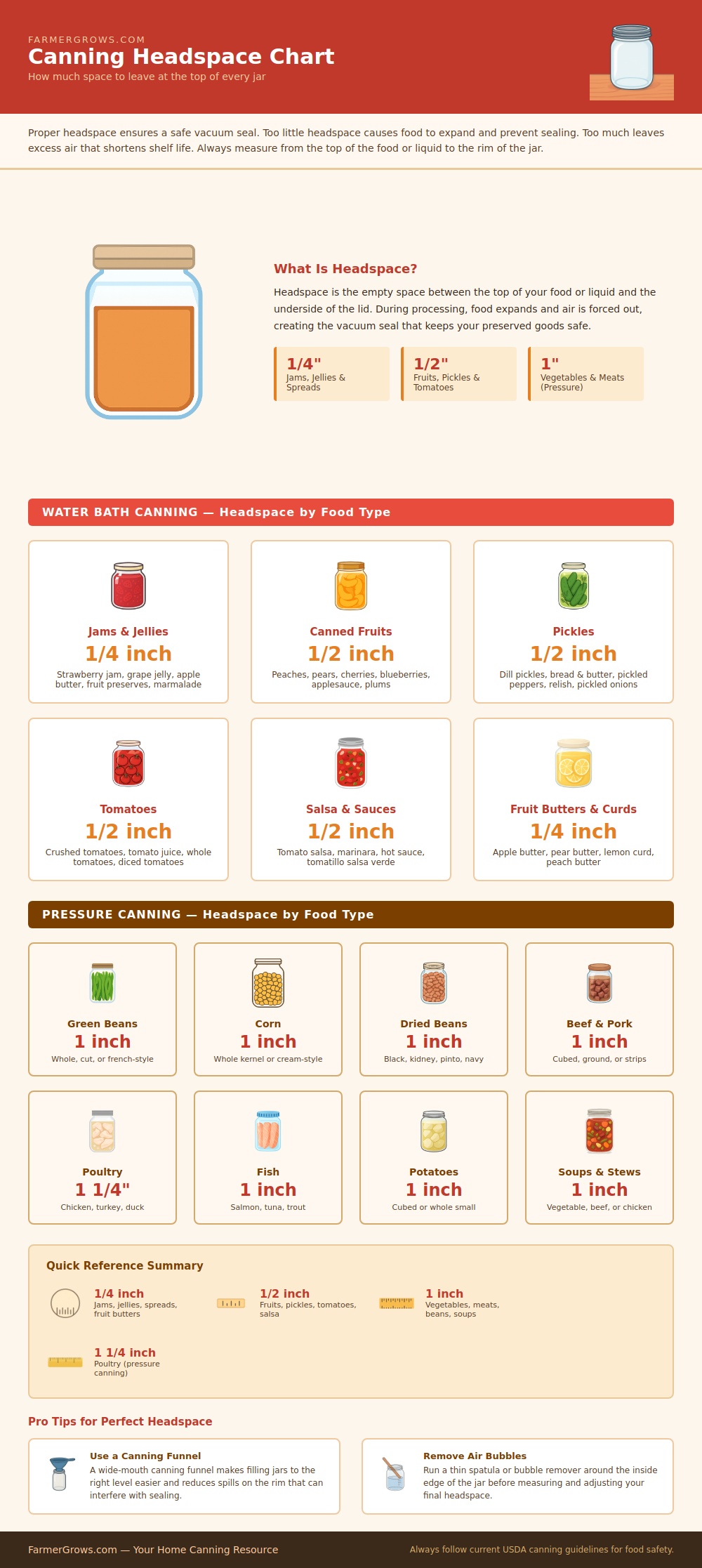
Canning headspace is the space at the top of the jar between the bottom of the lid and the top of the food or liquid. It is vital to reach a firm vacuum seal on the jars. Right headspace allows the growth of the food during warming and helps to form a strong vacuum when the jars cool
Headspace does two important tasks. First it allows the vacuum formation and closing of the jar. Second, it leaves space for growth during canning or if canned goods freeze.
Headspace in Canning: What It Is and Why It Is Important
Without enough headspace the jars do not close weel.
In the canning process the food and air expands inside the jars. That growth, together with air leaving the headspace, drops the pressure below normal level inside some minutes after processing. Then the lids suck down and tighten, producing the typical “ping”.
Generally jams, jellies and juices require one-quarter inch headspace. Fruits, salsa, chutney and tomatoes require one-half inch headspace. Low acid foods for pressure canner need one-inch headspace.
Pressure canning happens at higher temperature than boiling water canning, so the headspace is bigger here.
Too big headspace can cause weak closing, which leads to discoloration of the food and decay. Also it risks a wrong seal. If a jar does not have the right headspace, it goes in the refrigerator and is eaten first instead of canned.
Well measured headspace ensures an airtight seal during right process, which stops bacterial contamination and decay.
A small non-metallic spatula slides against the glass inside of the jar, pressed against the product to remove trapped air bubbles. Later you add liquid to reach the wanted headspace level. There are tools that combine two canning tasks: a bubble remover with a tapered form easily slides in full jars to remove trapped lumps.
Clear marks on it help to exactly measure the headspace.
Boilover can happen during water-bath canning by means of too strong heat and hot content. The food boils like this in the jars. A bit more cook and cooling time do not hurt the process.
It helps to ensure right headspace, so that the product does not brown or damage on the pantry shelf.