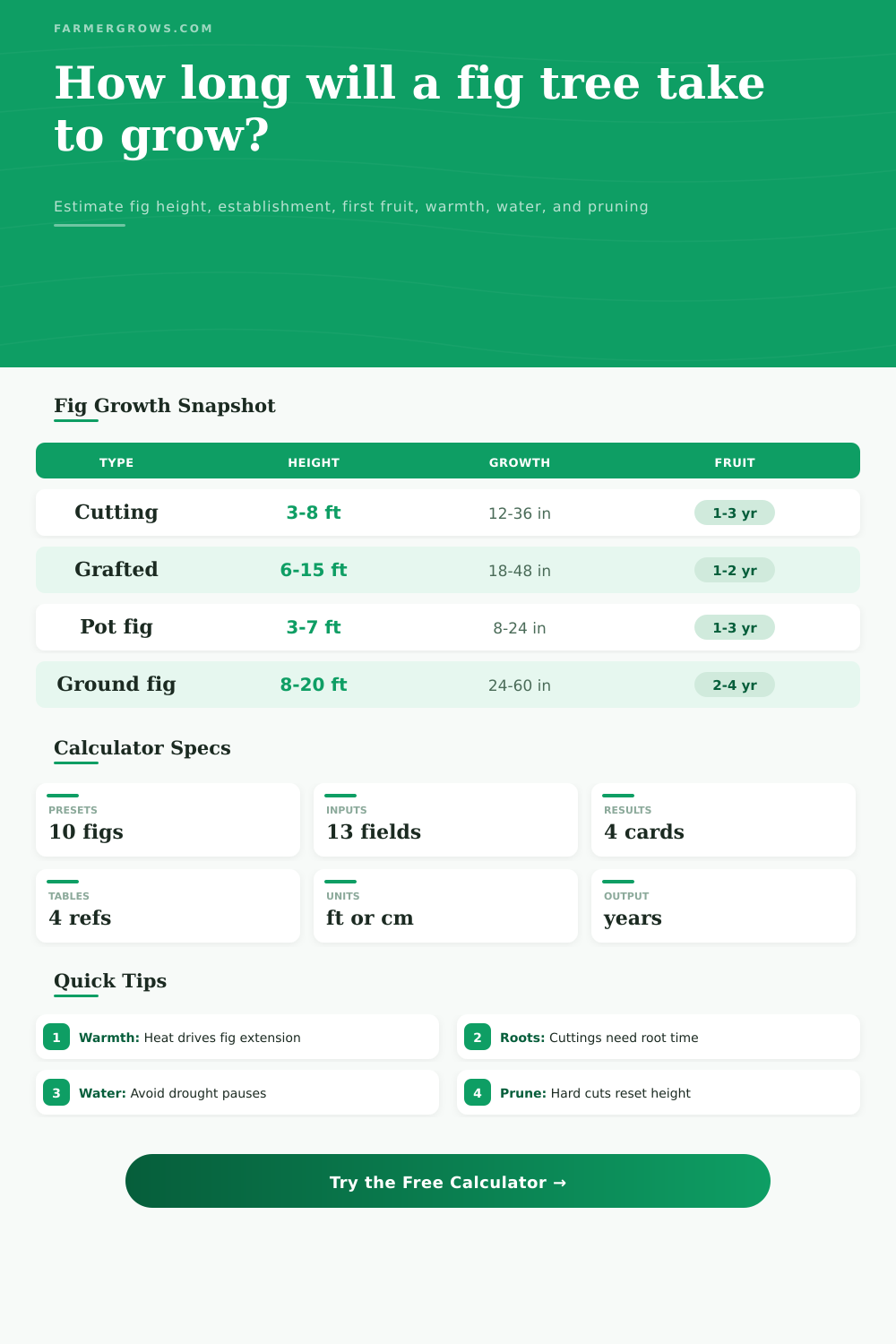
Fig Tree Growth Time Calculator
Estimate how long a fig tree needs to establish, reach a target height, build canopy, and produce its first meaningful crop using cultivar vigor, rooted cutting versus grafted tree, pot or ground growing, USDA zone, heat accumulation, pruning, water, and current size.
Load a common fig-growing situation, then adjust cultivar, propagation type, container size, zone warmth, pruning, water, and height target for your tree.
Fast figs such as LSU Purple or vigorous common figs extend quickly, while compact patio cultivars stay shorter and fill their target sooner.
Rooted cuttings spend early energy building roots. Grafted or nursery trees often start taller and fruit sooner if the root system is strong.
Containers warm early but restrict long-term size. Ground figs can surge once roots pass the planting hole and water stays steady.
Figs need heat to extend shoots and ripen fruit. Cold-zone dieback can restart height from the base each spring.
Estimated Fig Growth Timeline
Adjust the fig inputs to estimate height gain, establishment, canopy fill, and first fruit timing.
| Fig cultivar group | Typical mature size | Annual shoot growth | First fruit timing | Growth note |
|---|---|---|---|---|
| Chicago Hardy and cold-hardy common figs | 6 to 12 ft in warm zones, lower with dieback | 18 to 48 in | 1 to 3 years | Can fruit on new wood, useful where winter damage is common. |
| Brown Turkey, Celeste, and moderate figs | 8 to 15 ft in ground | 18 to 42 in | 1 to 3 years | Reliable home-garden types when roots are warm and soil drains well. |
| Black Mission and warm-climate vigorous figs | 12 to 25 ft in ground | 30 to 72 in | 1 to 2 years | Fast in long hot seasons, slower where winter wood is lost. |
| LSU Purple and vigorous southern figs | 10 to 20 ft in ground | 30 to 60 in | 1 to 2 years | Strong vegetative push with steady water and heat. |
| Dwarf or compact patio figs | 3 to 7 ft in containers | 8 to 30 in | 1 to 3 years | Root volume limits height but target size is smaller. |
| Seedling or unknown figs | Variable | 12 to 48 in | 3 to 6 years | Seedlings are unpredictable and may not match the parent fig. |
| Warmth setting | Typical fig response | Growth time effect | First fruit effect |
|---|---|---|---|
| Zone 9 to 10, high GDD | Long shoots, good wood ripening, low dieback | Fastest height and canopy fill | Main crop and breba crop may both be possible. |
| Zone 8, moderate to high GDD | Good growth with occasional tip injury | Usually predictable after the first year | First useful crop often follows once roots settle. |
| Zone 7 protected site | Good summer growth but winter protection matters | Height may pause after cold winters | New-wood crops are safer than breba crops. |
| Zone 6 or colder | Strong regrowth is possible after base dieback | Target height may reset each spring | Early cultivars and protection improve crop odds. |
| Greenhouse or indoor overwintering | Wood survives better and growth starts earlier | Can shorten the calendar if light is strong | Fruit timing depends on heat and pollination needs. |
| Starting setup | Early growth expectation | Height planning note | Fruit planning note |
|---|---|---|---|
| Rooted cutting | Often slow first months, then quick once roots fill the pot | Do not overrate top growth until roots are established. | May show figs early, but a useful crop often waits one more season. |
| Air-layered fig | Starts with older wood and a better top structure | Can be ahead of a cutting if roots stay moist after separation. | Often fruits sooner than a same-year cutting. |
| Grafted nursery tree | Strong start when graft union and rootstock are healthy | Rootstock vigor can speed early extension. | May fruit quickly, but young trees still need leaf area. |
| Large container | Warm roots and controlled size | Target 4 to 7 ft unless the pot is very large. | Can fruit well if watering never crashes. |
| In ground | Slower first season, then stronger long-term growth | Roots need time to move beyond the planting hole. | Usually best for larger crops after establishment. |
| Factor | Fast condition | Slow condition | Why the calculator adjusts timing |
|---|---|---|---|
| Pruning | Light shaping that keeps permanent wood | Hard heading, renovation, or winter dieback | Height and breba fruit depend on surviving wood. |
| Water | Deep, even moisture with mulch | Drought swings or containers drying hard | Fig shoot tips pause quickly when roots dry out. |
| Root space | Ground soil or large container | Small pot or root-pruned culture | Limited roots lower annual height gain even when the tree is healthy. |
| Crop load | Light fruit load on young figs | Heavy crop on a small tree | Fruit competes with vegetative growth and can slow canopy fill. |
Judge rooted cuttings by roots, not only leaves. A cutting can push leaves before it has enough roots to support fast height gain, so the first season often looks uneven.
Warmth is part of the growth formula. Figs may survive cool summers, but the fastest shoot extension and fruit ripening come from a long warm season.
Pot size changes the target. A 5 ft patio fig in a large container may be mature for that system, while the same cultivar in ground could keep growing much taller.
Protect old wood when breba matters. Breba crops form on last year's wood, so cold injury or hard pruning can delay that crop even if new shoots grow strongly.
This calculator estimates vegetative fig growth and first useful fruit timing for planning. Real results shift with cultivar identity, winter injury, soil depth, nematodes, salt, pests, crop load, pollination needs, and local weather.
Sometime in spring, you plant a fig tree and water it all summer long. The next year: Whaddya know, not much happened; or maybe some wood die back from frost. People become frustrated because they expects a big crop the very next year, and gauge success by the calendar instead of root mass and accumulated heat.
The calculator above tell you about what age to anticipate a significant crop, or how many years before the tree get to its desired size. Based off your local climate, your propagation method, and the cultivar‘s vigor. That transforms uncertain variables into a manageable timeline.
Why Your Fig Tree Grows Slowly
Most significant: Is this a nursery-tree grafted specimen or one you made from a cutting? With a cutting, the first year will be devoted to root development rather than shoot development. Leaves may form after four weeks or even sooner, and you may think, “Oh good, things are looking healthy,” but that is not always the case. The plant’s putting energy belowground first, creating a rooting system on which to support next year’s blossoms and fruit. Forcing it to grow aboveground too early, before its root system are ready, will cause stress that slows everything down.
A grafted tree comes to you with an established root system so it starts off growing quickly. That makes all the difference in what you can expect from Year 1; you’re waiting for a different set of natural signs.
But not only does this matter: Where did you buy the tree? How much room do the roots has to grow? If it was dug from the ground and has had some time to explore, those tree roots will have stretched out into surrounding soil. They find water and promote growth as soon as they escape the planting hole. Not so with figs that were grown in pots (as most are sold these days). Their root system is confined to the volume of the pot; a 5-foot fig in a big container may be fully developed for that space, whereas the identical cultivar growing outdoors in yard may reach several times that size.
Decide what you want: a full-size orchard tree, or something more like a manageable patio specimen. Those desires calls for different ways to handle pruning and soil environment.
The biggest driver of shoot extension is heat accumulation. Fig trees are tropical plants that like a long, hot summer. They can makes it through winters, but only just. Without warmth, they will stop growing if it gets too cold, such as in a cool garden. If it gets really cold in winter, they will drop their buds. That’s why the tool includes a heat model of growth, so you don’t over-estimate shoot extension if you have a marginal climate for figs. It also takes into account if the wood survived the winter or was reset every spring. If yours dies back to the ground year after year, it doesn’t matter how old the roots are: You’re starting over.
Timing also gets massively reshaped by your pruning strategy. If you’re light-shaping, you are maintaining the framework and keeping it growing in height slowly. If you hard prune, you reset the clock and remove whatever was there. However, many growers accepts that tradeoff to control size or force stronger wood with better fruiting reliability.
Similarly, consistent water help because a drop in soil moisture instantly stops the shoot tips from growing. Vertical growth stalls during dry spells, even though the tree may look fine at a distance. Steady watering mean continuing upward momentum without stressing the root system.
All of this has to come together just right for first fruit timing. In good warm soil, it may take a second year for a grafted tree. In cold soils, it takes three or more years to reach the minimum leaf area needed to support fruit. Rushing it typicaly results in poor crops and weak wood, so you should of been patient. The comparison tables will give you an idea of the range among setups and cultivars… Set your expectations to match beforehand.
Figs are about the trade-offs of where to use the energy: shoot growth (height), root growth (size), and then fruit production. Have them all maximum? No. Can you have them all minimal while giving them maximum care? No. Have it all? No.
Prune, water, and pick the container size you want; see when that puts you on the timeline for your goal by using the calculator. If you’re hoping for a privacy screen by next year, or you’re simply wanting to wait until breba ripens and is ready to go, knowing the mechanics transforms guesswork into a plan.
Roots do their thing under the soil, while leaves make energy overhead. Plant with intention, not hope.