Kitchen Scraps Composting Time Calculator
Estimate how long fruit peels, vegetable trimmings, coffee grounds, eggshells, and small cooked-food traces may take to become stable compost, plus the dry browns needed to keep the batch aerobic.
Kitchen scraps are wet, dense, and nitrogen-rich. The same bucket can finish quickly in a hot pile or turn sour in a sealed bin, so this calculator weighs method, scrap mix, chopping, browns, moisture, temperature, airflow, and risky-food percentage.
Kitchen Scraps Composting Estimate
Use this as a planning range. Actual finish time changes with weather, feed size, airflow, and how fully scraps are covered by dry carbon.
| Kitchen material | Approx C:N | Typical moisture | Density | Composting note |
|---|---|---|---|---|
| Mixed fruit and vegetable scraps | 12 to 18:1 | 70% to 85% | 28 to 36 lb/cu ft | Fast if chopped and covered with dry browns |
| Coffee grounds and paper filters | 18 to 24:1 | 55% to 70% | 35 to 45 lb/cu ft | Good nitrogen source but can compact when piled alone |
| Eggshell-heavy bucket | Low carbon impact | Low to moderate | 30 to 42 lb/cu ft | Crush shells; they add minerals but decompose slowly |
| Citrus, onion, garlic, and spicy scraps | 12 to 18:1 | 70% to 85% | 28 to 36 lb/cu ft | Use small amounts in worm bins; outdoor piles tolerate more |
| Small cooked grain or leftover traces | 12 to 20:1 | 60% to 80% | 32 to 45 lb/cu ft | Raises odor and pest risk; bury deeply and limit oils |
| Brown material | Starting ratio | Best use | Airflow effect | Caution |
|---|---|---|---|---|
| Dry shredded leaves | 2.5 to 3.5x scraps | Outdoor bins and piles | Good structure | Whole leaves mat unless shredded |
| Shredded paper | 2 to 3x scraps | Kitchen buckets and worm bedding | Moderate | Avoid glossy or heavily inked paper |
| Cardboard strips | 1.5 to 2.5x scraps | Tumblers and wet fruit loads | Strong if torn small | Soak or mix so it does not clump |
| Chopped straw | 2 to 3x scraps | Hot piles and trench cover | Excellent | Too much can dry the batch |
| Aged sawdust | 0.5 to 1.2x scraps | Odor correction in small doses | Can reduce air | High carbon may slow composting |
| Setup | Typical active time | Mixing rhythm | Best scrap load | Ready sign |
|---|---|---|---|---|
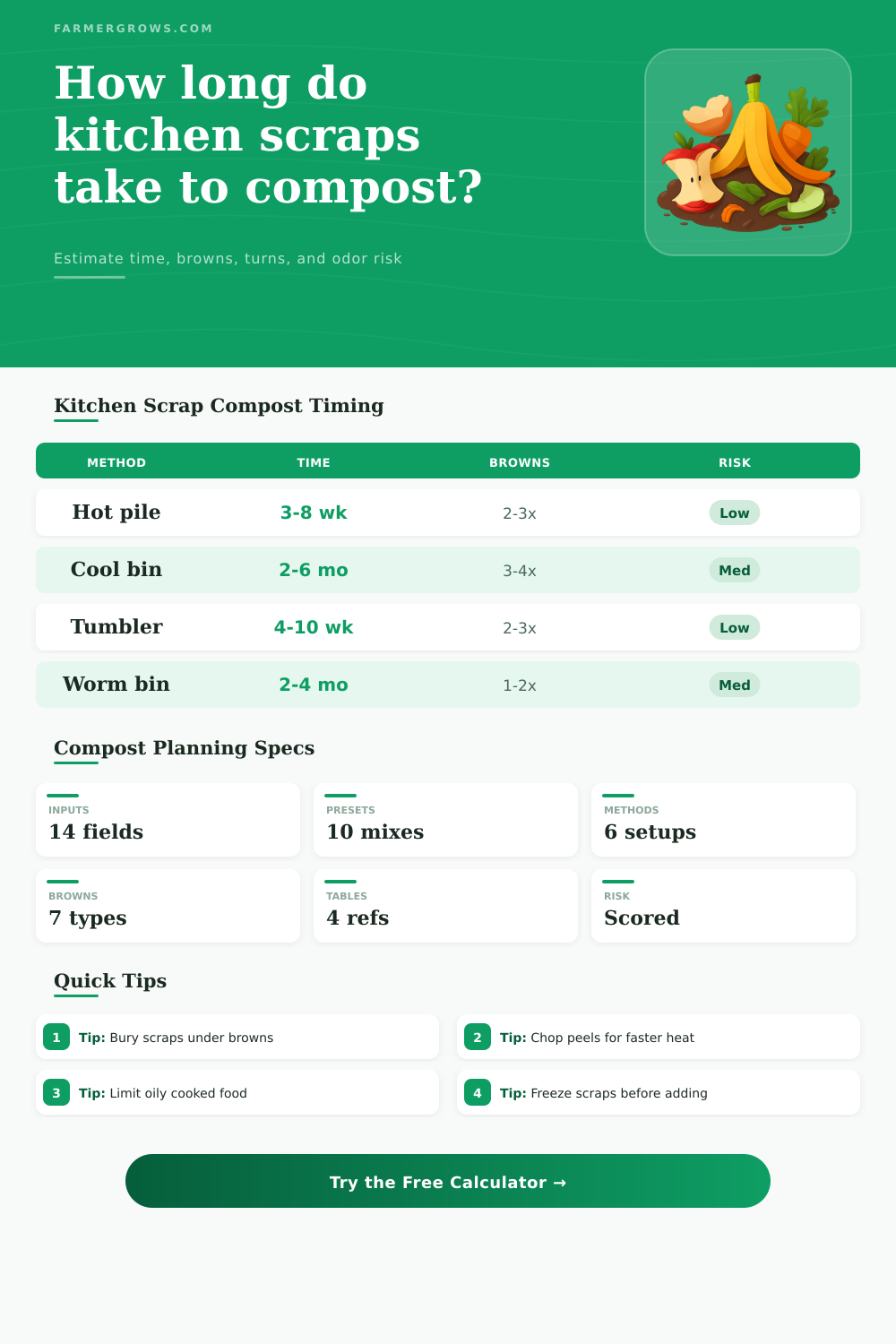
| Hot outdoor pile | 3 to 8 weeks | Every 3 to 7 days | Buried core with 2 to 3x browns | Dark, crumbly, earthy, no visible scraps |
| Covered cool bin | 2 to 6 months | Every 2 to 4 weeks | Small weekly buckets covered deeply | Scraps no longer recognizable |
| Tumbler | 4 to 10 weeks | Every 2 to 4 days | Moist scraps plus shredded paper or leaves | Uniform texture after curing |
| Worm bin | 2 to 4 months | Gentle bedding fluff only | Thin feeds under bedding | Castings dominate and food is gone |
| Bokashi then buried | 2 weeks ferment plus 3 to 8 weeks soil | Do not aerate during ferment | Sealed bucket, then buried or composted | Sour ferment smell fades in soil |
| Trench compost | 1 to 4 months | No turning | Chopped scraps under 8 inches soil | Soft soil and no intact food pieces |
| Signal | Likely cause | Correction | Time impact |
|---|---|---|---|
| Sour or rotten smell | Too wet, low air, or too many scraps | Add leaves or paper, open air channels, bury fresh food | Add 1 to 3 weeks |
| Fruit flies | Exposed sweet scraps | Cover with 4 inches browns or finished compost | Small if corrected fast |
| Scraps still visible | Pieces too large or pile too cool | Chop, turn, and add active compost | Add 2 to 6 weeks |
| White mold threads | Normal fungal breakdown | Mix lightly if dry, otherwise leave it working | Usually helpful |
| Greasy clumps | Oily cooked food or dairy traces | Remove what you can and dilute with dry browns | Add 2 to 8 weeks |
For odor control: Treat every bucket of scraps as wet green material. Cover it immediately with a full cap of leaves, paper, cardboard, straw, or finished compost.
For faster compost: Chop peels and rinds before adding them. Smaller pieces heat and disappear faster, especially in tumblers, cool bins, and trenches.
For worm bins: Feed lightly, bury food under bedding, and keep citrus, onion, salt, oil, and spicy leftovers small enough that worms can avoid them.
For pest prevention: Bury fresh scraps in the center of the pile or under soil. Do not leave fruit, rice, bread, or cooked scraps exposed.
When you look into kitchen composting bucket, what do you see? You see wilted spinach, carrot peels, coffee grounds, and a clumpy, moist mess. Will it be a stinking heap of decay, or will it transform into nutritious soil? The answer is never luck. It’s always physical: the science of how things decompose.
Composting are often treated passively as “throw in the kitchen scraps and eventually there’ll be gold.” Chances are that won’t happen. Because kitchen scraps is dense, wet and high in nitrogen, they requires help in breaking down well.
How to Make Good Compost
After you enter details of your set-up, page’s calculator does the math. No more guesswork: no need to time your pile or fret over ratios. By forcing you to take stock of what you’re composting, it also make you think of ways you might make adjustments.
What’s the dominant mix of scraps? A pail of coffee grounds is very different than a pail of eggshells or a pail of fruit peels. How do those textures breaks down? Sugary fruit breaks down quickly, but it invites pests if you dont cover it. Eggshells provides minerals, but don’t really rot much unless broken down to dust. Dense coffee grounds often compact into an anaerobic sludge without air pockets.
Knowing all this makes a difference, since texture determines airflow. Without airflow, the microbes needed to generate heat won’t survive, and the pile will turn sour rather then sweet. This is where brown-to-green ratio comes into play. While the greens are the food for the microbes, the browns is the structure that allows them to breathe. The tool will calculates how much dry carbon to add to the balance of your wet waste.
One mistake people make is not adding enough brown material. Too much brown material consume valuable space inside bin. That’s why some people worry over their supply of shredded paper or leaves. They should of been more worried about odor. When the heap stinks of rotting garbage, chances are it’s suffocating itself. It need more air and more carbon to create channels for oxygen.
See how different types of brown materials affects the process in the table at the bottom of the page. In a wet climate, shredded cardboard make an excellent addition; it soaks up moisture without matting down too fast. Avoid using sawdust in large amounts; it can deprives microbes of nitrogen. It is a good absorbent but a poor fuel source by itself.
Many people don’t realize that another factor influencing speed have nothing to do with anything you do at all: Temperature. In a warm pile, heat kills pathogens and weed seeds; it’s hot enough to finish fast, in weeks. A cold bin will take months, since there isn’t as much or as active a microbial population operating.
To get a realistic time frame, the composting calculator use the average active temperature of your pile. And if you’re in a cold place like me, no matter how much turning you do, the compost go slowly. Not enough insulation and not enough mass mean you can’t force it to be warmer. Turning lets in oxygen, but it also let out heat. You need to find a balance between turning enough to aerate and not turning so much that the temperature can’t build up.
Rodents and flies will is attracted to exposed oils and sugars. If you bury fresh scraps beneath a layer of dry leaves or finished compost, they won’t be visible to scavengers. By freezing your scraps first before adding, you’ll break down cell walls and hasten decomposition, which will reduces the immediate smell of fresh food as well. It is a small habit that makes a difference in how bin works.
Composting is all about transferring energy, giving the organisms that do the job (fungi and bacteria) what they want in order to create an environment helpful for them doing it: turning waste into humus. Moisture, air, and a balanced mix of ingredients, it’s all involved. If successful, your finished compost will be dark and crumbly, smelling as much like a rain-scented forest floor as possible.
Suddenly, that bucket of slimy vegetable trimmings transforms from mess to treasure. All you have to do is provide the microbes with the resources; and space, to go to work. Patience pays off; watching the process unfold will reward you with soil to feed your garden for years. Actualy, it’s more naturaly than you think. Just dont forget the brown materiel and avoid using too much moddern chemicals in your garden.