
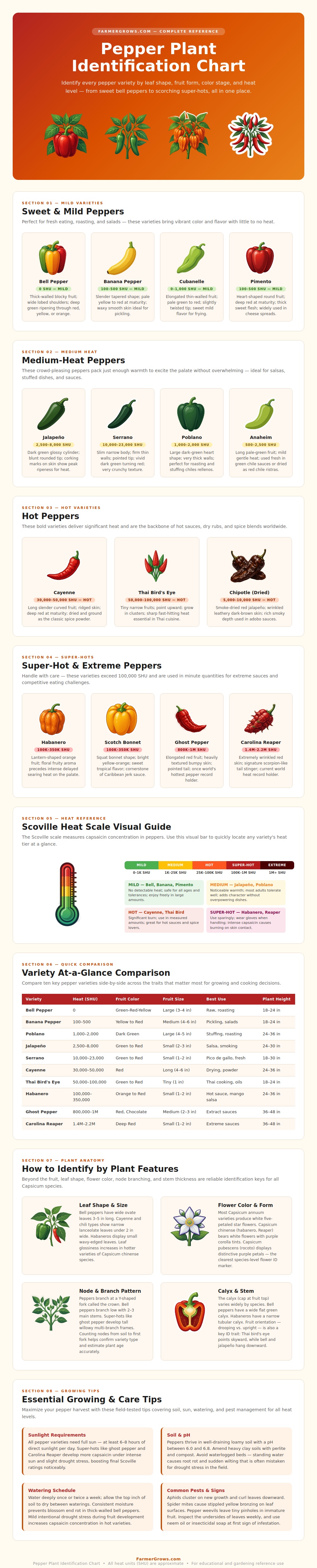
When seed packets fade or friends give you unlabeled cuttings, visual ID is your protection against culinary surprises. From flower color to fruit form and even leaf shape, you’ll know what’s in your hand. That’s how you can handle a mild bell pepper without bare fingers, and super-hots, afterward; it’s how you prepare for heat expectations of each kind.
Examine the leaves: The shape of a pepper plant’s leaves is often an indicator of both its heat level and overall growth habit. For example, bell peppers grows broad leaves for a more bushy appearance. Narrower leaves that are lance-shaped lie closer to the plant stem (such as in Thai bird’s eye or cayenne). Waxy-edged little leaf on habanero plants also indicate their heat level, even when no fruit has developed. That’s something you’ll notice early on giving you time to plan your garden accordingly.
How to Identify Different Types of Peppers
When flowers do happen, check them out. Peppers (most of them) just has basic white blooms. If some have petals that are streaked or tinted with purple, the plants is probably Capsicum chinense. This includes those Carolina reapers, habanero types and Scotch bonnets. And yes, that same genetic trait that results in more purple produces hotter plants because it’s part of what makes something hot, the capsaicin. Purple flowers mean it’ll be hot. A lot of people miss this clue until they rub their eyeballs while trimming back the plant.
Finally, check the fruit. Blocky, heart-shaped peppers droop down, such as on mild varieties (poblanos, bells). Hotties tend to grow up and outward in groups. Thai bird’s eye are tiny reddish spikes pointing upward. Habaneros resemble wrinkly-skinned lanterns. Peppers don’t get spicy just by being big: Chemical concentration, not bulk, causes heat. Small serranos is far hotter then big bells, hence the phrase “hot as a serrano.”
To cook confidently with peppers, consult the Scoville scale. Sweet, mild peppers can be eaten raw. Medium heat add flavor to salsas without dominating. Hot varieties like cayenne are sharp enough for sauces but not overbearing. Super-hots need gloves because the capsaicin in them can burns your skin. This is all spelled out in the reference guide so when it’s time to harvest, you’ll know what kind of protection to wear.
Tweak your conditions according to the heat tier. Peppers require well-draining soil that’s slightly acidic and full sun. For all kinds of peppers, consistent moisture are important (no blossom end rot in those thick walls). Hot ones have higher capsaicin content if exposed to mild drought stress while developing fruit so you can adjust your growing routine to encourage more spice or more sweet, depending on how the plant reacts. You could of adjusted your routine too.
Know the leaves first, know the flower color next (species clues), know the fruit shape last. Have the heat scale handy so you don’t mistake a banana pepper for a fiery reaper. The more carefully we pay attention, the better we’ll do in both the kitchen and the garden.