
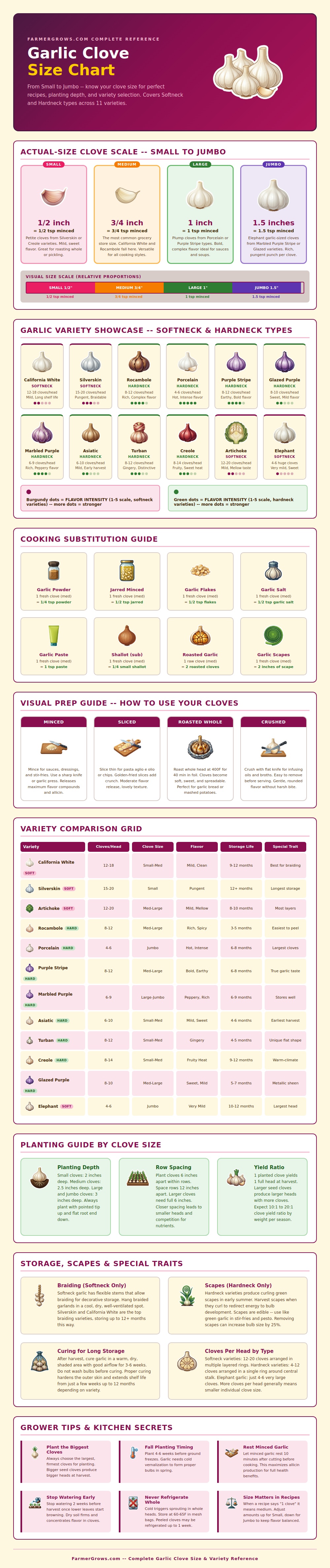
The issue is that garlic, unlike most other ingredients, is typically referred to as one unit, regardless of size, here’s a clove; over there’s another. Then you buy a bulb at the market, pull off what appears to be a normal-sized piece and use it in whatever recipe calls for it… only to find your finished sauce or soup doesn’t taste more better then last time. Chances are good it has something to do with size.
See how very different the size of these cloves can be (in the graphic above)? They range from tiny slivers to giant chunks that’ll more than double the amount of garlic call for in a recipe. But that isn’t to say it’s all about volume. How you use it in cooking also matter here.
Why Garlic Cloves Are Different Sizes and Tastes
Softneck types such as Creole and Silverskin tend to be small. They have a relatively mild, sweet flavor because they are grown longer to develop unique sugar compounds. These would of being ideal for pickling or even roasting whole, where you want the garlic to meld into background instead of taking center stage.
Then there is the more “industry standard” medium cloves from bulb varieties like California Whites. These are versatile enough to provide solid flavor for everyday sautéing. Because of this, when a recipe calls for “one clove” but doesn’t specify size, the implied base is medium.
But what about bigger ones? The purple- or porcelain-colored ones called Purple Stripes or Porcelains, whose fat segments has heady, layered flavors that stand up to robust soups and sauces? Or there are the extra-big ones, referred to as “elephant” garlic or certain hardneck varieties; that all pack a powerful, peppery punch in every clove. Use a hunk of these in place of a Silverskin miniclove without accounting for difference, and you’ll end up with some soup that tastes far too spicy (or at least that’s how your home cook will feel).
That’s what many of us get wrong: we don’t recognize that the same number of cloves doesn’t necessarily mean the same amount of clovelike flavor, no matter how large or small each is. But knowing about the variety that hides inside size will help you select wisely.
In general, softneck garlic has many more cloves per head (so each one is smaller). The flexible stem makes it good for braiding and long-keeping… Up to a year or longer. Hardnecks, by contrast, typically have fewer but bigger-sized cloves wrapped around a central stalk. They do have richer flavors and a bit of spice, too, but they are not such good keepers.
The chart above lays out the differences in detail to help you determine if you want a multi-layered taste bomb now for tonight’s dish, or something you can stash in the pantry, where it’ll stay fresh for months.
Size also intersects with preparation: Allowing the chopped garlic to sit for about 10 minutes before cooking will release all the allicin, the active compound in garlic that gives it its pungent kick and health-giving properties. The sliced version create an appealing texture (for chips, say, or oil) as well as a milder amount of flavor. For things you want to roast (such as whole heads), roasting them transforms them into sweet, spreadable pastes; similarly, the crush-with-the-flat-side-of-a-knife treatment gently infuses broths but doesn’t leave any bits in your soup stock. Every process alters the way each individual clove affect your finished dish.
To grow your own garlic, start with the largest cloves because larger seed cloves makes bigger heads at harvest time. Prepare a sunny spot. Plant each one 2-3 inches deep, or deeper if it is bigger, with the pointy end up. Space them 6 or more inches apart so they do not compete for nutrients.
Don’t water for a few weeks before harvesting; let them cure in skin. Store carefully in a cool, dry location that has good air circulation. Never refrigerate, unless sprouting is desired.
In the end, though, with garlic as with many things, it’s all a matter of finding balance. When you grow your own or buy at a farmer’s market, keep an eye on those cloves. Doing so will help you cook more precisely based off no guessing game. It will also make your food sing, flavor-wise, each and every time.
So next time you pick up one of those bulbs, bear this in mind: All garlic may appear alike, but then again, none of it tastes actualy alike.