
The tuscan melons are finally ripe: Wait months for them, pick too soon and you’ll be disappointed. They is pale and starchy, with no sweetness at all in the insides. It is like eating wet cardboard flavored faintly of cucumber.
They’re an Italian cantaloupe; you have to be patient with them as much if not more than any other crop in the garden, since they don’t ripen very well once picked. Unlike tomatoes, which finish up ripening on a kitchen counter, these melon want some heat and sun right up to the bitter end to release their aroma and sugars.
How to Know When Tuscan Melons Are Ready to Pick
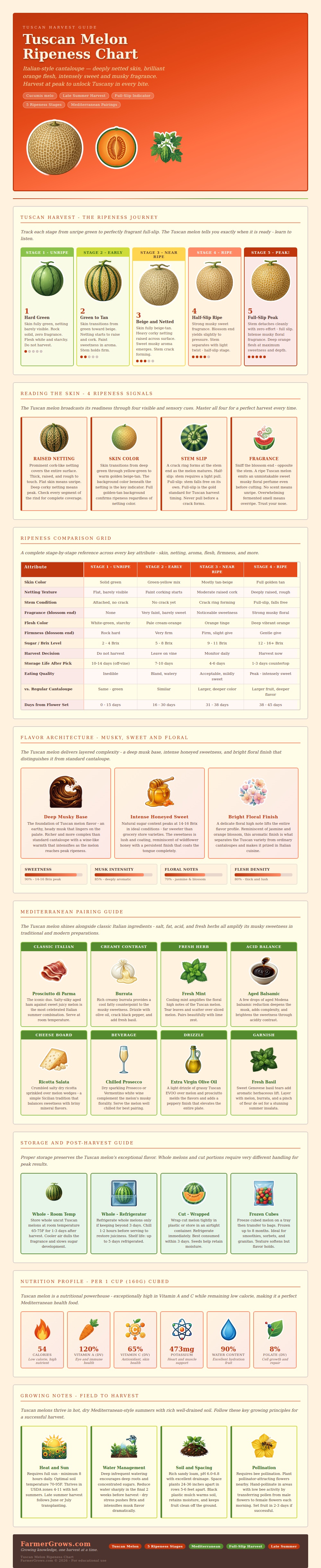
Over several weeks, the chart (above) illustrates what happens to the skin: it goes from green to ripe. Early on the rind will be solid green, very lightly netted. Don’t pick then. As the season progresses, the background color will move toward a warm golden beige. The netting will raise up and feel rough to the touch. Heavy all-over texture, not just in patches, are required. A good indication of when the fruit is getting ready is that the netting appears deep, and the background color is fully tan.
In cool summers and humid years, looks might not be everything: Look instead at the end of the stem, where the melon connects to the vine for your best clue. It should slip off naturaly, what we call full slip. With a ripe Tuscan melon, there’s no need to twist or tug hard; it slips away easily with nearly no resistance, leaving a nice round scar (not a raggedy tear). This is not the melon to wait and try again later. There is no fixing that one by waiting some more on the counter. First, trust the slip.
Right harvest: That is where you get instant gratification right away. It must have beautiful deep orange colored flesh (high sugar and beta carotene). Before you even slice into it, you’ll get a whiff. Flower scents are part of the story; some people swear they can smell wildflower honey or perhaps jasmine on a ripe one. It fills your kitchen.
Growing conditions that closely mirror its native Mediterranean habitat create this complexity. Heat, heat, heat. Long hot days and well-drained soils (sandy loams) is what these plants require to reach their full potential. And finally, there’s the element of water management, which surprisingly contributes as much to flavor as anything else. Most growers grow their plants in moist soil, all the way through to harvest, so they dilute the sweetness within the fruits. In order to increase brix, withhold significant amounts of water in the last couple weeks leading up to harvest. This mild stress causes the plant to concentrate its resources into the developing melon, creating richer taste and denser flesh. It seems odd to dry out your garden but there is a reason for it.
The trick with storage is that once picked, these fruits begin giving off ethylene gas, which can be harmful if not handled carefully. For best results, eat them as soon as possible, but at least give them a day or two at room temperature to blend their flavors. Once ripe, you can refrigerate them if you plan to eat them within three days. However, only do this once they are fully ripe. Cold air also kills the strong scents that give this fruit its special character.
The sweetness of these melons pairs beautifully with salty ingredients. While prosciutto di Parma is a classic choice, fresh burrata cheese, drizzled with high quality olive oil is equally delicious. The fat carries the floral notes around your mouth and the salt cuts through the richness. Eat them slightly chilled to refresh your senses without dulling the smell.
Nothing forces you to pay closer attention than growing a Tuscan melon. To get them right, you must forget about your calendar and learn to read their visual signs. You have to really, really listen to what they are telling you. Look hard at the blossom side and the stem end of the fruit, and they will tell you exactly when they’re ripe for harvest.
Slice open a just-picked, perfectly ripe melon, and you’ll remember all those days of waiting were worth every minute. That bright orange flesh confirms it all.