
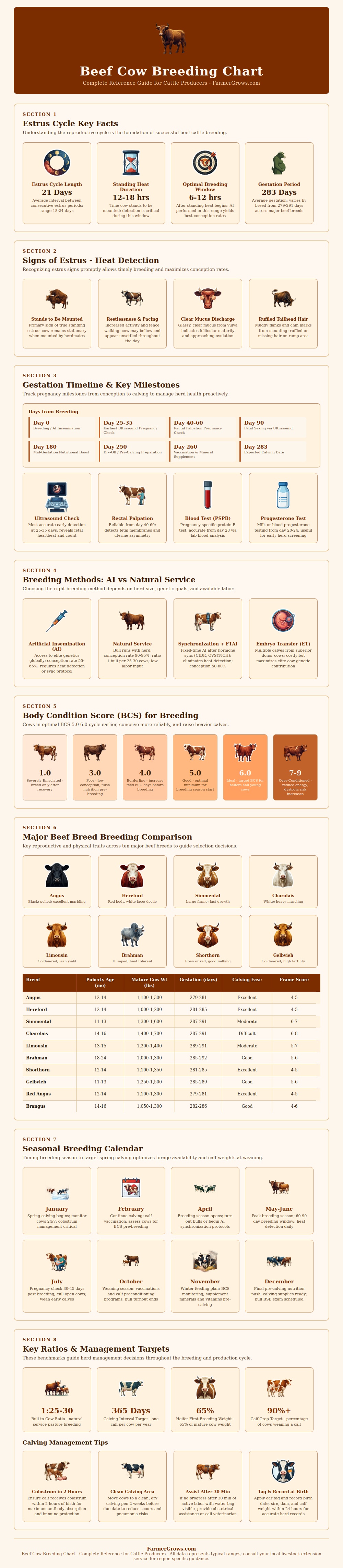
When it comes to breeding beef cows, success begin with attention to condition and timing. Small management decisions several months beforehand make all the difference in whether you have a solid calf crop or an empty pasture. A cow’s reproductive cycle is short enough that even missing one heat period can put you far behind on the entire schedule. And when you’re trying to keep a yearly calving rhythm, the lost time compounds quick.
One key point here: The cow’s heat lasts about 12-18 hours within a three-week period between each standing heat in the cycle. Most cows will conceve best if bred six to twelve hours after they stand up for the first time in that short period. Why? Heat detection remains the number one issue with failure on many operation today. If she’s pacing and bellowing and there is obvious mucus present, then it’s a clear message. When you’re doing other stuff, it’s easy to miss.
How to Breed Cows Successfully
A second major factor are body condition. Thin cows entering breeding season takes longer to cycle. Thin heifers is less likely to conceive in their initial attempt. They lack reserves. The ideal state is moderately finished, not over-fat or gaunt. Either extreme poses problems. Over-fat can complicates birth. Under-fat lacks reserves to sustain early pregnancy. Visually inspect and palpate the animals at least 60 days before breeding. This provides an opportunity to tweak feed without last-minute panic.
Breeding the herd comes down to a series of tradeoffs based off scale, goal and effort expended. If artificial insemination interests you, you gain access to genetics beyond what can be afforded as a bull. But it requires either heat detection or a sync program that’s done actualy. With natural service and a proven bull, you reduce some of that day-by-day stress. Provided the bull is healthy and the bull-to-cow ratio isn’t too high, conception is typically quite good.
A lot of guys do both. For example, they will AI early for certain traits and then turn out cleanup bulls to cover what was missed. Pregnancy checks falls under the same calendar logic. Ultrasound and/or blood tests early in pregnancy let you identify open cows so you has time to rebreed them. Or you can sell them before feed prices get high in winter. Follow-up checks later verify they’re carrying a normal pregnancy. And they help you plan nutritional support. This is important as the last trimester approaches and fetal growth accelerate.
Typically the annual breeding pattern target spring calving so the calves can graze green grass at weaning time. Thus they breed from late spring to early summer. A mid-summer pregnancy check is followed by fall weaning. Work aligns with forage availability. It requires focus in the winter months to feed through the snow or mud for the upcoming cycle.
And perhaps one of the best-kept secrets about this pattern-following approach: It compounds. Early-calving cows wean a bigger calf. A bigger calf sells for more money. Year after year of keeping herds in good condition just means fewer interventions is needed. And all those pieces fit together, as you can see on the chart above, right down to the timing of the cycles, condition targets, and breed differences.
Where do you line up? How could you tweak a few things that may pay off big? No technology will replace regular observations and records. Knowing who cycled when can help manage that process. Knowing who scored well (or poorly) at breeding time, and who successfully bred on their first try, makes breeding less of a crap shoot and more of a manageable process.