Sheep Feed Blend Calculator
Build a lamb or ewe batch mix from corn, oats, barley, soybean meal, alfalfa pellets, mineral, and molasses while checking dry matter, crude protein, TDN, and inclusion limits.
This calculator is for practical batch planning, not a complete mineral program. Use forage tests, ingredient tags, local sheep mineral guidance, and veterinary or nutritionist advice before feeding high-grain blends.
Sheep Feed Blend Results
Ingredient weights are normalized to the entered blend percentages, then checked against dry matter nutrients, phase targets, molasses, mineral, and inclusion limits.
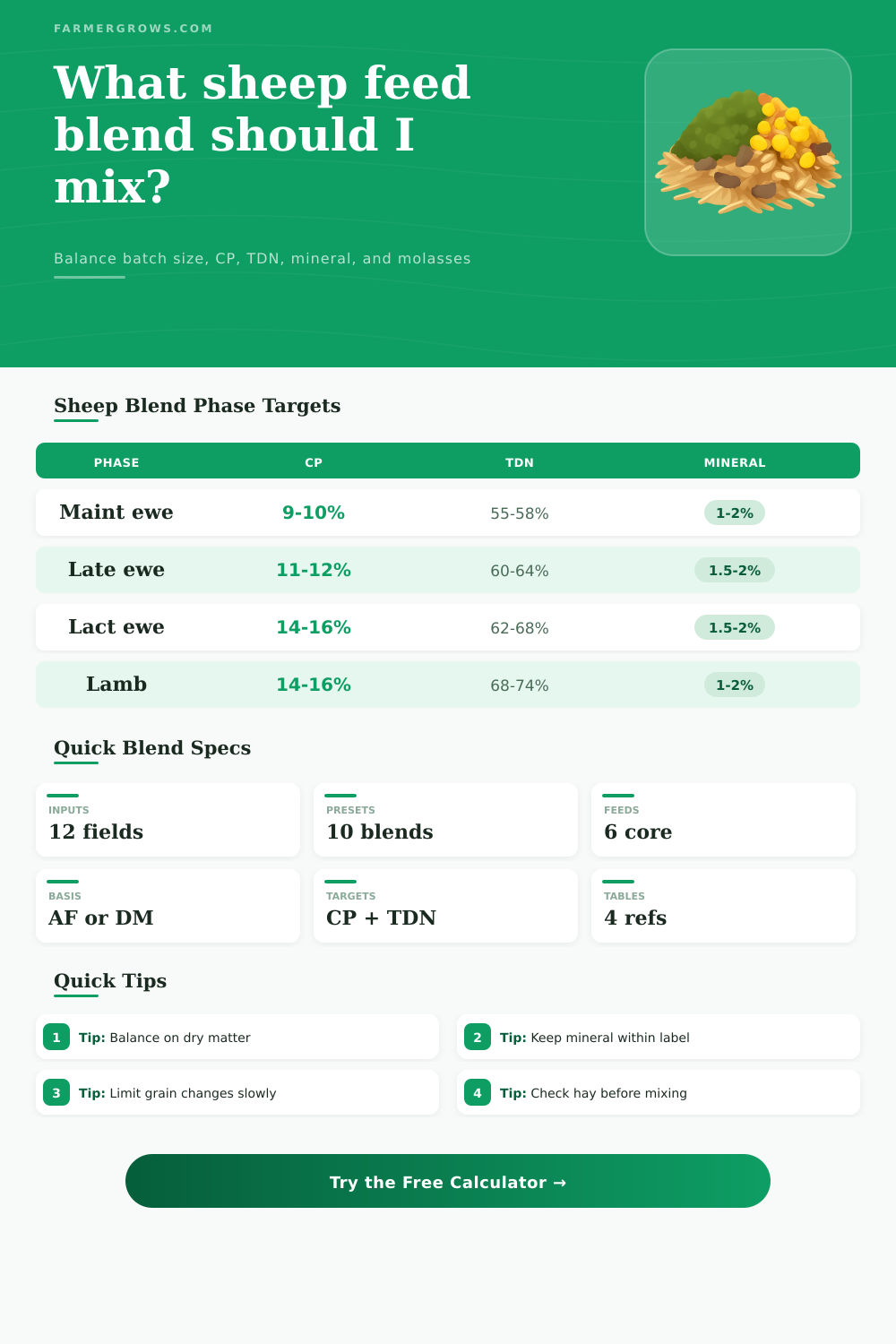
| Sheep phase | Typical CP target | Typical TDN target | Concentrate caution | Blend note |
|---|---|---|---|---|
| Maintenance ewe or ram | 8% to 10% of DM | 52% to 58% of DM | Keep grain modest | Forage usually carries most of the ration. |
| Flushing ewe | 10% to 12% of DM | 60% to 66% of DM | Short-term energy lift | Use before breeding when body condition calls for it. |
| Late gestation ewe | 11% to 13% of DM | 60% to 66% of DM | Increase gradually | Twin-bearing ewes need dense, consistent feed. |
| Lactating ewe | 14% to 16% of DM | 62% to 68% of DM | Watch intake and water | Protein and energy both rise with milk demand. |
| Growing or finishing lamb | 14% to 17% of DM | 68% to 76% of DM | Manage acidosis risk | Adapt lambs slowly and keep roughage available. |
| Ingredient | Dry matter used | CP used | TDN used | Primary role |
|---|---|---|---|---|
| Cracked corn | 89% | 9% | 88% | High energy grain for gain or late gestation support. |
| Whole or rolled oats | 89% | 12% | 68% | Bulkier grain with more fiber than corn or barley. |
| Rolled barley | 89% | 12% | 82% | Dense energy grain with moderate protein. |
| Soybean meal, 48% | 90% | 48% | 84% | Protein correction for lamb and lactation blends. |
| Alfalfa pellets | 90% | 17% | 58% | Digestible fiber, calcium, and moderate protein. |
| Sheep mineral | 95% | 0% | 0% | Macro and trace minerals according to the tag. |
| Molasses | 75% | 5% | 72% | Binder, dust control, palatability, and energy. |
| Ingredient | Maintenance max | Ewe max | Lamb max | Why the limit matters |
|---|---|---|---|---|
| Corn | 25% | 35% | 55% | High starch, so step changes up slowly. |
| Oats | 35% | 35% | 35% | Useful safer grain, but still part of total concentrate. |
| Barley | 25% | 35% | 45% | Dense grain that needs consistent processing. |
| Soybean meal | 8% | 12% | 18% | Raises protein quickly and can overshoot small batches. |
| Alfalfa pellets | 55% | 55% | 45% | Good fiber source but not a substitute for long roughage. |
| Sheep mineral | 2.5% | 2.5% | 2.5% | Follow label directions and avoid cattle minerals. |
| Molasses | 5% | 5% | 6% | Too much can make feed sticky and variable. |
| Planning check | Formula used | Good range | Field interpretation |
|---|---|---|---|
| As-fed basis | Ingredient lb = batch lb x final percent | Use for mixer loads | Best when you weigh actual feed going into the mixer. |
| Dry matter basis | As-fed lb = DM lb / ingredient DM | Use for ration comparing | Best when matching nutrition targets across moist and dry feeds. |
| Crude protein | CP lb / total DM lb | Within 1% of target | Protein shortfalls often point to soybean meal or alfalfa changes. |
| TDN energy | TDN lb / total DM lb | Within 2% of target | Energy shortfalls usually call for grain or better forage. |
| Mineral inclusion | Percent of final blend | 1% to 2.5% | Use a sheep-specific mineral and respect the product label. |
Use dry matter for decisions: Compare CP and TDN on a dry matter basis, then convert back to as-fed pounds for the mixer and feed cart.
Protect sheep mineral safety: Use sheep-specific mineral, check copper sources, and do not swap in cattle mineral without local professional guidance.
A feed blend calculator allow a person to create a sheep ration. The feed blend calculator will ensure that the ration contains a correct amount of nutrients for the sheep. Rations must contain correct amount of protein and energy to provide the sheep with the nutrients that it require based off its stage of production.
If the ration does not contain the correct amount of protein and energy, the sheep may not recieve the nutrition that it require. The calculator will take the percentages of the different ingredients, then calculate the weight of each ingredient that should be use in the ration to create the batch size that you would like to prepare. Each ingredient contain different nutrients for the sheep.
How to Use a Sheep Feed Blend Calculator
For instance, corn contains energy to the sheep, but very little protein. Oats contain fiber for the sheep, which balance the starch that the corn contains. Barley contains both energy and fiber, so it is an ingredient that lies in between corn and oats in terms of the nutrients that it supply to the sheep.
Soybean meal increase the protein levels quick to the ration, but is more risky if an error is made in the amount of soybean meal. Alfalfa pellets provide fiber and calcium to the sheep, and sheep consume them easier than long hay. Additionally, the sheep require minerals, but must be within safe limits for those nutrients.
Finally, molasses is an ingredient that will increase the amount of feed that the sheep eat, but if too much is added to the ration, it can become sticky. The feed blend calculator can be used to determine the percentages of ingredients on an as fed basis or on a dry matter basis. The dry matter basis is preferred.
Each ingredient contains different amount of moisture. Using the dry matter basis allow for a more accurate comparison of the nutrients of each ingredient. The calculator will show the pounds of each ingredient that must be weigh based on the dry matter calculations.
This prevents error that could occur if someone estimated the percentages of ingredients. Additionally, the calculator will show if the percentage levels of minerals or molasses are outside of safe limits. The calculator will also display the total amount of grain that will be in the ration.
The feed blend calculator contain different settings according to the stage of production of the sheep. Each stage of production contain different requirements for protein and energy. For example, protein and energy requirements is different for sheep during maintenance than they are during lactation.
During lactation, the sheep require more protein to produce milk, and require more energy to prevent losing too much body weight during lactation. Additionally, reference table will display the limits of each ingredient and the ration in general. There is variables in the barn that the feed blend calculator cannot measure.
For instance, the quality of hay can change. The nutrient content of corn change depending on the year that it was grown. Additionally, the amount of feed that the sheep eat change depending upon the water intake of the sheep and the amount of space in the bunk area where the sheep eat.
The calculator cannot measure these variables, but they should be monitored after the calculator is use to determine if any change need to be made to the ration. If changes are to be made to the sheep ration, only one ingredient should be change at a time. For instance, if soybean meal is increased to increase the protein content, the amount of grain and minerals should be held constant.
Only changing one ingredient at a time will allow for the effect of that one ingredient to be seen. Additionally, you should record the changes so that they can be monitored over an extended length of time. Thus, using the feed blend calculator and keeping records of the changes to the ration will allow for the person to manage the ration more effective.