Garlic Planting Calculator
Estimate garlic cloves, row count, seed garlic weight, expected bulbs, mulch volume, harvest weight, and planting date fit from bed size, spacing, variety type, survival rate, mulch depth, and growing zone.
Use measured bed dimensions and your actual seed garlic size. The calculator assumes one clove becomes one plant, then adjusts expected bulbs by the survival rate you enter.
Garlic Planting Results
Your garlic planting plan will appear here after calculation.
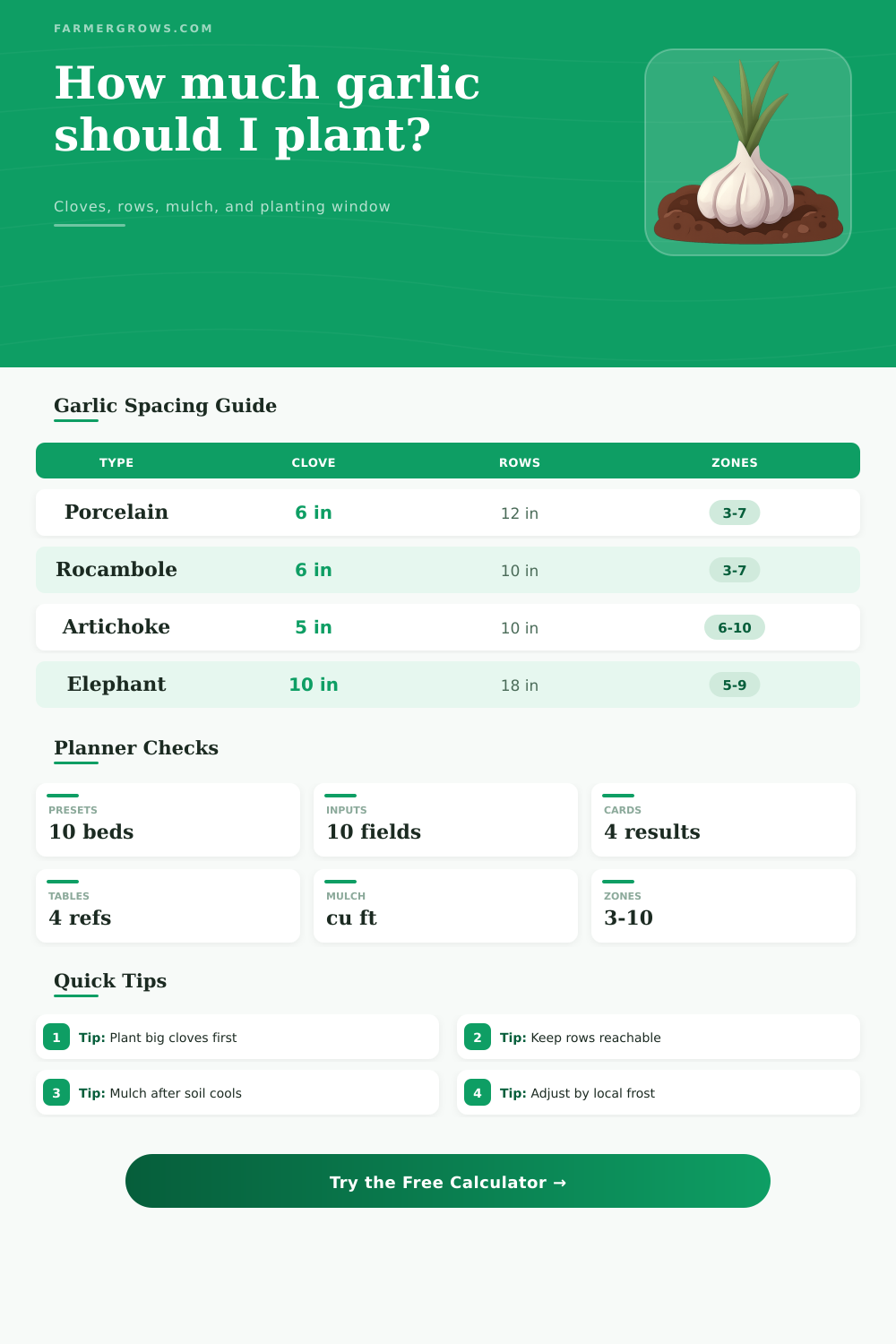
| Variety type | Typical clove spacing | Typical row spacing | Best zone fit | Planning note |
|---|---|---|---|---|
| Porcelain hardneck | 6 to 8 in | 10 to 12 in | 3 to 7 | Large cloves need room for large bulbs. |
| Rocambole hardneck | 6 in | 10 to 12 in | 3 to 7 | Excellent flavor, shorter storage than softneck. |
| Purple stripe hardneck | 5 to 6 in | 10 to 12 in | 4 to 8 | Adaptable and steady for mixed garden beds. |
| Asiatic or turban | 5 to 6 in | 9 to 10 in | 5 to 9 | Earlier harvest, avoid over-wet spring soil. |
| Artichoke softneck | 4.5 to 6 in | 9 to 10 in | 6 to 10 | Reliable storage and braiding in mild climates. |
| Elephant garlic | 10 to 12 in | 18 to 24 in | 5 to 9 | Very large plants need much wider spacing. |
| USDA zone | Typical fall planting window | Hardneck fit | Softneck fit | Timing cue |
|---|---|---|---|---|
| 3 | Sep 15 to Oct 5 | Strong | Limited | Plant early enough for roots before freeze. |
| 4 | Sep 25 to Oct 15 | Strong | Limited | Mulch after planting to reduce heaving. |
| 5 | Oct 1 to Oct 25 | Strong | Moderate | Aim before sustained hard freezes. |
| 6 | Oct 10 to Nov 10 | Strong | Good | Most garlic types fit with normal fall planting. |
| 7 | Oct 20 to Nov 20 | Good | Strong | Hardnecks may need vernalized seed in warm sites. |
| 8 to 10 | Nov 1 to Jan 31 | Variable | Strong | Choose softneck, creole, or pre-chilled hardneck seed. |
| Average clove weight | Approx cloves per lb | Best use | Stand note |
|---|---|---|---|
| 3 g | 151 cloves/lb | Small softneck inner cloves | Use for greens or seed nursery, not largest bulbs. |
| 5 g | 91 cloves/lb | Medium softneck and small hardneck | Good for dense beds and average bulbs. |
| 7 g | 65 cloves/lb | Large hardneck planting stock | Often better for premium bulb size. |
| 10 g | 45 cloves/lb | Extra large porcelain cloves | Give extra spacing and strong fertility. |
| 18 g | 25 cloves/lb | Elephant garlic cloves | Use very wide rows and deep loose soil. |
| Mulch depth | Coverage per cubic yard | Coverage per 3 cu ft bag | Garlic use note |
|---|---|---|---|
| 1 in | 324 sq ft | 36 sq ft | Light cover for mild sites or spring refresh. |
| 2 in | 162 sq ft | 18 sq ft | Moderate weed and moisture cover. |
| 3 in | 108 sq ft | 12 sq ft | Common fall garlic mulch target. |
| 4 in | 81 sq ft | 9 sq ft | Useful in cold zones with heaving risk. |
| 6 in | 54 sq ft | 6 sq ft | Heavy straw cover; pull back if spring shoots struggle. |
Sort seed before planting. Plant the largest, firmest cloves for the main crop and keep small inner cloves for scallions, trials, or culling. Uniform clove size makes spacing and harvest estimates more reliable.
Match mulch to climate. Cold gardens often need deeper loose mulch to reduce frost heaving, while wet mild gardens may need lighter mulch so the bed drains and warms in spring.
Garlic planting require planning because the planting of garlic involve several different variables. The cloves that you plant in the ground in the fall will grows into garlic bulb that you can harvest in the summer. The size of the bulbs that you harvest from your garden depend upon two factors: the spacing of the cloves that you plant in your ground, and the variety of garlic that you selects for your specific climate zone.
Many people dont give their garlic enough space to grows, and many people do not plan for the timing of the first hard freeze in there zone during the winter. A garlic planting calculator help you to manage these different variables; the calculator can perform the math for you to determine the number of garlic cloves and bulb that you will grow in your garden based on the variables mentioned above. The size of the cloves that you plant is one of the more important variable to consider.
Plan Your Garlic Planting
Garlic bulbs contain cloves, and each clove weigh a certain amount of grams. The larger the cloves, the more bulb will grow from your planted cloves. However, because large cloves weigh more gram each, if you choose a garlic variety that contains seven gram cloves instead of five gram cloves, you will need to purchase more pound of garlic seed to ensure that you have enough cloves to fill your garden bed with garlic plants.
The garlic planting calculator can help you to determine the total weight of garlic seed that you will need, and it will show that weight in both pounds and kilograms for your convenience in purchasing the seed. Another important variable is the spacing of the garlic cloves. Clove spacing will determine how many garlic bulb you will grow in your garden bed.
If you space the cloves more closer together in your rows, you can grow more garlic plants, but the bulbs will be smaller due to the lessening of the space provided to the plants to grow their roots and to expose their leaves to the sunlight. If you space the cloves further apart in your garden, the bulbs will be larger but you will have fewer cloves to harvest. The garlic planting calculator will show you the total number of cloves and bulbs that you will grow in your garden based on the number of cloves of each type of garlic you will use in your garden.
Garlic variety is another variable to consider when you decide how to plant your garlic. Hardneck and softneck garlic varieties grows in different zones due to the different requirements for the types of bulbs that grow from these varieties. Hardneck garlic varieties require a period of winter cold to develop bulbs, so hardneck garlic varieties is best for growing zones three through seven.
Softneck and Creole garlic varieties can be grown in the southern areas of the United States that experience milder winters; they are able to tolerate these milder temperatures. The garlic planting calculator will alert you if the variety of garlic that you select is not appropriate to your zone; this will help you to not plant garlic varieties that will eventualy produce small heads of garlic in your warm climate zones. Mulch is another variable to account for in your planning.
Garlic plants will require mulch to protect the roots of the garlic plants, but the planting calculator can determine how much mulch is required for your area. The planting calculator will determine how much mulch in cubic feet or cubic yards is required for your area based on the width of your planting bed and the depth of mulch that you will use. Additionally, the garlic planting calculator will also alert you as to how many bag of mulch you will need to purchase to ensure that you have enough to cover your garlic plants.
The timing of when you will plant your garlic is the final variable that you will consider. The planting date will affect the growth of your garlic plants, so you must ensure that it match the weather patterns in your specific planting zone. The garlic planting calculator will alert you if your planting date is too early, if it is on time, or if it is too late.
If you begin to plant your garlic too early in the season, winter freezes may kill the garlic leaves. If you begin to plant your garlic too late in the season, the garlic plants will not have enough time to develop roots before the ground becomes hard and the growth of roots is prevented. While the garlic planting calculator will consider many different variables, there are other factors that may affect the survival of your garlic plants.
Factors like soil drainage and conditions, winter heaving, and voles eating the garlic bulbs can all impact the survival of your garlic bulbs. If the soil where you are planting the garlic stay wet in the spring, more garlic plants may not survive than if the soil is drained of excess water. In this case, you can enter a percentage in the calculator that reflects the survival of your garlic plants; if the survival percentage is lower, the garlic planting calculator will adjust the number of bulb of garlic that will be harvested.
Additional reference tables is also available to assist you in your planting of garlic. One table describes the spacing of cloves within rows and rows within a planting bed based on the variety of garlic that is to be planted in those beds. Another reference table indicates the planting windows for different zones, and suggests whether hardneck or softneck varieties of garlic should be planted in those zones.
A third reference table includes the weight of cloves in pounds and the number of cloves that each pound of garlic contains. This can help you to determine how many garlic plants you will be able to grow from one bag of garlic seed. Another reference table can help you to determine how deep to spread mulch in your planting beds and how large of an area the mulch will cover.
This can help to ensure that you have enough mulch in areas like your driveway to prepare for planting your garlic. In order to improve the results of your garlic plants, you can sort the garlic seed before you begin to plant the garlic. Separate the largest and firmest cloves for your main garlic crop, and use the remainder of the cloves for green garlic or for other intended purposes for those cloves.
Remember that the garlic planting calculator assumes one clove of garlic will result in one garlic plant. To reflect the weight of the largest cloves in the bag, you may choose to enter the average weight of your cloves into the garlic planting calculator. Another suggestion for best results with your garlic plants is to ensure that each row of garlic is within your reach.
If you enter the planting bed and begin to weed the garlic plants, you may compact the soil; too much compaction of the soil can damage the garlic plants. The garlic planting calculator will indicate how many rows of garlic will be created in your planting bed based on the width of the planting bed. If the number of rows is high that you can reach with your feet while standing in the planting bed, you may want to modify the width of the planting paths instead of adding more rows of garlic to the planting bed.
By planning your garlic planting, you can determine the weight of garlic bulbs that you will have to eat and store. Based on the weight of the bulbs that you will have, you can determine whether you will need to plant more garlic in the following season. If you know the weight of garlic seed that you will need for the following year, you can prepare to plant garlic in your garden next year.
By performing this planning every fall season when preparing to plant garlic bulbs, you will find that your garlic harvest is the most reliable possible.