Trellis Calculator
Estimate trellis posts, wire or string length, anchors, clips, and working load for vegetable rows, vineyard lines, berry rows, and flower supports.
This tool treats one trellis row as a straight run with end posts, optional braces, interior line posts, and horizontal tiers. Use local wind, soil, and crop conditions before buying permanent trellis materials.
| Formula | Expression | What it estimates | Planning note |
|---|---|---|---|
| Line post count | ceil(row length / spacing) - 1 | Interior posts between the two end posts | Short rows still need two end posts |
| Wire length | row length x tiers x material buffer | Total horizontal support line to buy | Add extra for wraps, knots, and repairs |
| Crop load | plants x crop lb per plant x load factor | Approximate working pull and foliage mass | Wet vines and wind increase load quickly |
| Post length | height x 1.25, then round up | Suggested post purchase length | Use deeper embedment in loose soil |
| Crop group | Typical height | Default clips | Base load |
|---|---|---|---|
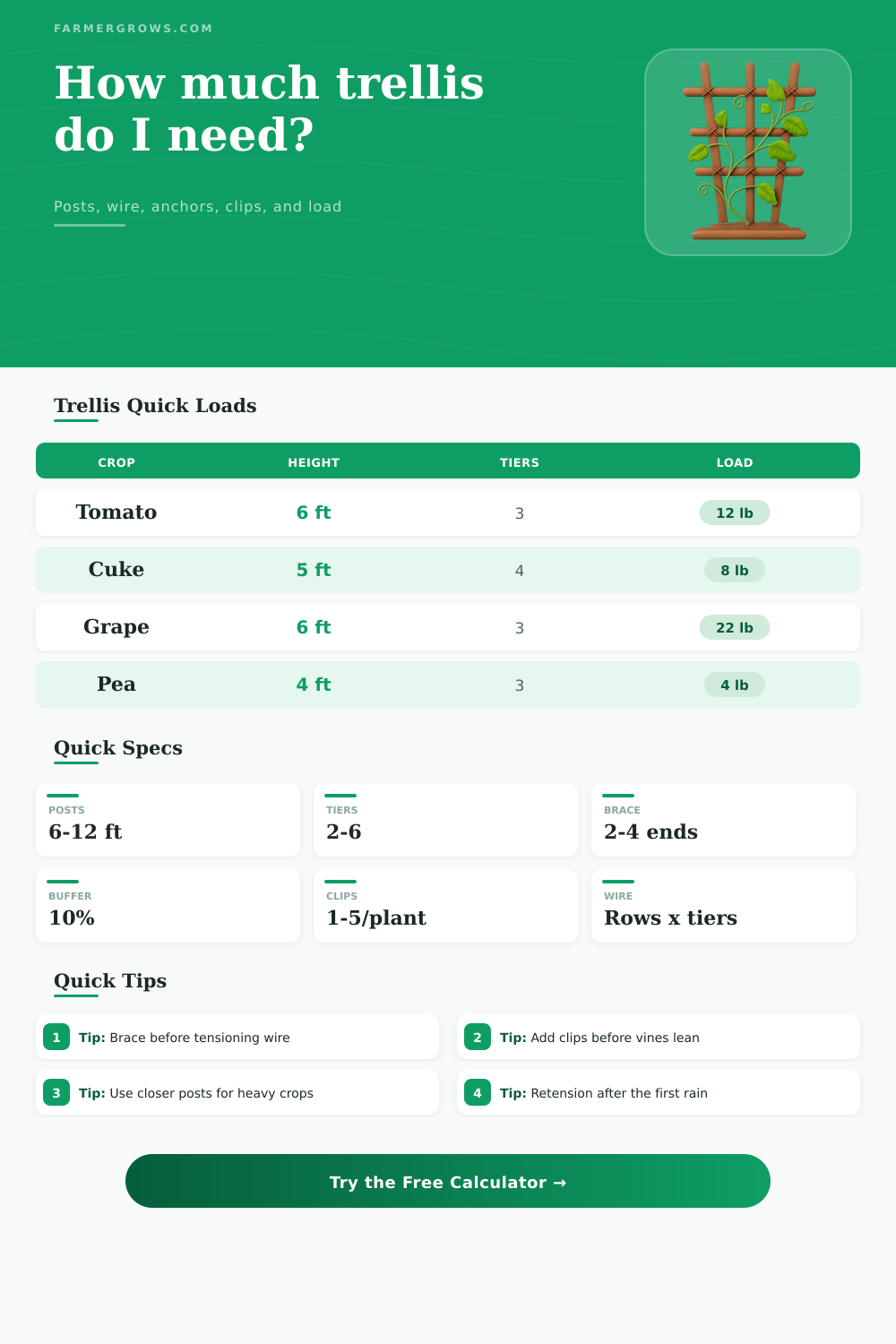
| Indeterminate tomato | 6 to 8 ft | 4 per plant | 12 lb per plant with fruit |
| Cucumber | 5 to 6 ft | 3 per plant | 8 lb per plant with vines |
| Pea and pole bean | 4 to 7 ft | 1 to 2 per plant | 4 to 6 lb per plant |
| Grape and hop | 6 to 16 ft | 2 to 5 ties per plant | 22 to 30 lb per plant |
| Cane fruit | 4 to 6 ft | 2 to 3 ties per plant | 10 to 14 lb per plant |
| Material type | Best fit | Relative strength | Field caution |
|---|---|---|---|
| Steel T-post and wire | Vegetables, berries, temporary grape rows | High | Use proper clips and protect hands when tensioning |
| Treated wood and wire | Permanent berry and vineyard runs | Very high | Brace ends before tightening long rows |
| Bamboo with twine | Light beans, peas, short garden rows | Low | Reduce spacing and replace weathered poles |
| Fiberglass stake system | Tomatoes, flowers, protected rows | Medium | Avoid overload at hot, flexible spans |
| Poly string and netting | Cucumbers, flowers, tunnel crops | Medium | Support the top line well to stop sagging |
| End brace style | Anchors counted | Extra brace posts | Use when |
|---|---|---|---|
| Simple end posts | 0 | 0 | Short, light rows with little wire tension |
| End posts plus anchors | 2 | 0 | Most garden trellises with moderate crop pull |
| H-brace ends | 2 | 2 | Berries, grapes, and rows over 100 ft |
| Deadman anchors | 2 | 0 | Where surface anchors are in the way |
| Double H-brace ends | 4 | 4 | Permanent high-tension vineyard-style rows |
Before tensioning: Set and brace the end assemblies first. A straight row with tight end posts is easier to adjust than a row corrected after vines are heavy.
Before planting close: Match plant spacing to air flow. A trellis can hold the crop, but crowded foliage still raises disease pressure and harvest time.
The trellis work require planning because the plants, such as tomato or raspberry plants, will create a significancy amount of weight as they grows. The weight of the fruit that the plants produces will add to the weight of the plants. The weight of that fruit will stress the trellis system.
All the parts of the trellis system, such as the post, lines, anchors, and clips must be planned together so the trellis system does not fail under the weight of the plants and there agricultural products. The trellis system must be strong enough to hold the weight of the plants and the weather. The length of the row is the first measurement to consider when setting up the trellis system.
How to Plan a Strong Trellis for Heavy Plants
The length of the row will ultimately determine the number of post needed for the row. If the distance between the posts are small, there will be more posts. If the distance between the posts is large, there will be less posts.
The calculator determine the number of posts based off the length of the row and the number of plants growing in the row. The second measurement to consider is the height of the trellis system. This measurement is divided into two measurements: the above-ground height and the total length of the posts.
The above-ground height is the height of the posts above the ground that will be visible from the ground. The remainder of the post length have to extend into the ground deeper than the above-ground height of the trellis system because deeper posts will increase the stability of the trellis system. Deep posts will prevent the trellis from leaning due to the wind or the weight of the plant.
The third and last measurement is the type of crops that will grow in the row. Plants such as tomatoes and grapes will create a significant amount of downward force on the trellis system due to the weight of the fruit that they produce. The plants such as peas and flowers will be of a lighter weight than tomato and grape plants.
However, they will still need attachment points for there stems to remain above the ground. Lastly, if the crops are exposed to alot of wind, the load factor setting can be used to counteract the additional downward force that the wind will place on the plants. Foliage hold water when it rains.
The water makes the foliage heavier. The end bracing of the trellis is important for the stability of the trellis. Short rows may use end posts alone; however, long or heavy rows will require the use of anchors or H-brace assemblies.
The H-brace assembly use additional posts and anchors to prevent the tension in the wire from pulling the end posts inward. The calculator help to determine the additional number of posts and anchors that will be required to establish the H-brace assembly. The items that attach the plants to the trellis is referred to as clips and ties.
Not using enough clips and ties will cause the plants to fall off of the trellis or the stems of the plants will break. Using too many clips and ties, however, will require the grower to spend too much time cutting the clips and ties when the tomatoes are harvested from the plants. The tool allow the grower to choose the density of clips and ties that are required based on the type of crop that will be grown and how the plants will grow.
Most growers does not use enough clips and ties. Using too few clips and ties will cause problems for the plants when the wind moves the plants away from their intended position. The materials that are used for the trellis will impact the strength of the trellis.
T-posts made of steel and wire that is galvanized will be the strongest materials for the trellis and are best used for supporting heavy crops of tomatoes. For those on a budget, materials like bamboo and twine will be the least expensive materials for building a trellis; however, they are not as strong as steel T-posts and galvanized wire. Bamboos and twine will flex and weather more quick than steel T-posts and galvanized wire.
Moving from one row of plants to a block of rows will increase the amount of material that is required. A single row of 100 feet will require a considerable amount of wire to wrap around the tiers of the trellis. The number of supports that will be required for that single row will depend upon the length of the row and the weight of tomatoes that will be grown in that row.
The calculations for the row that has the greatest number of tomatoes or the longest length should of been performed first. The plan that is developed for the heaviest row will help to ensure that the rest of the rows in the garden will be able to support the weight of their plants and weather.