Conveyor Torque Calculator
Estimate running torque, startup torque, motor hp, and shaft load for grain, feed, fertilizer, and other bulk material runs. Test presets, then fine tune the drive.
Pick a real layout first. Each preset sets width, speed, length, lift, trough, fill factor, and startup margin for a common conveyor.
This calculator is tuned for agricultural and yard conveyors, so it prioritizes pull, density, lift, torque, and startup demand instead of cost or purchase guidance.
Torque Output
Estimated running torque, startup torque, motor demand, and shaft torque from the settings above.
| Belt width | Practical speed | Typical use | Notes |
|---|---|---|---|
| 18 in | 1.6 m/s | Small feed line | Gentle loading |
| 24 in | 2.0 m/s | Grain transfer | Balanced duty |
| 30 in | 2.4 m/s | Fertilizer run | Higher output |
| 36 in | 2.8 m/s | Bulk handling | Heavy service |
| Width | Trough | Flow band | Common use |
|---|---|---|---|
| 18 in | 35° | 35-55 t/h | Seed line |
| 24 in | 35° | 55-85 t/h | Bin unload |
| 30 in | 35° | 90-135 t/h | Feed mill |
| 36 in | 35° | 130-190 t/h | Bulk yard |
| Pulley | Speed at 2 m/s | Best for | Note |
|---|---|---|---|
| 12 in | 318 rpm | Fast feed | Higher belt wear |
| 16 in | 239 rpm | Balanced run | Common choice |
| 20 in | 191 rpm | Gentle load | Lower belt stress |
| 24 in | 159 rpm | Slow bulk | Good for lift |
Conveyor torque is the amount of rotational force that is required to move the material along the belt or the chain. In order for the conveyor system to effective move the material, the conveyor system must overcome the forces of friction, gravity, and inertia. If the torque is calculate incorrectly, the conveyor system may stall or become overheated during operation.
Thus, it is important to understand the concept of conveyor torque, it determine if the conveyor system will operate smooth or if it will experience downtime. One of the first steps in calculating the torque that is required for a conveyor system is to select the type of material that will move along the belt. The type of material that is selected will determine the density of the load.
How Conveyor Torque Works
For instance, materials like corn may have a density of 45 pound per cubic foot, while materials like gravel have a density of 109 pounds per cubic foot. Materials that have a higher density will require more pulling force to be moved along the belt, and, therefore, will require more torque to operate the conveyor system. Additionally, another factor to consider is the duty class of the conveyor system.
The duty class account for the friction that is created by the type of material that is to be conveyed. For instance, some materials are quite clean and do not create much friction as they move along the belt, while other materials may be abrasive and create significant friction. Belt width and belt speed is two factors that determine the capacity of the conveyor system.
However, there are often trade-offs associated with these factors. For instance, while a wider belt may allow for more materials to be moved, it may require more space to operate. Similarly, increasing the belt speed will increase the amount of material that the conveyor system moves, but it will also increase the amount of heat created by the conveyors bearing, as well as the stress placed upon its idler.
Additionally, both the length of the conveyor system and the amount that it lifts the materials also affect the amount of torque that is required. Conveyor systems that move at horizontal rates will require less torque to operate than those that are moving the materials up an inclines, as they have to fight against the force of gravity. Another factor to consider is the startup torque that is required by the conveyor system.
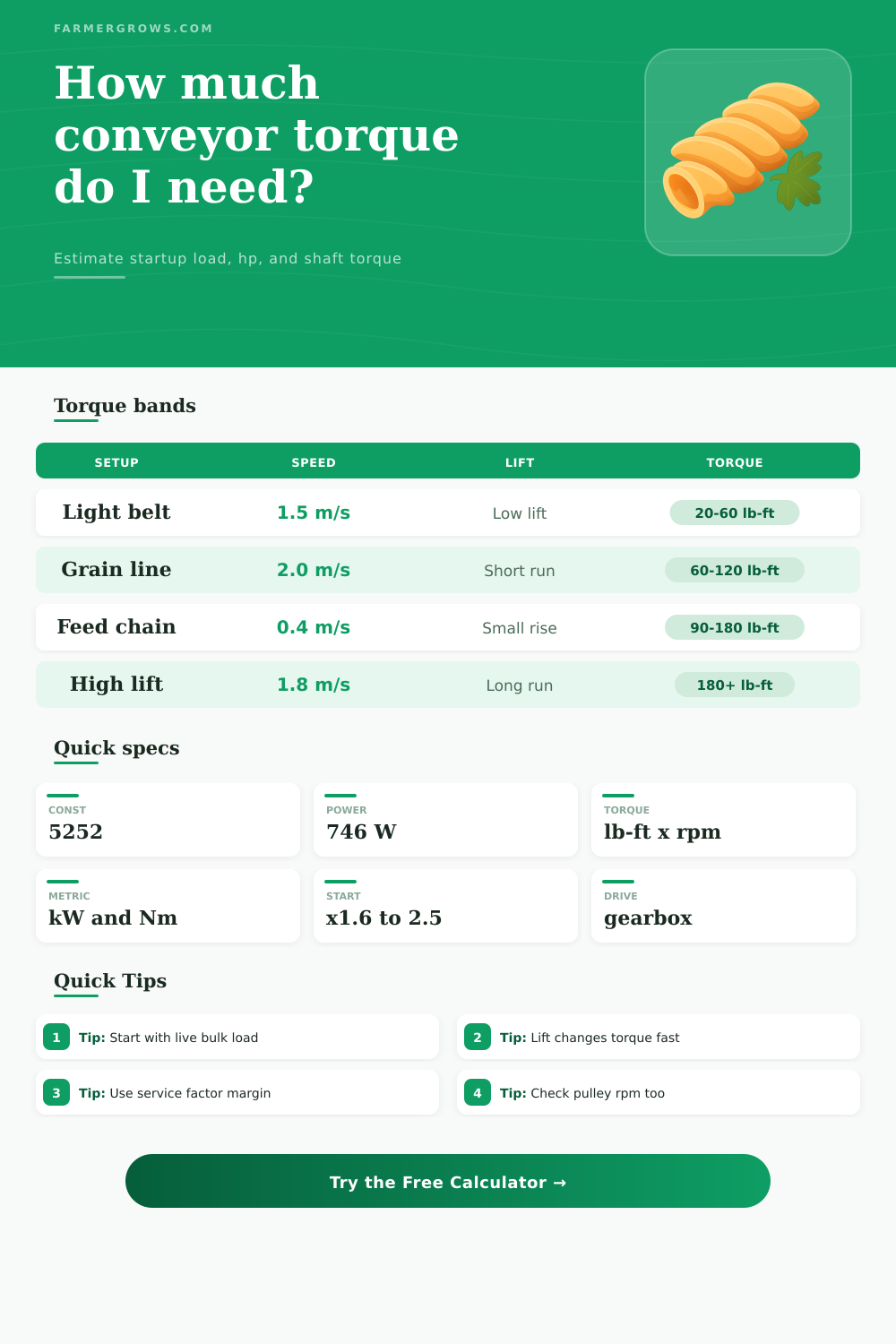
Startup torque will typically be between 1.6 and 2.5 times more higher than the amount of torque that is required to move the same load while it is in operation. The reason for this is that stationary load are much more resistant to movement than loads that are already in motion. Therefore, a buffer of 10 to 20 percent must be include in the calculations to account for this additional startup torque.
Furthermore, another factor that must be consider is the diameter of the pulley. The larger the pulley diameter, the lower the revolution per minute that are required to move the load. There are a few mistake that many individuals make when they are sizing a conveyor system.
One of the most common is undersizing the motor that is used to turn the conveyors belt. If the motor is undersized, it may fail or experience a brownout. Another mistake is ignoring the abrasive nature of the materials that are to be convey on the belt.
This can lead to excessive friction within the system. Additionally, if the trough (the belt) is increased in angle above 40 degrees, the capacity of the conveyor system will increase. However, the side drag that is created by sticky material will increase as well.
Finally, increasing the belt speed will increase the output of the conveyor system. However, the belt speed that is selected will also decrease the time between maintenance interval for the conveyor system. By correctly sizing the conveyor systems components and calculating the amount of torque that is required, the system will operate proper.
With the proper sizing, the conveyor system will idle when there is little load on the system, but will provide more power to the belt as the load increase. Additionally, if the correct amount of torque is use, the belt will last longer. Furthermore, fewer service calls will be required for the conveyor system.
There are reference tables that indicate the bands of torque that is typically required for various types of systems. By using these tables, an individual can ensure that the torque requirement for there system will be met. If the requirements for the conveyor system are matched with the characteristics of the materials, the conveyor system will operate smooth.