
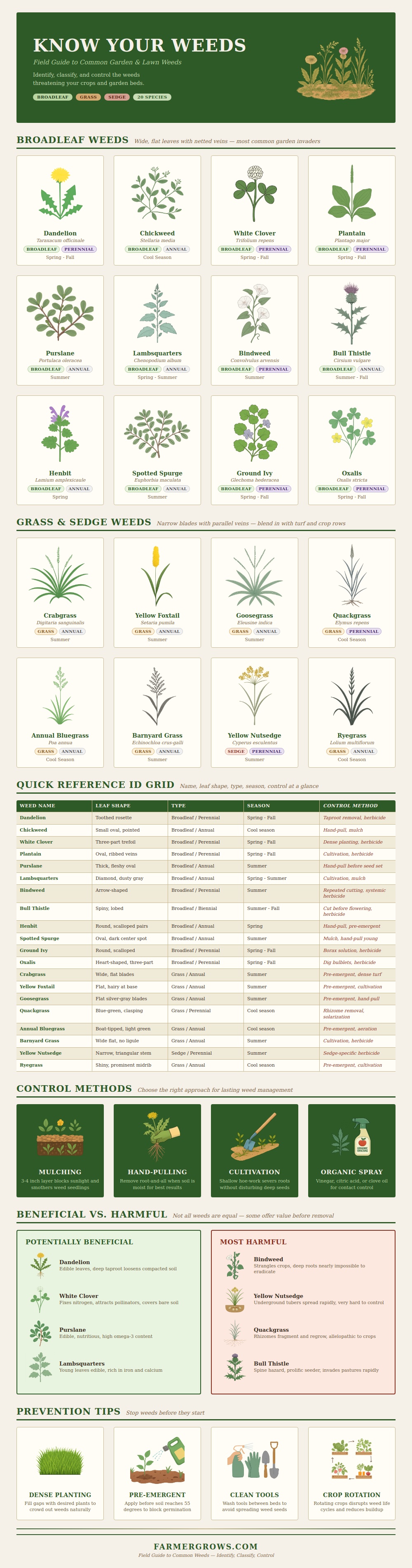
Weed identification are the process of identifying the specific weed that is growing in your garden so that you can use a correct method for controlling that weed. If you dont correctly identify the weed, then you will use a method for controlling the weed that will not be effective in getting rid of that weed. Many weed identification guides will provide informations about the different characteristics of weeds so that you can identify them correctly.
Weeds can be categorized in different ways. For instance, there are broadleaf weeds and grasses. Broadleaf weeds tend to have wider leaves with veins in the leaves.
How to Identify and Remove Garden Weeds
Grass weeds will have narrow blades in their leaves that may be similar to lawn or crop plant. Another way to categorize weeds is by the life cycle of the plant. There are annual weeds and perennial weeds.
Annual weeds will live for one year and will focus on producing many seed. Perennial weeds live for many years due to their ability to have underground structure such as roots or rhizomes that allow them to regrow. If you find a perennial weed, the weed control method that you use will have to remove the entire root system of the perennial weeds as they will regrow if you leave the roots of the perennial weed in the soil.
For instance, if the perennial weed have a taproot, you will have to completely remove the root to prevent it from growing again. If you find an annual weed, your weed control method should focuses on preventing it from creating seed. There are different weed control methods for different temperature range.
For instance, chickweed weeds will grow when the soil temperature is below 70 degrees while purslane weeds will grow when it is hot weather in your area. Weed control method include preventing weeds from growing, physically removing the weeds, and chemically treating the area to remove the weeds. Preventive methods include planting plants more dense to provide shade for the soil and remove weed seeds by cleaning your gardening tool.
Physical methods include hand pulling the weeds or using a hoe to cut the stems of the weeds. Mulching is a method that involve placing mulch in the soil so that the weeds cannot get the light that they require to grow. Chemical methods include using herbicides to kill the weeds.
It is best to use contact herbicides to kill young broadleaf weeds but use systemic herbicides that will travel throughout the plant to kill perennial weeds. Some plants that people consider to be weeds may have some benefit to the soil and ecosystem. For instance, dandelion plant have deep taproots that will help aerate the soil while white clover weeds can provide nitrogen to the soil.
However, any plant that interfere with your gardening goals is considered to be a weed. Bindweed is considered to be a harmful weed because the vines will wrap around other plants and prevent them from recieveing the light that they need to perform the processes necessary for growing plant. Nutsedge is another harmful weed because the tubers of this plant will multiply if the soil is continual disturbed.
These types of plants will be considered weeds in relation to your gardening goals. It is important to control the weed infestation consistent so that there are fewer weeds in your garden over time.