📦 Manure Pit Calculator
Calculate manure pit volume, storage capacity & animal waste output
Cu Ft / Day
Cu Ft / Day
Cu Ft / Day
Cu Ft / Day
Cu Ft / Day
Cu Ft / Day
Cu Ft / Day
Cu Ft / Day
| Pit Depth | Cu Ft per 100 sq ft | Cu Yards per 100 sq ft | Metric (m³ per 100 m²) |
|---|---|---|---|
| 4 ft (1.2 m) | 400 cu ft | 14.8 cu yd | 12.2 m³ |
| 6 ft (1.8 m) | 600 cu ft | 22.2 cu yd | 18.3 m³ |
| 8 ft (2.4 m) | 800 cu ft | 29.6 cu yd | 24.4 m³ |
| 10 ft (3.0 m) | 1,000 cu ft | 37.0 cu yd | 30.5 m³ |
| 12 ft (3.7 m) | 1,200 cu ft | 44.4 cu yd | 36.6 m³ |
| 14 ft (4.3 m) | 1,400 cu ft | 51.9 cu yd | 42.7 m³ |
| Animal Type | Density (lbs/cu ft) | Weight/Cu Yd (lbs) | Weight/Cu Yd (kg) |
|---|---|---|---|
| Dairy Cow (liquid) | 62 | 1,674 | 759 |
| Beef Cattle (solid) | 45 | 1,215 | 551 |
| Hog (slurry) | 58 | 1,566 | 710 |
| Horse (bedded) | 30 | 810 | 367 |
| Poultry (dry) | 40 | 1,080 | 490 |
| Sheep / Goat | 28 | 756 | 343 |
| Veal Calf | 55 | 1,485 | 673 |
| Turkey | 35 | 945 | 429 |
| Operation Type | Pit Size (ft) | Volume (cu yd) | Animals Supported (180 days) |
|---|---|---|---|
| Small Horse Farm | 10 x 15 x 6 | 33 | 2–4 horses |
| Small Dairy | 20 x 20 x 8 | 119 | 10–15 cows |
| Mid Beef Operation | 40 x 30 x 10 | 444 | 20–30 cattle |
| Hog Confinement | 60 x 30 x 12 | 800 | 80–120 hogs |
| Large Dairy | 80 x 40 x 12 | 1,422 | 60–80 cows |
| Poultry House | 50 x 30 x 8 | 444 | 500–800 birds |
Manure pit are storage container for the manure that comes from livestock. Since manure pits are necessity to manage the waste that livestock produce, the manure pit has to be sized appropriately. If the manure pit is undersized, the manure will overflow from the manure pit and cause environmental violation or fines.
On the other hand, if the manure pit is too large, then money will be wasted on constructing such a large manure pit. Therefore, the volume of the manure pit has to be calculate correctly. For many peoples, calculating the volume of a manure pit can be difficult due to the various factor that may impact the amount of manure that the livestock will produce.
How to Size a Manure Pit
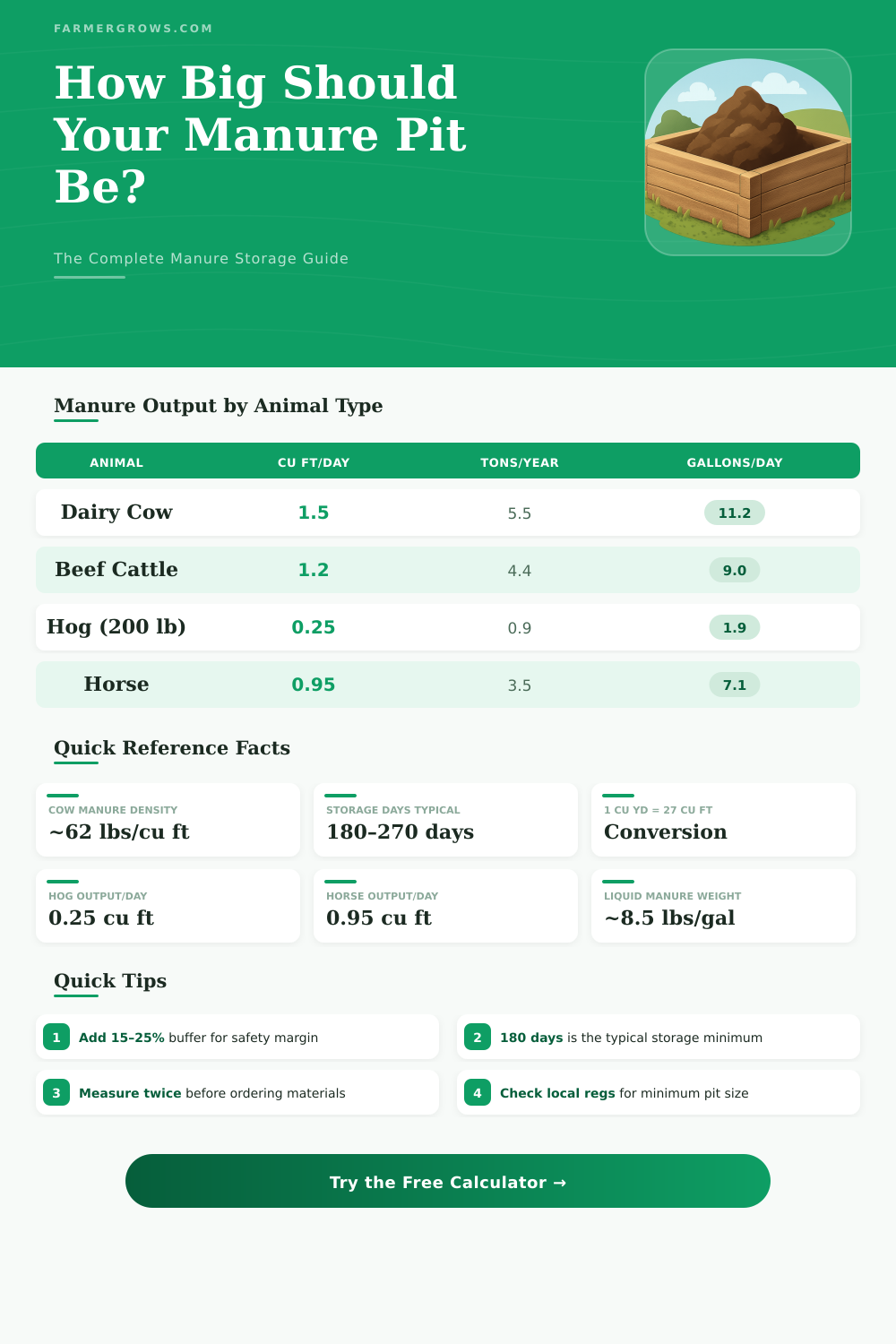
The amount of manure that the livestock will produce will depend on the type of animal that are stocked to the farm. For example, a dairy cow will produce approximately one and a half cubic feet of manure per day. The manure will contain solid, liquids, and bedding from the cow.
Beef cattle will produce slightly more manure at one cubic foot per animal per day. Hog farms will produce less manure per animal. Horses will produce alot of manure and bedding in there waste, and the amount of manure from horses will be closer than that of dairy cows.
These different type of animals must be accounted for in the creation of the manure pit to ensure that the depth and footprint of the manure pit is sized appropriately to accommodate the waste from the animals on the farm. The shape of the manure pit will have an impact on the amount of manure that can be stored in the manure pit and the amount of land that the manure pit will occupy. Rectangular manure pits is easier to build as the walls will be straight.
Additionally, rectangular manure pits may be more suitable to the layout of the barn. However, circular manure pits will allow for more volume from the waste and will be better suited to farms with limited amount of land to construct the manure pit. The raw capacity of the manure pit can be calculate by multiplying the area of the floor by the depth of the manure pit.
However, you should of include freeboard in the calculation. Freeboard is the area in the manure pit that is left for the formation of foam, waste movement caused by agitation of the manure pit, and rainfall that may fall on the manure pit during the year. Another factor that will have an impact on the manure pit is the length of time that the manure will be stored in the pit.
This will depend on the weather in the area where the manure pit will be construct and the frequency with which the manure will be cleaned. Many regulation require farms to have at least 180 day of storage for manure pits because 180 days allow the manure to be stored until the ground is not frozen. In areas with long periods of rainfall, 270 days of storage will be required.
Additionally, 10 to 25 percent of the total calculated volume for the manure pit will have to be provided as a safety margin to account for the rainfall that may fall into the manure pit and the increase in the number of animal on the farm. The rainfall that enters the manure pit come through the roofs of the barn or the walls of the manure pit. The density of the manure will have an impact on the weight of the manure that will fill the manure pit.
The weight of the manure will impact the strength of the walls of the manure pit. Dairy manure will have a density of approximately 62 pound per cubic foot. However, the dry manure from horses will have a much lower density.
The manure pit will have to be construct with strong wall to handle the weight of the manure that will fill the manure pit. The manure pit will become very heavy when fill with manure. The strength of the walls will have to be calculated to ensure that the manure pit will not crack or leak due to the weight of the manure.
Additionally, the volume of the bedding that the animals will use in the stalls has to be considered for the manure pit. If the stalls are not cleaned daily, the volume of the bedding will be double the amount of manure that come from the animals. The climate where the manure pit will be construct will also impact the design of the manure pit.
In colder climate, deeper manure pits are required to accommodate for the frozen ground that prevents the spread of manure on the ground during the winter months. Additionally, certain region have established rules that require the separation of the urine from the manure. This would require the construction of separate manure tank on the farm.
Furthermore, another factor that must be consider is that manure will expand approximately 20% during the agitation process of the manure pit. Finally, if the manure pit is managed correctly, the manure can be used as fertilizer for the crops on the farm. However, if the manure pit is of the incorrect size for the number of animal on the farm, it can cause environmental problem.