
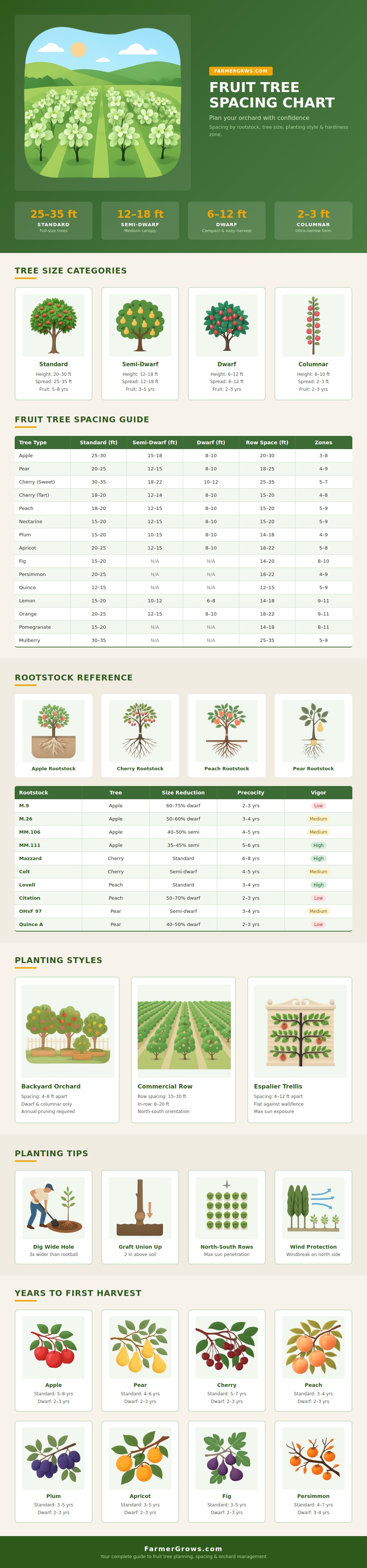
Proper spacing are necessary when you plant fruit trees because proper spacing will ensure that the fruit trees has enough sunlight and enough soil nutrient to perform there necessary tasks. If the fruit trees dont have access to these two essential elements, the trees will not be able to perform as they should and will not produce as much fruit as they could potentially could. If there is too much space between the fruit trees, there will be a reduction in the amount of fruit that you can harvest from your yard.
Therefore, it is essential to use the proper spacing for the type of fruit trees that you are planting. The type of fruit tree that you choose to plant will impact the amount of space that the fruit trees need. Standard fruit trees tend to grow to be 25 to 35 feet in width.
How to Space Fruit Trees
Due to the width of these types of trees, they require alot of space within the yard. Semi-dwarf fruit trees are in the middle in terms of size and only grow to be 12 to 18 feet in width. Semi-dwarf fruit trees are beneficial because they produce their fruit sooner than standard fruit trees.
Dwarf and columnar fruit trees is small fruit trees that require very little space in the yard. These types of fruit trees are ideal for small space like patios and can begin to produce their fruit in as little as two year. Each type of fruit tree has a specific amount of space that it needs.
For instance, standard apple trees require 25 to 30 feet of space between the trees. However, peach trees only require 18 to 20 feet of space between each tree. You should plant rows of fruit trees at least 15 to 30 feet apart from each other to allow for proper air circulation between each tree.
These wide rows will allow machinery to travel through the rows to help with harvesting the fruit. Depending on the type of fruit trees and where you live, they may only grow well in specific climate zones. For instance, cherry trees grow best in climate zones 5 to 7 while citrus trees require warmer areas such as zones 9 to 11.
Additionally, depending on the rootstock of the fruit trees, they may grow to different sizes. For instance, if the apple trees use M.9 rootstock, they will grow to be much smaller in size. Additionally, M.9 rootstock will allow the trees to produce their fruit more quick.
However, the M.9 rootstock will result in the fruit trees having less growing vigor so you may need to use stakes for the M.9 rootstock trees. Depending on the type of yard in which you will plant these fruit trees, they can be managed in different ways. If your planting area is in a backyard, you can plant the dwarf fruit trees 4 to 8 feet apart from each other to allow for easier access to the fruit on each tree.
If creating a commercial orchard, you should plant the rows of fruit trees in a north-south direction to allow each tree to recieve even amount of sunlight. Additionally, you can use the espalier method for fruit trees. The espalier method involves training the fruit trees to grow flat against a fence or a wall.
Espalier fruit trees should be spaced 6 to 12 feet apart. When you dig a hole for a fruit tree, it is important to make the hole three times the width of the rootball. Additionally, the graft union should be two inches above the ground.
This prevents the graft union of the fruit tree from rotting in the ground. Depending on the direction that you dig your rows, you should orient them to the north and south to allow the fruit trees to receive the maximum amount of sunlight. Additionally, you can plant windbreaks to the north side of your fruit trees to prevent the wind from damaging the fruit.
Depending on the vigor of the rootstock of the fruit trees, they may require more pruning than others. The vigor of the rootstock will make the trees grow faster. Additionally, if the rootstocks have high vigor, they will require more frequent pruning.
Before you begin to plant these trees, observe your yard to study the soil and the amount of sunlight that the area receives. Standard fruit trees can take five to eight years to begin producing their fruit. However, dwarf fruit trees can begin to produce their fruit in two to three years.
Additionally, the amount of space that you allocate for each tree and the rootstock of the trees will have an impact on the amount of time that you have to prune each tree. If you take the time to observe your soil and sunlight in your yard and take proper note of the information, you can make a plan that will allow your fruit trees to grow successfuly.