🐑 Sheep Hay Calculator
Calculate daily and total hay requirements for your sheep flock by animal type, production stage, and feeding period.
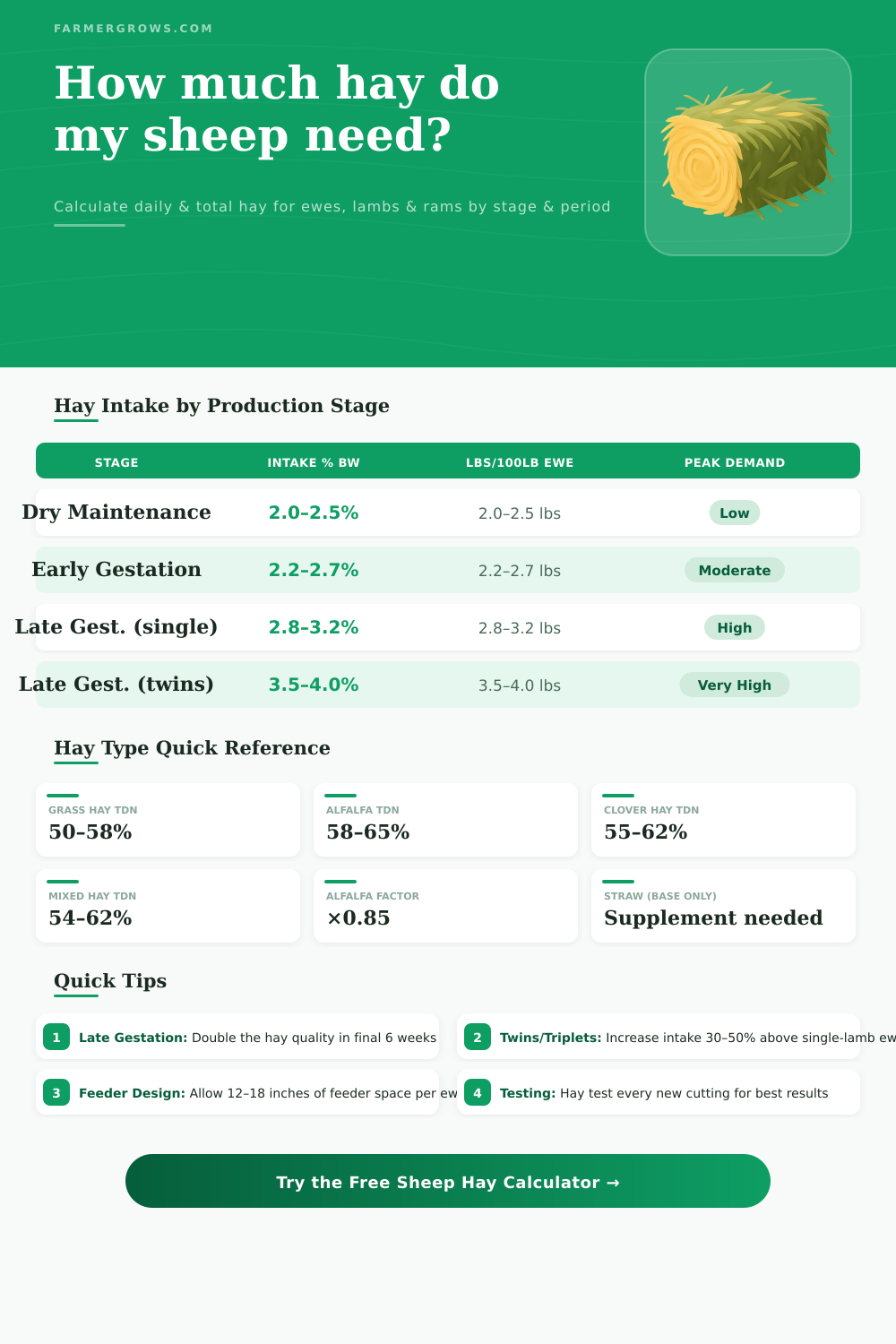
| Stage | Intake % BW | Lbs/100lb Ewe | Peak Demand |
|---|---|---|---|
| Dry / Maintenance | 2.0–2.5% | 2.0–2.5 lbs | Low |
| Early Gestation (1–15 wks) | 2.2–2.7% | 2.2–2.7 lbs | Moderate |
| Late Gest. single (last 6 wks) | 2.8–3.2% | 2.8–3.2 lbs | High |
| Late Gest. twin (last 6 wks) | 3.5–4.0% | 3.5–4.0 lbs | Very High |
| Lactation (single lamb) | 3.0–3.8% | 3.0–3.8 lbs | High |
| Lactation (twin lambs) | 4.0–5.0% | 4.0–5.0 lbs | Peak |
| Weaned Lamb Growing | 3.5–4.0% | 3.5–4.0 lbs | High growth |
| Hay Type | TDN % | Crude Protein | Notes | Best Use |
|---|---|---|---|---|
| Grass Hay | 50–58% | 8–12% | Good base forage | Maintenance & dry ewes |
| Alfalfa Hay | 58–65% | 16–22% | Reduce qty ×0.85 | Lactation & late gest. |
| Mixed Hay | 54–62% | 12–16% | Balanced, economical | All stages |
| Clover Hay | 55–62% | 14–18% | High palatability | Growing lambs |
| Straw | 38–45% | 3–5% | Low nutrient, add grain | Dry maintenance only |
| Month | Stage | Hay per Ewe/Day | Supplement Notes |
|---|---|---|---|
| Sept–Nov | Breeding / dry | 2.5–3.0 lbs | Flush ewes pre-breeding |
| Dec–Jan | Early gestation | 3.0–3.5 lbs | Good-quality grass hay |
| Feb–Mar | Late gestation | 4.0–5.0 lbs | Add alfalfa or grain |
| Mar–May | Lactation | 4.5–6.0 lbs | Peak demand, best hay |
| June–Aug | Dry / summer | 2.0–2.5 lbs | Reduce if pasture good |
Sheep are animals with ruminant stomach so they have four rooms in the belly to ferment and digest fibers from feed or hay. Fiber stays long in that stomach because bacteria and other microorganisms can process it well. To feed sheep well, you must use quality hay mostly.
They naturally eat grass to stay healthy.
How to Feed Sheep with Hay
Sheep eat daily two to three percent of their weight. For instance, 100-pound sheep requires around two pounds of food. 110-pound lamb wants three pounds, while 150-pound ewe requires four to five pounds.
Growing or nursing sheep can receive up to five percent of thier weight. In winter you must give at least seven pounds of hay for one animal without counting waste.
Hay has different nutrition value, and what works for cattle or horses is not always best for sheep. Working sheep require richer hay than those only keeping weight. They like leafy and fresh hay, not coarse.
If you give bad quality hay, it will go mostly to waste.
Alfalfa is superior feed. Sheep require less of it than grass hay, but it gives good nutrition and helps the rumen. Even so it often costs a lot, so average grasses work because of their low price.
During pregnancy or nursing you can switch to alfalfa. Also size of stems matters: sheep eat and clean small stems better.
Here grows fown waste that you must manage. Pile it, leave it compost and add to the garden. That works well.
Lay a board on the soil under the feeder to catch leaves and seeds that sheep like to eat.
Round bales of hay can work well. Lay big round in special feeder with axis horizontal, then cut from the top and leave fall behind the slats, so that sheep eat around the edge. Square bales also are useful because you can leave them beside the pasture for slow use.
Even during hay feeding, give to sheep freely accessible minerals special for them and fresh water. Balance calcium and phosphorus is important because imbalance cause kidney stones, similarly to renal calculations.