🥒 Zucchini Plant Water Calculator
Calculate exactly how much water your zucchini garden needs based on plant count, growth stage, and garden size
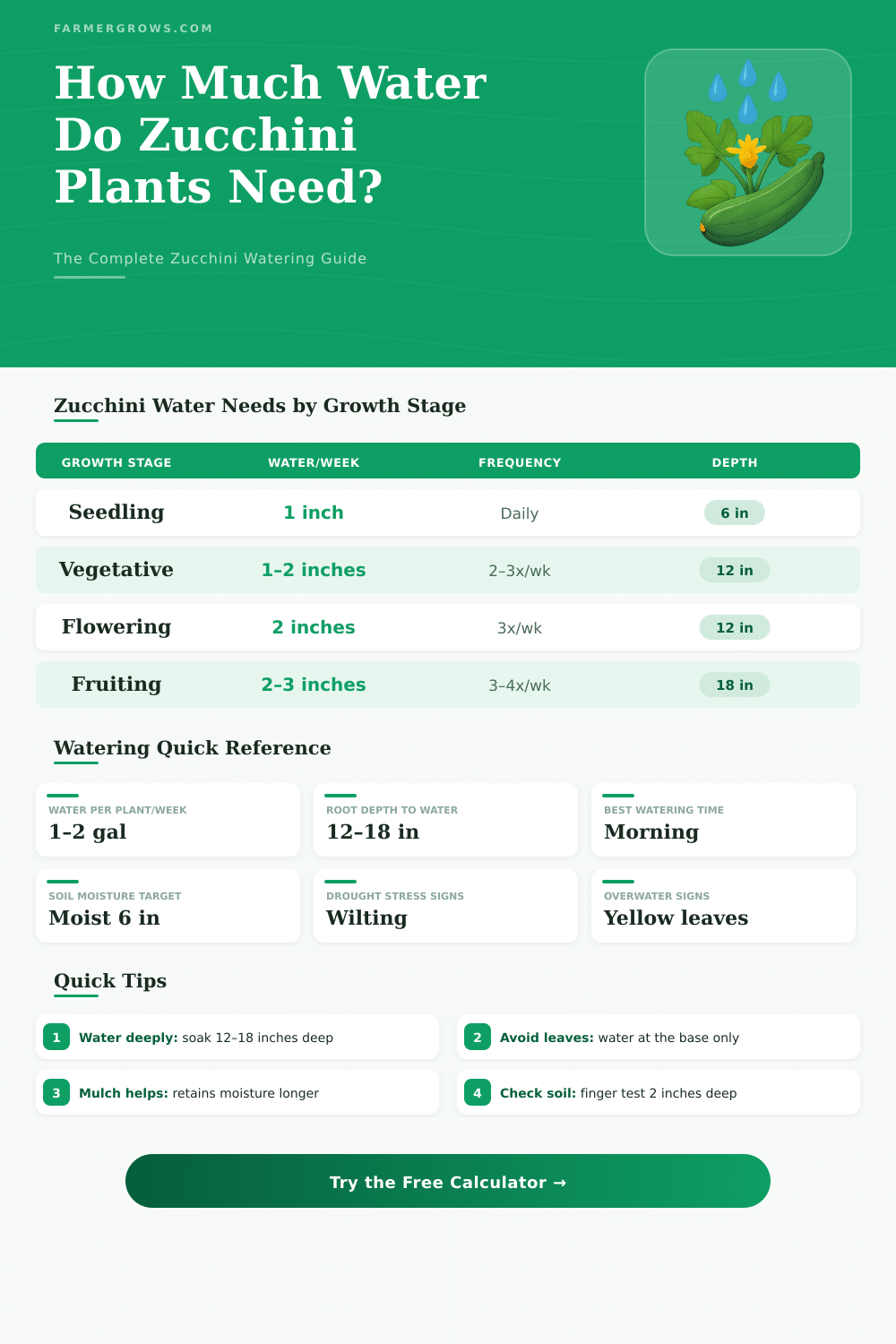
| Water Depth | Gallons per Sq Ft | Liters per Sq Meter | Best For Stage |
|---|---|---|---|
| 0.5 inch (1.3 cm) | 0.31 gal | 12.7 L/m² | Seedling |
| 1 inch (2.5 cm) | 0.62 gal | 25.4 L/m² | Seedling / Vegetative |
| 1.5 inch (3.8 cm) | 0.93 gal | 38.1 L/m² | Vegetative |
| 2 inch (5.1 cm) | 1.25 gal | 51.0 L/m² | Flowering |
| 2.5 inch (6.4 cm) | 1.56 gal | 63.8 L/m² | Heavy Fruiting |
| 3 inch (7.6 cm) | 1.87 gal | 76.5 L/m² | Drought Recovery |
| Method | Efficiency | Extra Water Needed | Notes |
|---|---|---|---|
| Drip Irrigation | 90–95% | +0% | Best for zucchini |
| Soaker Hose | 80–90% | +10% | Good for rows |
| Hand / Hose | 70–80% | +25% | Avoid wet leaves |
| Sprinkler | 60–75% | +35% | Risk of mildew |
| Soil Type | Water Holding | Frequency Adjust | Depth to Check |
|---|---|---|---|
| Sandy | Low — drains fast | +30% more frequent | 4–6 inches |
| Loam | Ideal — balanced | No adjustment | 6–8 inches |
| Clay | High — slow drain | –20% less frequent | 8–10 inches |
| Raised / Potting Mix | Good — fast drain | +15% more frequent | 4–6 inches |
| Plants | Area (approx) | Gal/Week (Moderate) | Gal/Week (Hot) |
|---|---|---|---|
| 1 plant | ~4–8 sq ft | 2–4 gal | 3–6 gal |
| 2 plants | ~8–16 sq ft | 4–8 gal | 6–12 gal |
| 4 plants | ~16–32 sq ft | 8–16 gal | 12–24 gal |
| 6 plants | ~24–48 sq ft | 12–24 gal | 18–36 gal |
| 10 plants | ~40–80 sq ft | 20–40 gal | 30–60 gal |
| 20 plants | ~80–160 sq ft | 40–80 gal | 60–120 gal |
Zucchini mostly is made up of Water. We talk about more than 90% of the whole. Truly that is a whole lot of moisture in one single vegetable.
That high Water content is exactly what helps it stay fresh and lively in the garden. But here is where things become a bit tricky: as soon as you bring it inside and cook it, the whole extra liquid becomes a real problem.
How to remove water from zucchini
If you make Zucchini fries muffins, bread or even chocolate Zucchini cake, one of the most important steps is to remove as much moisture as you can from your grated Zucchini. Too much Water, and the final dish ends too wet, heavy or even soaked; nobody wants that. A good method is to grate it using the big holes of a box grater and then firmly squeeze with your hands; that already helps a lot.
Another way: cut the Zucchini, lay the slices on paper cloths, sprinkle with salt, and leave them rest for 15 to 30 minutes. The salt draws the moisture right out. Then simply pat everything with fresh paper cloths.
If you have a thick kitchen towel around, roll the grated Zucchini in it like a roll, that pulls out much more Water than a regular kitchen cloth. You can aslo use a strainer to do the squeezing.
Salt is truly the most effective way. A salad spinner might seem useful, but it only bruises the Zucchini and mostly dries the surface, it does not really pull the Water from inside. After you salted it, you normally rinse the extra salt, then drain well and dry before use.
Partial drying is also useful for removing a bit of Water, so that your dish does not end watery. Full thorough drying makes it too stiff, but a light touch is enough to do the work.
Here is a tip: do not dump the leftover Zucchini juice. That liquid does have benefits. It can serve as a quick health boost if you need something like that.
You can cook rice in it, although hear is a warning. Zucchini does not have a very strong taste, so the Water will not add much to the flavor. Smoothies and soups are also good choices for using it.
Zucchini is actually great also for making a fresh drink. It is refreshing and full of vitamins and minerals. Mixing Zucchini strips with Meyer-lemon gives a nice taste combo.
A simple mixed drink is made by blending equal parts of cubed cucumber and Zucchini, the juice of one lemon, and about two to three cups of Water.
Here is something notable: Zucchini actually carries less Water than cucumbers. If you make pickles and swap cucumbers for Zucchini, you will end with less leftover liquid, so maybe you will need to raise the amount of vinegar a bit. Zucchini can be cooked without oil or butter entirely.
If you instead use splashes of veggie broth or Water, you get a lighter result, although you do lose abit of that rich taste.