🌿 Yard of Mulch Calculator
Calculate exactly how much mulch you need for any project — in cubic yards, bags, and weight
| Depth (in) | Depth (cm) | Coverage (sq ft) | Coverage (m²) |
|---|---|---|---|
| 1 | 2.5 | 324 | 30.1 |
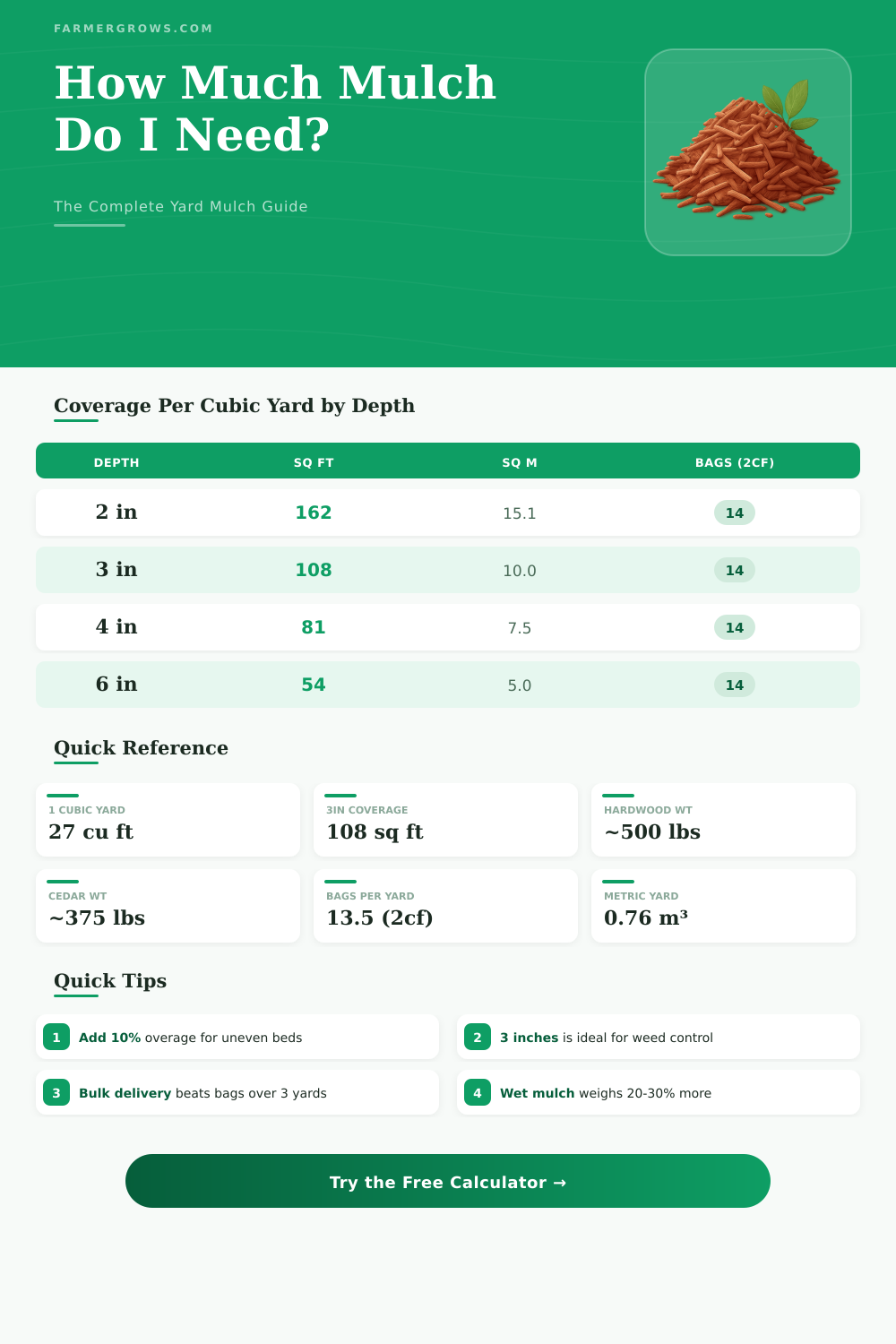
| 2 | 5.1 | 162 | 15.1 |
| 3 | 7.6 | 108 | 10.0 |
| 4 | 10.2 | 81 | 7.5 |
| 6 | 15.2 | 54 | 5.0 |
| Bag Size | Volume | Bags per Cubic Yard | Coverage at 3 in |
|---|---|---|---|
| 2 cu ft bag | 0.074 cu yd | 13.5 bags | 8 sq ft |
| 3 cu ft bag | 0.111 cu yd | 9 bags | 12 sq ft |
| Project | Area (sq ft) | Cubic Yards | 2 cu ft Bags |
|---|---|---|---|
| Small flower bed | 50 | 0.46 | 7 |
| Tree ring (6×6) | 36 | 0.33 | 5 |
| Garden bed (10×20) | 200 | 1.85 | 25 |
| Side yard path (4×25) | 100 | 0.93 | 13 |
| Medium bed (20×20) | 400 | 3.70 | 50 |
| Large garden (30×40) | 1,200 | 11.11 | 150 |
| Full yard (50×50) | 2,500 | 23.15 | 313 |
| Playground (15×15) | 225 | 2.78 | 38 |
108 square feet – that is one cubic yard of mulch in 3 inches of depth, and honestly I should double check that number because it seems too low. If you drop to 2 inches, then you cover up to 162 square feet per yard, what sounds much better, until you remember, that weeds push through anything under 3 inches.
At 4 inches of depth, and you fall to 81, almost half of the more lightweight layer.
How Much Mulch Do You Need?
Dense wooden bark weighs around 500 pounds per yard in the heaviest case. Cedar is more lightweight, near 375. Rubber mulch?
More than 1200 pounds per cubic yard. I should recheck that. To cover 500 square feet in 3 inches, you need around 4.6 yards; say 5 with 10 percent buffer.
Wet mulch weighs 20 to 30 percent more than dry, what matters, if you load it. For 2500 square feet you need 23 cubic yards or around 313 bags (of the kind with 2 cubic feet). Everything taht sounds truly brutal.
The info below does not come from any calculator or converter. It is based on actual usage, forum chats and experiences of communities across the net.
mulch is a layer of material laid on the soil. It stops growth of weeds, slows erosion from wind, helps hold water and makes the surrounding landscape nicer. It slows drying of soil and stops seeds from growing up.
Because of that, if some want too quickly block grass, mulch adds elegant touch to any garden.
mulch simply is a layer of natural plant waste. The idea to use it in forest areas comes from the forest floors, where twigs, leaves, bark and other dead stuff builds up and covers the ground. Ground creatures use that layer to form healthy soil.
Organic mulch like wooden chips, leaves and other plant materials well keep the soil damp and control the temperature during warm and cold seasons. They give nutrients and help the structure of soil and drainage, while they break down over time.
Cedar mulch is liked because of its long life and because it does not wash away easily. Pine wooden mulch commonly washes away more quickly. Good cedar mulch works more well than cheap bark pieces of fir or spruce, that pulls nitrogen from the ground during breakdown.
Even so pine bark mulch has one downside. If it sits beside a white house wall, it can attract fungus, that leaves little black spots, that almost it is possible not to flush. The natural cedar smell is wonderful.
Changing a garden of stone to mulch can make everything feel fresh. Reducing the heating ability of the soil helps to keep the surrounding air less hot. Mulch also is useful in dry regions, where care about water is costly and difficult.
A cubic yard of mulch matches 27 cubic feet. Most bags store around 2 cubic feet, so roughly 13.5 bags give one cubic yard. One cubic yard covers around 100 square feet in 3 inches of depth.
3-inch depth well stops weeds. A cubic yard of mulch weighs around 800 pounds. If you buy in bulk, the prices range between 20 and 30 dollars per yard.
Lay cardboard down first, soak it with water, then add 3 or more inches of mulch on top works very well. The mulch needs refreshing every year or every second. Pine needles also serve as mulch and give few weeds, but they must be added yearly, because stepping on them smashes them into dust.
After years of regular additions of mulch, the soil below can become thick layers of pure compost. Mulch colors range from red to black, what helps to match thelook of any garden.