🌾 Straw Coverage Calculator for Grass Seed
Calculate exactly how many bales or cubic yards of straw you need to cover your grass seed area
lbs / cu yd
lbs / cu yd
lbs / cu yd
lbs / cu yd
lbs / cu yd
lbs / cu yd
lbs / cu yd
lbs / cu yd
| Depth (in) | Depth (cm) | Sq Ft per Cu Yd | Sq M per Cu Yd | Cu Yds per 1,000 Sq Ft |
|---|---|---|---|---|
| 0.5 in | 1.3 cm | 648 sq ft | 60.2 m² | 1.54 |
| 1 in | 2.5 cm | 324 sq ft | 30.1 m² | 3.09 |
| 1.5 in ⭐ | 3.8 cm | 216 sq ft | 20.1 m² | 4.63 |
| 2 in | 5.1 cm | 162 sq ft | 15.1 m² | 6.17 |
| 3 in | 7.6 cm | 108 sq ft | 10.0 m² | 9.26 |
| 4 in | 10.2 cm | 81 sq ft | 7.5 m² | 12.35 |
| Bale Type | Volume (cu ft) | Bales per Cu Yd | Coverage at 1 in | Coverage at 1.5 in | Coverage at 2 in |
|---|---|---|---|---|---|
| Small Bale | 2.5 cu ft | 10.8 bales | 30 sq ft | 20 sq ft | 15 sq ft |
| Standard Bale ⭐ | 3.0 cu ft | 9.0 bales | 36 sq ft | 24 sq ft | 18 sq ft |
| Large Bale | 3.5 cu ft | 7.7 bales | 42 sq ft | 28 sq ft | 21 sq ft |
| Jumbo Bale | 4.0 cu ft | 6.75 bales | 48 sq ft | 32 sq ft | 24 sq ft |
| Project | Area (sq ft) | Cu Yards Needed | Standard Bales (3 cu ft) | Cu Meters |
|---|---|---|---|---|
| Bare Patch | 80 sq ft | 0.37 cu yd | ~4 bales | 0.28 m³ |
| Small Lawn 20x30 | 600 sq ft | 2.78 cu yd | ~25 bales | 2.12 m³ |
| Front Yard 30x25 | 750 sq ft | 3.47 cu yd | ~32 bales | 2.65 m³ |
| Side Strip 10x40 | 400 sq ft | 1.85 cu yd | ~17 bales | 1.41 m³ |
| Medium Lawn 50x40 | 2,000 sq ft | 9.26 cu yd | ~84 bales | 7.08 m³ |
| Backyard 60x50 | 3,000 sq ft | 13.89 cu yd | ~125 bales | 10.62 m³ |
| Large Lawn 100x80 | 8,000 sq ft | 37.04 cu yd | ~334 bales | 28.32 m³ |
| Sports Field 100x200 | 20,000 sq ft | 92.59 cu yd | ~834 bales | 70.79 m³ |
straw commonly chosen to protect grass seed against birds and bad weather, especially if you start a fresh meadow or fix empty places. Even so, it not always works, and it is good to know some causes before you spread it through your whole garden.
The main benefit of straw is that it protects grass seed against too much direct sunshine and stops birds eating them. It also stops washing of soil and slows erosion during strong rains. Some products from straw have natural glue that holds everything in place and boosts the sprouting.
Straw for New Grass: Good and Bad and What to Use Instead
But here the thing: straw is not fully needed. When you well prepare the ground and press the seeds for good contact, you can skip it and still get good results.
The main trouble with straw is the seeds of unwanted grasses, and that is a real cause. Many packages of straw carry a big amount of unwanted grasses like crabgrass, spurge, goosefoot, and bluegrass. Winter wheat can grow also, although it usually dies when summer heat arrives.
Search always for pure straw. Otherwise, you simply spread grass seed on freshly prepared ground. Highway crews use cheap straw always because they do not care about the grass seed that comes with it.
Peat moss commonly spreads as the best option. It does not bring seeds of unwanted grasses, as does straw. The downside?
Peat moss works best when one applies it very thin. If it is too thick, the young grasses hardly push threw it. Hay from salt marsh deserves thought as another option, but its access depends on your location and local resources.
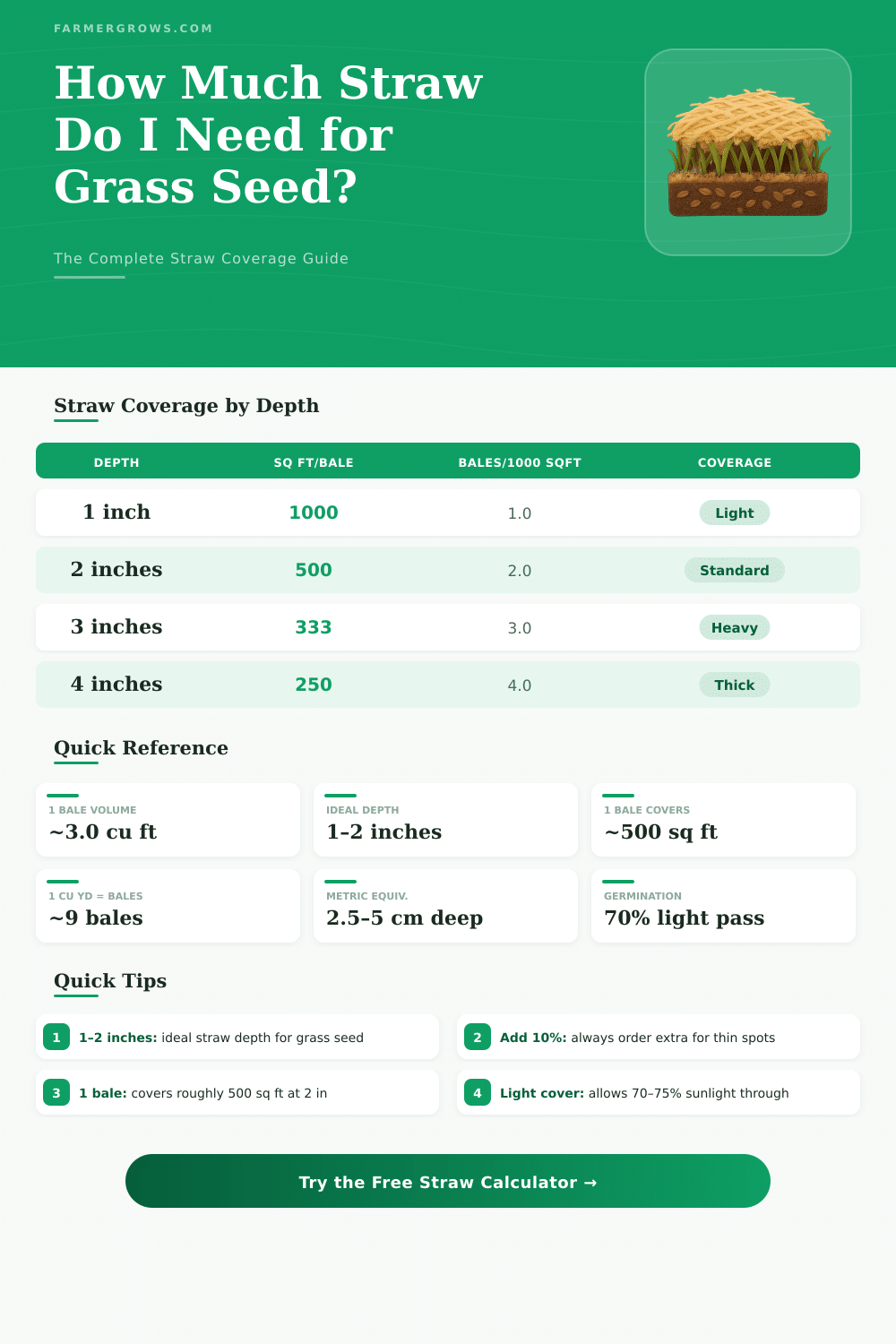
When you are ready to spread it, work in easy parts and move backwards, to not walk on recently covered areas. You want that almost half of the soil shows through it. Think about a quarter to half of inch of covering.
Too thick a layer only forms a hide that chokes the young grass. Straw with good short bits easily forms into dense hides, that is especially harmful for seedlings. Longer straw maybe needs pressing before you can settle, which risks destroying the wet new growth.
About the amounts, one standard package covers around 300 square feet at one inch thickness on average. If it is heavy, the same package only covers 50 to 75 square feet. A package of 50 pounds of pure wheat straw needs two folks for one hour of hand work.
Machine blowing needs almost 35 to 40 packages per acre, butby hand it almost doubles that number.
Rolling seeds directly in the ground gives another whole method. It ensures the best contact between seed and soil and will not flush during rainstorms. Some folks consider straw almost useless, because it simply lies on top.
Adding compost or gently pressing seeds in the ground gives similar results without that trouble.