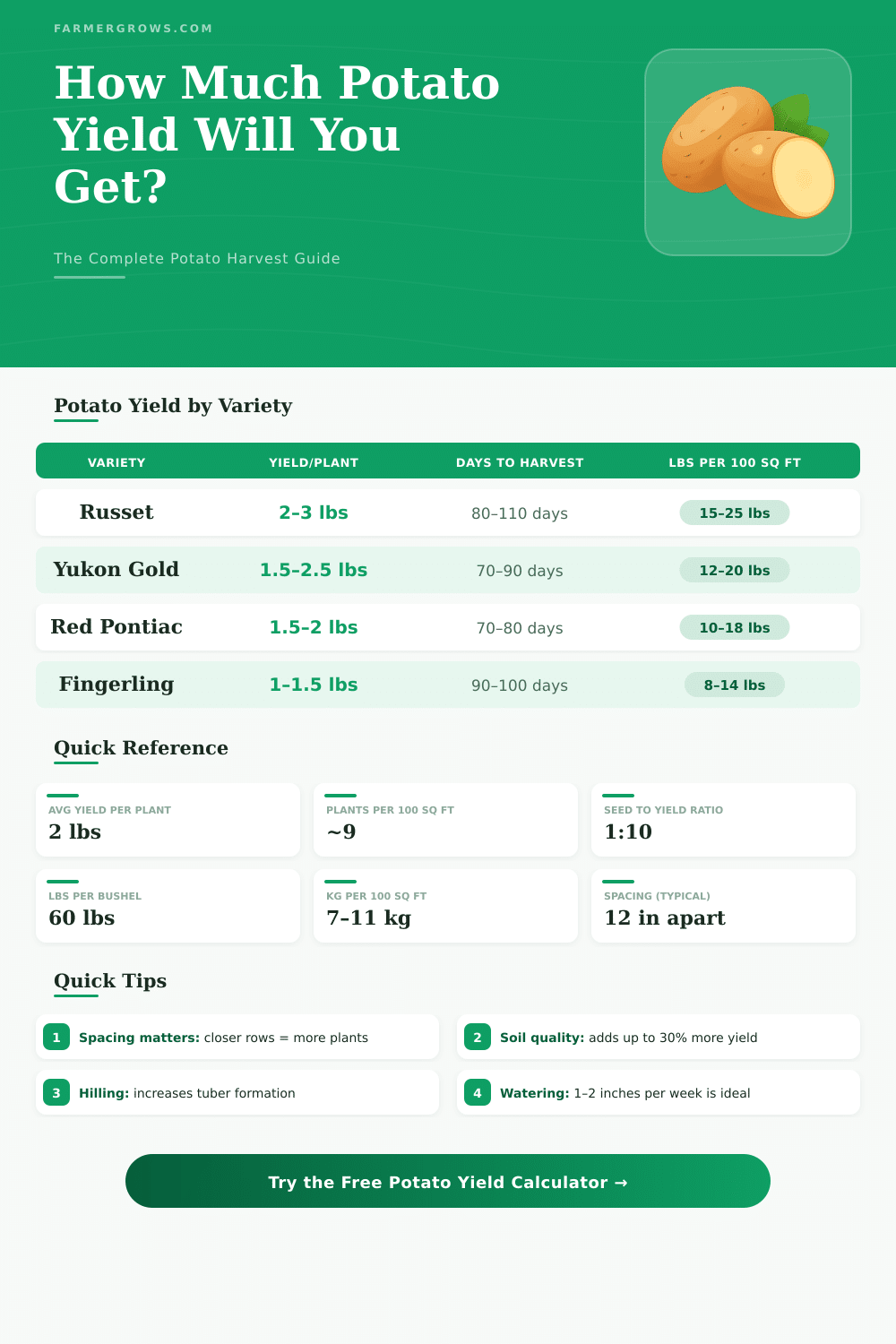
🥔 Potato Yield Calculator
Estimate your potato harvest by plot size, spacing & variety — imperial & metric supported
| Plot Size | Plants (12" x 30") | Est. Yield (lbs) | Est. Yield (kg) |
|---|---|---|---|
| 10 x 10 ft (100 sq ft) | ~4 plants | 8–14 lbs | 3.6–6.4 kg |
| 10 x 20 ft (200 sq ft) | ~9 plants | 18–27 lbs | 8.2–12.2 kg |
| 20 x 20 ft (400 sq ft) | ~19 plants | 38–57 lbs | 17–26 kg |
| 20 x 50 ft (1,000 sq ft) | ~48 plants | 96–144 lbs | 44–65 kg |
| 50 x 50 ft (2,500 sq ft) | ~120 plants | 240–360 lbs | 109–163 kg |
| 50 x 100 ft (5,000 sq ft) | ~240 plants | 480–720 lbs | 218–327 kg |
| 100 x 100 ft (10,000 sq ft) | ~480 plants | 960–1440 lbs | 435–653 kg |
| Row Spacing | Plant Spacing | Plants per 100 sq ft | Plants per Acre |
|---|---|---|---|
| 24 in | 10 in | ~7 | 26,136 |
| 24 in | 12 in | ~6 | 21,780 |
| 30 in | 12 in | ~5 | 17,424 |
| 30 in | 15 in | ~4 | 13,939 |
| 36 in | 12 in | ~4 | 14,520 |
| 36 in | 18 in | ~3 | 9,680 |
| Plot Area | Plants Needed (12"x30") | Seed (lbs, 2 oz pieces) | Seed (kg) |
|---|---|---|---|
| 100 sq ft | ~5 | ~0.6 lbs | 0.27 kg |
| 500 sq ft | ~24 | ~3 lbs | 1.4 kg |
| 1,000 sq ft | ~48 | ~6 lbs | 2.7 kg |
| 2,500 sq ft | ~120 | ~15 lbs | 6.8 kg |
| 5,000 sq ft | ~240 | ~30 lbs | 13.6 kg |
| 1 acre (43,560 sq ft) | ~2,090 | ~1,600 lbs | 726 kg |
The potato yield depends on several factors. Quality of the soil, the weather, the temperature the time of harvest and even the exact place all affect strongly. In one same city even, the results can differ a lot.
Also the chosen variety matters, so pick the type of potato that best fits the local conditions and the needs of the market, is a wise step. Test new varieties in small plots on the farm is another good idea.
How to Grow More Potatoes
For a grower in the first year, potato yield would be around 25 tons per hectare or 10 tons per acre. Farmers with many years of experience can reach 40 to 70 tons per hectare. If the management is good and the weather helps, one can reach 300 hundredweight per acre.
In systems with a lot of irrigation, high levels of light and long grwoing seasons, it is possible to reach even 160 Mg per hectare. Here actual amounts above 120 Mg per hectare is possible.
Potatoes manage to give up to four times more then wheat, according to the variety and the methods of growing. Moreover they use water and nutrients more well, what makes them a more profitable crop for the farmers.
At home one plant of potato usually gives 5 to 10 lumps. This matches to 1 to 3 pounds per plant in normal conditions. In general one harvests around 10 pounds for every pound planted.
If one grows in boxes, one can get 10 to 15 pounds per pound of seed potatoes. In a well done garden one can reach 4 to 5 pounds per square foot. One plant gives about 2.5 pounds of potatoes in the lowest case, so for one family one would need about 60 plants.
Potatoes do best in deep, light loose soil, that is not too rich. For mounds and raised beds, mix two parts of garden soil with one part of compost. Ideal are sandy, well draining soil with mild and cool temperatures.
If too much nitrogen is in the soil, the plant will grow a lot of green leaves instead of lumps. Potatoes truly need much nitrogen at first, later little nitrogen but much phosphorus and potassium, when the lumps grow.
One does mounding to avoid sunburn and green potatoes. Mounding at the right moment truly increases the potato yield, especially when lumps grow. Plants that flower will give less product.
After harvest, one should keep the lumps in 55 to 60 degrees during some weeks, so that wounds heal. Later the healthy lumps should stay in 38 to 40 degrees with 85 to 90 percent of humidity intotal darkness.
Using boxes from scraps beside the garden is a good way to increase the use of space and the potato yield, especially if the local soil is bad. It is good to buy certified seed potatoes without diseases. They need proper mix for boxes, good feeding and regular care.