🌳 Circle Mulch Calculator
Calculate exactly how much mulch you need for circular beds, tree rings & round gardens
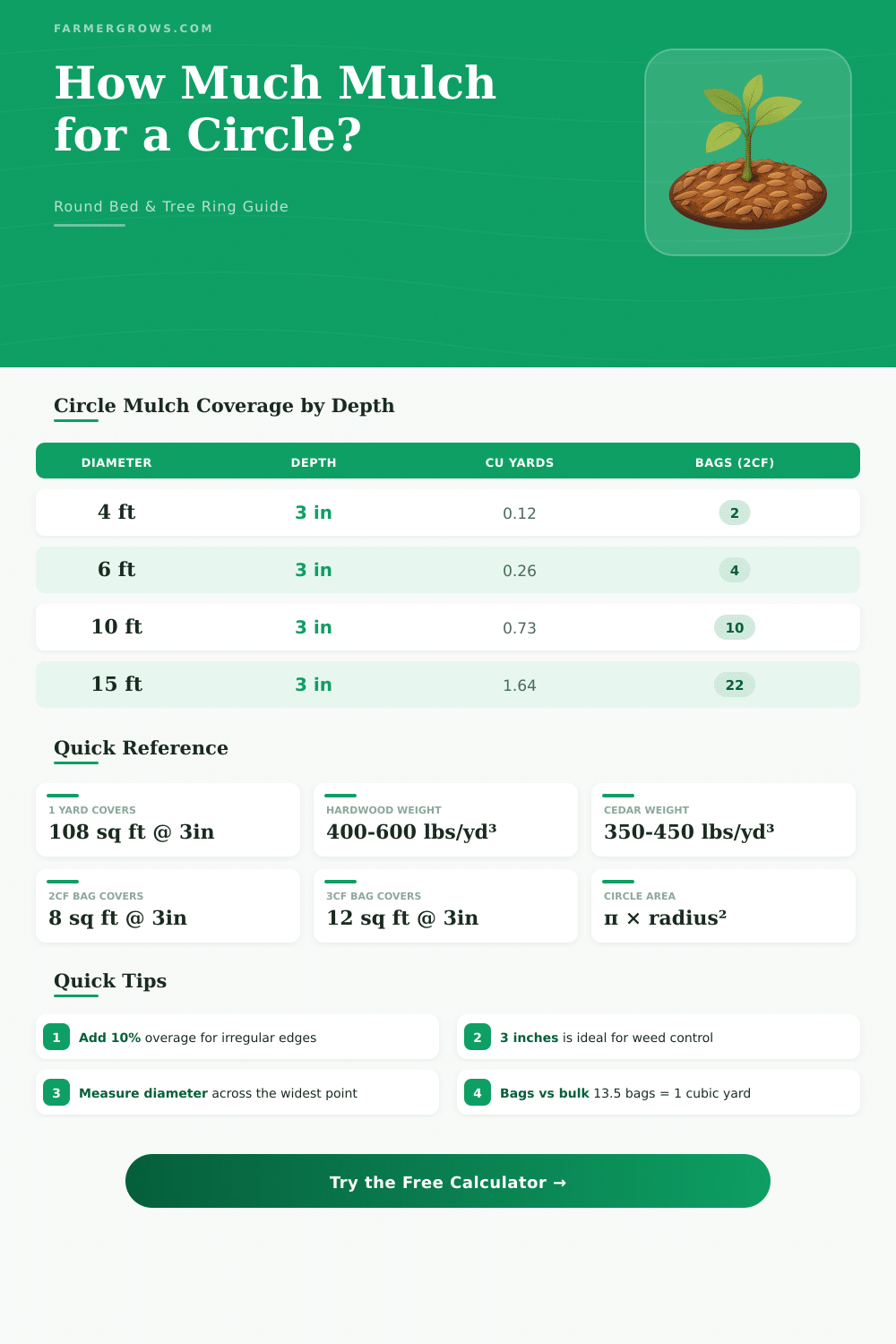
| Depth | Sq Ft / Yard | m² / Yard | Depth (cm) |
|---|---|---|---|
| 1 in | 324 | 30.1 | 2.5 cm |
| 2 in | 162 | 15.1 | 5.1 cm |
| 3 in | 108 | 10.0 | 7.6 cm |
| 4 in | 81 | 7.5 | 10.2 cm |
| 6 in | 54 | 5.0 | 15.2 cm |
| Bag Size | Volume / Bag | Bags / Cubic Yard | Coverage @ 3 in |
|---|---|---|---|
| 2 cu ft bag | 0.074 cu yd | 13.5 bags | 8 sq ft |
| 3 cu ft bag | 0.111 cu yd | 9 bags | 12 sq ft |
| Project | Diameter | Area (sq ft) | Cubic Yards |
|---|---|---|---|
| Small Tree Ring | 4 ft | 12.6 | 0.12 |
| Medium Tree Ring | 6 ft | 28.3 | 0.26 |
| Garden Circle | 8 ft | 50.3 | 0.47 |
| Round Bed | 10 ft | 78.5 | 0.73 |
| Large Circle | 12 ft | 113.1 | 1.05 |
| Fire Pit Area | 15 ft | 176.7 | 1.64 |
| Round Garden | 20 ft | 314.2 | 2.91 |
| Large Round Bed | 25 ft | 490.9 | 4.55 |
A 10 foot diameter circle only gives you about 78.5 square feet, and at 3 inches deep thats roughly 0.73 cubic yards of mulch which honestly doesnt sound like much until you realize hardwood bark weighs somewhere around 500 pounds per yard.
The information below does not come from a computer or some automatic translator. It is based on real experiences, discussions in forums and community opinions from the whole net.
Mulch: What It Is and How to Use It
mulch is made up of layers of materials that sit above the ground. One can spread it around gardens, trees, flower beds and landscapes. Usable materials can be natural or fake, and one can mix them in many ways in one single garden or around a house.
Usually mulch has organic character although not always like this.
Organic mulch stores materials as cut grass clippings, straw, chips of bark and alike. Also non-organic types are available. For instance, shredded redwood bark is a famous organic type, occasionally called gorilla hair.
It weighs little and spreading it is simple, even so it stays quite a lot rugged. Wooden mulch types like shredded bark chips, do several tasks in the garden. They help to push fungal growth, that breaks the wood over time.
Mulch from hemlock bark is another option, that commonly beats the basic store versions in quality. Some coloured mulch types from big stores are simply chopped wooden pallets from soil, and thier colour can fade a bit too soon.
Rubber mulch offers another chance. It does not blow from the place as easily as wooden mulch, although a leaf blower however can move it. In general wooden mulch types are light and can be blown or washed away just as easily.
The basic idea of landscape mulch is to copy the forest floor. In woods, bits of plants, stems, leaves and twigs build up on the soil and cover it naturally. In a garden or yard, one must add that organic protection on purpose.
Mulch saves and feeds the ground by means of materials, that slowly age. It works as a tank, from witch plants pull everything during growth.
The benefits of mulch go beyond only the nice look. It keeps moisture in the ground, because water in mulch covered soil does not dry out as quickly. Mulch stops erosion by means of protection of the soil against the blow of rain.
It slows the growth of unwanted grasses, blocking sunshine and stopping seeds reach the ground. It controls the temperatures of the soil, what saves the ground from too fast drying in dry times. Over time, organic mulch breaks down and adds organic matter to the soil, what improves its health and richness.
During winter, mulch covers bare ground and plants. During spring, it keeps moisture, stops unwanted grasses and feeds the soil. Adding mulch ranks between the most useful actions for the health and look of trees.
White or silver mulch stops grasses from growing and protects the ground, during typical black mulch well keeps moisture and warms the soil. Colours range from red until almost black, what helps to customize the look of the yard.
Right thickness for mulch is around three inches. One should not lay it directly against the main stem of a plant, because plants and roots need to breathe andexchange oxygen. During mulching around trees, escape too big depth.
Buy mulch in amount of a yard or half yard from soil and gravel shops costs much less than bags from a store. If no truck is available, one can choose delivery, or rent a truck, what yet saves compared to bagged mulch.
One spot to mind is fresh grass clippings. If one piles them, they warm quickly, genuinely warm. Fresh cut grass laid around young plants, that intends to protect them against cold, can sharply cook the plants because of the heat of decay.
Browned mulch escapes that problem. One can first lay compost and later add mulch over it. Even so, if the mulch carries too much mixed compost, unwanted grasses can grow directly above it.
Use only compost alone commonly causes that grasses grow more quickly than one can them pull.
Organic mulch types obviously beat rocky mulch types, when ground health is the main issue, because they continuously break down and improve the ground. Mulch also helps to hold back unwanted grasses and gives the landscape a clean, finished look. Shady places, where grasses hardly grow, work ideally for mulch, adding shade loving plants as rhododendrons results in flowers with fewer issues.