🌿 Lawn Grass Seed Calculator
Calculate exactly how much grass seed you need for new lawns, overseeding, or patching bare spots
lbs / 1,000 sq ft
lbs / 1,000 sq ft
lbs / 1,000 sq ft
lbs / 1,000 sq ft
lbs / 1,000 sq ft
lbs / 1,000 sq ft
lbs / 1,000 sq ft
lbs / 1,000 sq ft
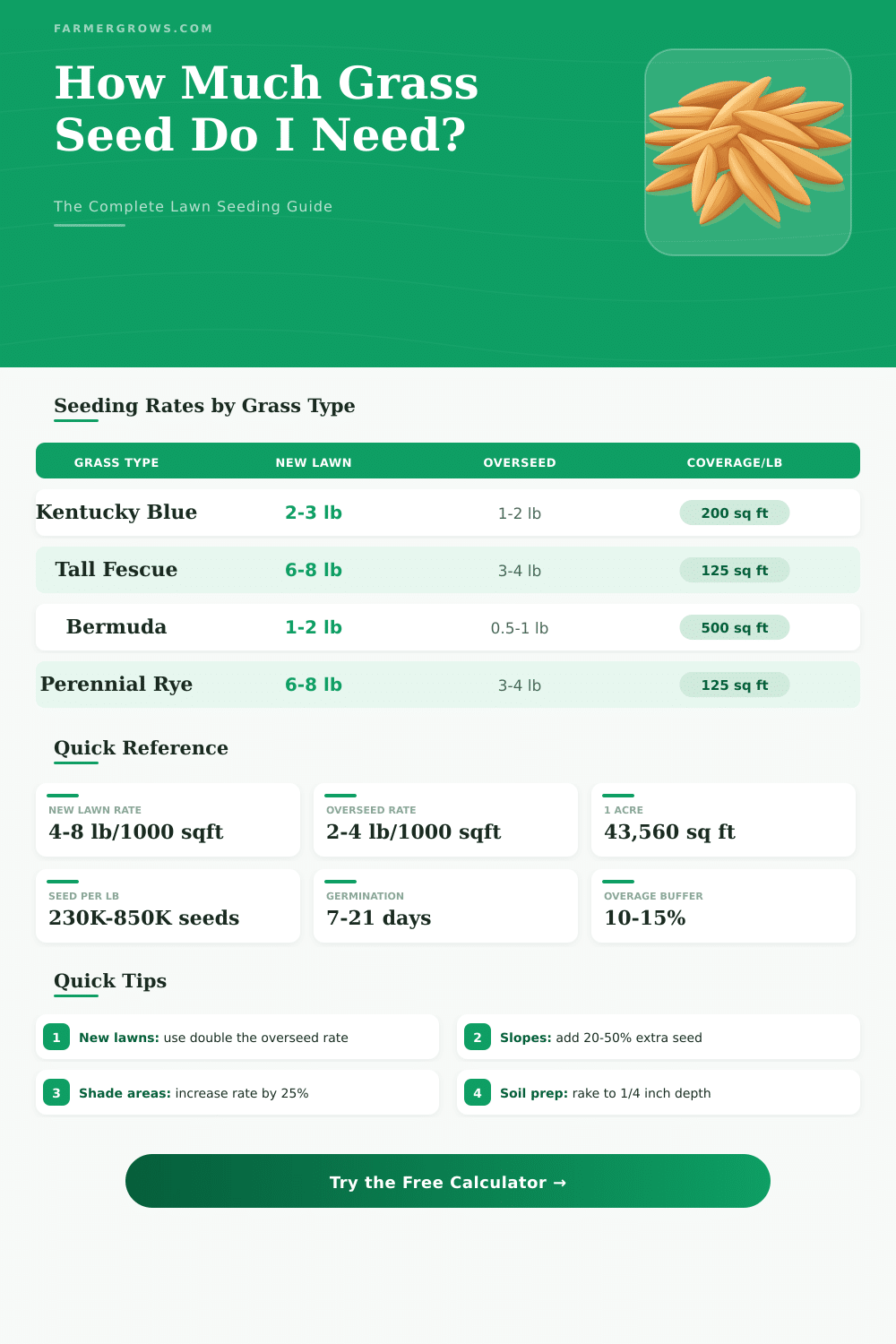
| Grass Type | New Lawn (lbs/1,000 sq ft) | Overseed (lbs/1,000 sq ft) | New Lawn (g/m²) |
|---|---|---|---|
| Kentucky Bluegrass | 2 – 3 | 1 – 2 | 10 – 15 |
| Tall Fescue | 6 – 8 | 3 – 4 | 30 – 40 |
| Perennial Ryegrass | 6 – 8 | 3 – 4 | 30 – 40 |
| Fine Fescue | 3 – 5 | 2 – 3 | 15 – 25 |
| Bermuda Grass | 1 – 2 | 0.5 – 1 | 5 – 10 |
| Zoysia Grass | 1 – 2 | 0.5 – 1 | 5 – 10 |
| Centipede Grass | 0.5 – 1 | 0.25 – 0.5 | 2.5 – 5 |
| Bahia Grass | 5 – 7 | 3 – 4 | 25 – 35 |
| Bag Size | Kentucky Blue (sq ft) | Tall Fescue (sq ft) | Bermuda (sq ft) |
|---|---|---|---|
| 1 lb bag | 333 – 500 | 125 – 167 | 500 – 1,000 |
| 3 lb bag | 1,000 – 1,500 | 375 – 500 | 1,500 – 3,000 |
| 5 lb bag | 1,667 – 2,500 | 625 – 833 | 2,500 – 5,000 |
| 10 lb bag | 3,333 – 5,000 | 1,250 – 1,667 | 5,000 – 10,000 |
| 25 lb bag | 8,333 – 12,500 | 3,125 – 4,167 | 12,500 – 25,000 |
| 50 lb bag | 16,667 – 25,000 | 6,250 – 8,333 | 25,000 – 50,000 |
| Project | Area (sq ft) | Tall Fescue (lbs) | Kentucky Blue (lbs) |
|---|---|---|---|
| Small Patch | 100 | 0.6 – 0.8 | 0.2 – 0.3 |
| Side Yard | 500 | 3 – 4 | 1 – 1.5 |
| Front Lawn | 1,000 | 6 – 8 | 2 – 3 |
| Average Yard | 2,500 | 15 – 20 | 5 – 7.5 |
| Large Yard | 5,000 | 30 – 40 | 10 – 15 |
| Half Acre | 21,780 | 131 – 174 | 44 – 65 |
| Full Acre | 43,560 | 261 – 348 | 87 – 131 |
| Grass Type | Seeds Per Pound | Germination (days) | Full Cover (weeks) |
|---|---|---|---|
| Kentucky Bluegrass | 850,000 | 14 – 21 | 8 – 12 |
| Tall Fescue | 227,000 | 7 – 12 | 6 – 8 |
| Perennial Ryegrass | 230,000 | 5 – 10 | 4 – 6 |
| Fine Fescue | 615,000 | 7 – 14 | 6 – 10 |
| Bermuda Grass | 1,750,000 | 10 – 21 | 8 – 12 |
| Zoysia Grass | 1,350,000 | 14 – 21 | 10 – 14 |
| Centipede Grass | 410,000 | 14 – 28 | 10 – 14 |
| Bahia Grass | 160,000 | 14 – 28 | 8 – 12 |
Note: This article is based on actual research and changes in communities about care of lawns and information from producers.
seed of grass comes in various kinds and choosing the right one is really important. Between the commonly used types are fescue, bermuda, zoysia and Kentucky bluegrass. Grasses for cool season work well with mixes of tall fescue, while those for warm season benefit from zoysia or St. Augustine grass.
How to Choose and Plant Grass Seed
Southern types grow better in regions with high temperatures, including coastal areas with salty air. Kentucky bluegrass and fescue clearly favor less warm places, from one coast to the other. Some grasses successfully adapt to both cold and warm climates in the middle part of the land.
Choosing seed that matches the local conditions of your region is important. When the garden receives much light, grass resistant against lack of rain works best. For areas in shade, one chooses a type that tolerates darkness, that is the best way.
Stores in the area usually offer seed that works for the surrounding area, whcih simplifies everything.
Not every seed for grasses is the same. Many cheap bags carry fillers like annual rye or seeds of unwanted grasses, and simply one lays a nice label on it. Between that type and truly good quality exists big distance.
One carefully picks and grows the grasses for good seed. Higher quality usually costs more, because it does not have any seeds of unwanted grasses or other crops. Knowingly check the label of the bag about the percentage of unwanted grasses.
Good seed shows none four those seeds.
The best moment for planting grass is the autumn, because the ground stays quite warm, fewer unwanted grasses appear and the plants have two seasons to grow before the summer. Also the spring works. Before sowing, one must well prepare the soil.
Badly ready ground results in uneven and bumpy lawn. First one loosens and aerates. Using a fork to make holes in the soil is a good method.
A spreader or drop spreader helps well for planting and mix the seed with sand or good soil, which spreads them equally. A rake with good teeth matters for pressing the seed in the ground, later one reverses the move to cover them. The seed must not dry under the sun, or they will not grow.
Kentucky bluegrass spreads on its own and fills damaged parts over time, especially if one adds nitrogen. Rye and types of tall fescue for tall areas do not spread without help. There are also mixes for no-mowed lawns from several different fescues.
Only one of them is creeping grass, while the rest are clumping or without spreading. The Creeping Red Fescue in such mixes grows very slowly over years.
seed of grass commonly has higher growth rate in the second year, so saving the bag for a year can truly be useful. Many hybrid grasses do not give reliable seed, or if yes, the plants go back to worse forms. Too many seeds in one place make all plants unhealthy, because theystruggle over nutrients, oxygen, light and water.