🪴 Indoor Plant Watering Calculator
Calculate exactly how much water your indoor plants need based on pot size, plant type & season
| Pot Diameter | Pot Volume (approx) | Standard Water (1/2 vol) | Light Water (1/4 vol) |
|---|---|---|---|
| 4 in (10 cm) | ~16 oz / 470 ml | 8 oz / 240 ml | 4 oz / 120 ml |
| 6 in (15 cm) | ~54 oz / 1.6 L | 27 oz / 800 ml | 13 oz / 400 ml |
| 8 in (20 cm) | ~128 oz / 3.8 L | 64 oz / 1.9 L | 32 oz / 950 ml |
| 10 in (25 cm) | ~250 oz / 7.4 L | 125 oz / 3.7 L | 63 oz / 1.85 L |
| 12 in (30 cm) | ~432 oz / 12.8 L | 216 oz / 6.4 L | 108 oz / 3.2 L |
| 14 in (36 cm) | ~686 oz / 20.3 L | 343 oz / 10.2 L | 172 oz / 5.1 L |
| Season | Water Adjustment | Frequency Shift | Notes |
|---|---|---|---|
| Spring | +10% base amount | Normal | Growth resumes, increase gradually |
| Summer | +20% base amount | More frequent | Heat increases evaporation |
| Fall | −10% base amount | Slightly less | Growth slowing, reduce gradually |
| Winter | −30% base amount | Much less frequent | Dormancy, risk of overwatering |
| Pot Material | Evaporation Rate | Water Adjustment | Best For |
|---|---|---|---|
| Terracotta / Clay | High (porous walls) | +25% vs plastic | Succulents, cacti, herbs |
| Plastic / Glazed | Low (sealed) | Baseline | Tropical, ferns, most plants |
| Fabric / Breathable | Very High | +35% vs plastic | Aeration-loving roots |
| Self-Watering | Very Low (reservoir) | −30% vs plastic | Vacations, busy schedules |
Plants use Water quickly when the conditions are warm, dry or windy. Young plants and those with shallow roots often need more Water because they cannot absorb quite a lot to stop drying of the sheets. It is not wise to wait until the sheets start to wither because thirsty plants not only look bad, but also risk pests and diseases.
Water moves through plants and exits through little holes in the sheets, called stomata. One calls this process transpiration. As Water evaporates from the stomata, carbon dioxide flows in and takes its place.
How to Water Potted Plants
Plants need carbon dioxide to make food.
The amount of Water that plants need depends directly on the humidity in the room, as well as on the strength and length of the light that it receives. Far more sunshine requires more frequent Water, while less sunshine alolws less watering. So plants need more Water during the summer.
A plant that grows beside a bright window in the south will need more Water than one in a slightly shadier place.
Also the type of soil plays a big role. Sandy soil drains more quickly and so needs more frequent watering. The goal is too keep the soil around the plant at 50 to 100 percent of its maximum holding ability.
Potting soil works like a sponge. In small jars with less soil it dries more quickly than in big jars with more soil. A large amount of soil acts as a Water tank, that holds more Water and dries more slowly.
When the soil is fully dry, Water can simply flow along the banks of the jar and exit at the bottom, without the soil soaking any of it. Less frequent watering helps to reach the right amount for the roots. The only truly useful Water for a plant is that in the root area, not at the surface.
Daily watering can lead to shallow root growth, which is not good, because nutrients sit deeper in the soil.
A good way to check is to stick a finger in the ground. It should feel dry at about 2.5 cm depth in a 10 to 12 cm jar, and deeper in a big jar. Dry soil looks cracked and pale.
Damp soil feels cool and quite wet, which means it does not yet need Water. Too wet or sticky soil shows that one must wait.
Yellow drooping sheets often point to too much Water. Brown sheets that fall usually signal that the plant thirsts. Different plants have truly different needs.
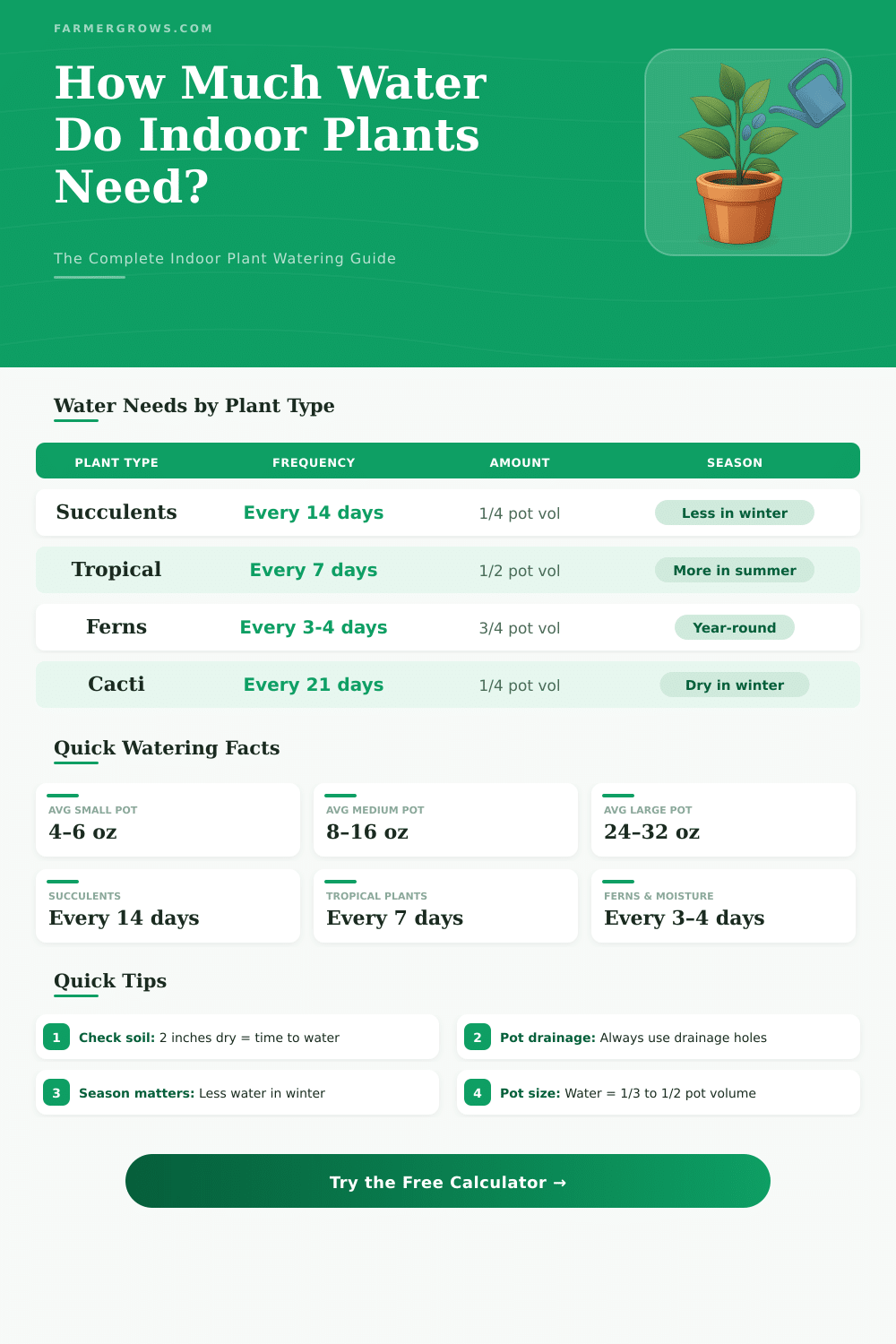
Use this general rule: give Water for a quarter to a third of the pot volume weekly. Weekly checking of Indoor Plants forms a good habit. Apps like Waterbug or Happy Plant can give useful reminders for watering.
Use Water with few minerals andflush the soil of the plant with pure Water each 4 to 6 months, to stop buildup of minerals.