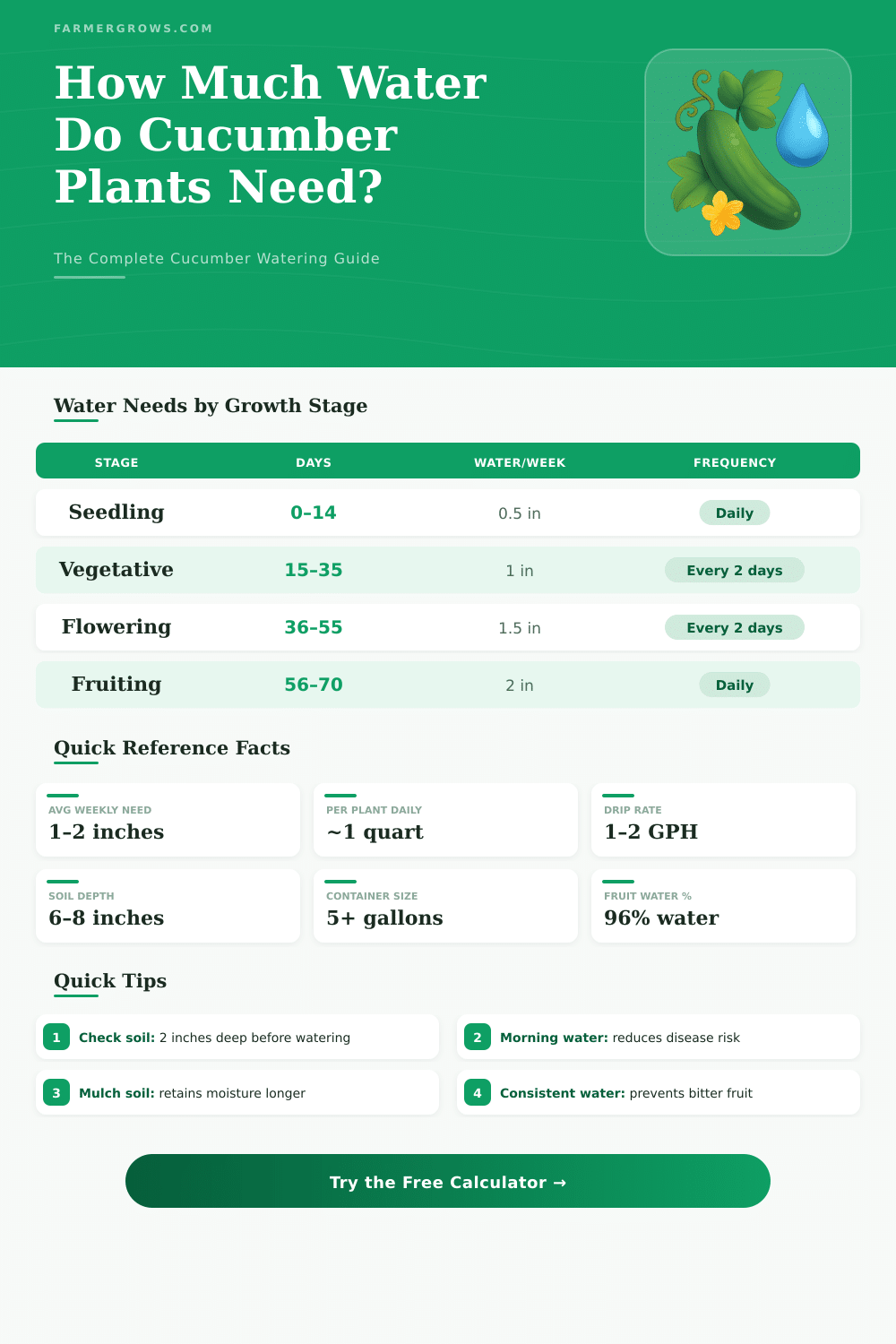
🥒 Cucumber Plant Water Calculator
Calculate exactly how much water your cucumber plants need based on garden size, growth stage, and climate conditions.
| Water Depth | Gallons / 100 sq ft | Liters / 10 m² | Frequency (moderate) |
|---|---|---|---|
| 0.5 inch | 31 gal | 117 L | Every 3–4 days |
| 1 inch | 62 gal | 235 L | Every 2–3 days |
| 1.5 inches | 94 gal | 356 L | Every 2 days |
| 2 inches | 125 gal | 473 L | Daily |
| 2.5 inches | 156 gal | 591 L | Daily (hot climate) |
| Climate | Temp Range | Water Multiplier | Frequency Adjustment |
|---|---|---|---|
| Cool | Below 70°F / 21°C | ×0.75 | Every 3–4 days |
| Moderate | 70–85°F / 21–29°C | ×1.00 | Every 2–3 days |
| Hot | Above 85°F / 29°C | ×1.35 | Daily or twice daily |
| Method | Efficiency | Water Factor | Best For |
|---|---|---|---|
| Drip Irrigation | 90–95% | ×1.00 | Rows, raised beds |
| Soaker Hose | 80–90% | ×1.05 | Row gardens |
| Hand Watering | 75–85% | ×1.15 | Small beds, containers |
| Overhead Sprinkler | 60–75% | ×1.30 | Large areas |
| Furrow / Flood | 50–70% | ×1.50 | Field rows |
| Soil Type | Drainage | Watering Adjust | Tip |
|---|---|---|---|
| Sandy | Very fast | Water 25% more often | Add compost to retain moisture |
| Loam | Ideal | Standard frequency | Best for cucumbers |
| Clay | Slow | Water 25% less often | Ensure drainage to prevent rot |
| Container Mix | Fast | Water daily in heat | Check daily; dries quickly |
| Garden Size | Plants | Weekly Water (moderate) | Daily Need (fruiting) |
|---|---|---|---|
| 4 x 4 ft (16 sq ft) | 2–3 | ~10 gal | ~2 gal/day |
| 4 x 8 ft (32 sq ft) | 4–6 | ~20 gal | ~3 gal/day |
| 10 x 10 ft (100 sq ft) | 8–12 | ~62 gal | ~9 gal/day |
| 20 x 20 ft (400 sq ft) | 20–30 | ~248 gal | ~35 gal/day |
| Single container (5 gal) | 1 | ~3.5 gal | ~1 qt/day |
Cucumbers love the heat and grow well when the temperature moves between 75 and 85 degrees. They are very tender plants, even a bit of cold can destroy them entirely. Hence matter to wait until after the last spring cold before planting.
In South California the frost-free period starts already in April and lasts until July but if you start seeds inside in jars, it is possible to start in March.
How to Grow Cucumbers
For the crop you have two main possible forms: vines or bushes. The vine species spread on the soil or climb along any support that you provide. Bush variants, as the Burpless Bush Hybrid, stay compact and work well for jars or small garden areas.
Vertical growth changes everything, when the space is tight.
Direct sowing stays the easiest and cheapest method. Wait after the last cool day, when the ground temperature reaches at least 70 degrees. In most of Minnesota that happens at the end of May.
Here the tricky part… Cucumbers dislike to be moved during rooting, hence transplanting can be risky, if the time outside does not work. Black plastic mulch helps for earlier crop, and blending of organic material with full dressing in the ground before makes them comfortable.
Those plants require full sunshine and rich, well drained soil, that is lightweight and loose. Water does not lack… They thirst a lot.
Morning light with a bit of shade in the afternoon works well, and during warm days, when they start to wilt, cover with shade helps a lot. Build good drain into the work. Hold them away from ground surface, because contact with the ground brings rot, diseases and problems with bugs.
Because they are big eaters, Cucumbers want rich ground, regular food and steady Water. Plants in tins most require food at least twice per month during the fruiting time. Too much nitrogen however hurts, it promotes only foliage.
Formula with little nitrogen is the best choice. Their roots are sensitive, and when they divide, all roots converge, hence any move risks a lot.
Cucumbers belong too the gourd family and have both male and female flowers. The male flowers appear first, later fall without anything produced. Extreme heat occasionally causes only-male flowering.
Companion crop helps a lot to block insects and attract useful insects. Cucumber beetles and squash drills like gourds. The worst is bacterial wilt…
Born by those beetles, that destroys most species.
Burpless variants have bigger seeds, but they give full taste and work surprisingly for fresh salads. Japanese and English species have more small seeds, grow big and shine in picnics or fresh salads. Direct Eight shows commonly ingarden stores during the planting season.