🌺 Camellia Sunlight Calculator
Find out exactly how much sun your camellia needs based on species, climate zone, and growing location
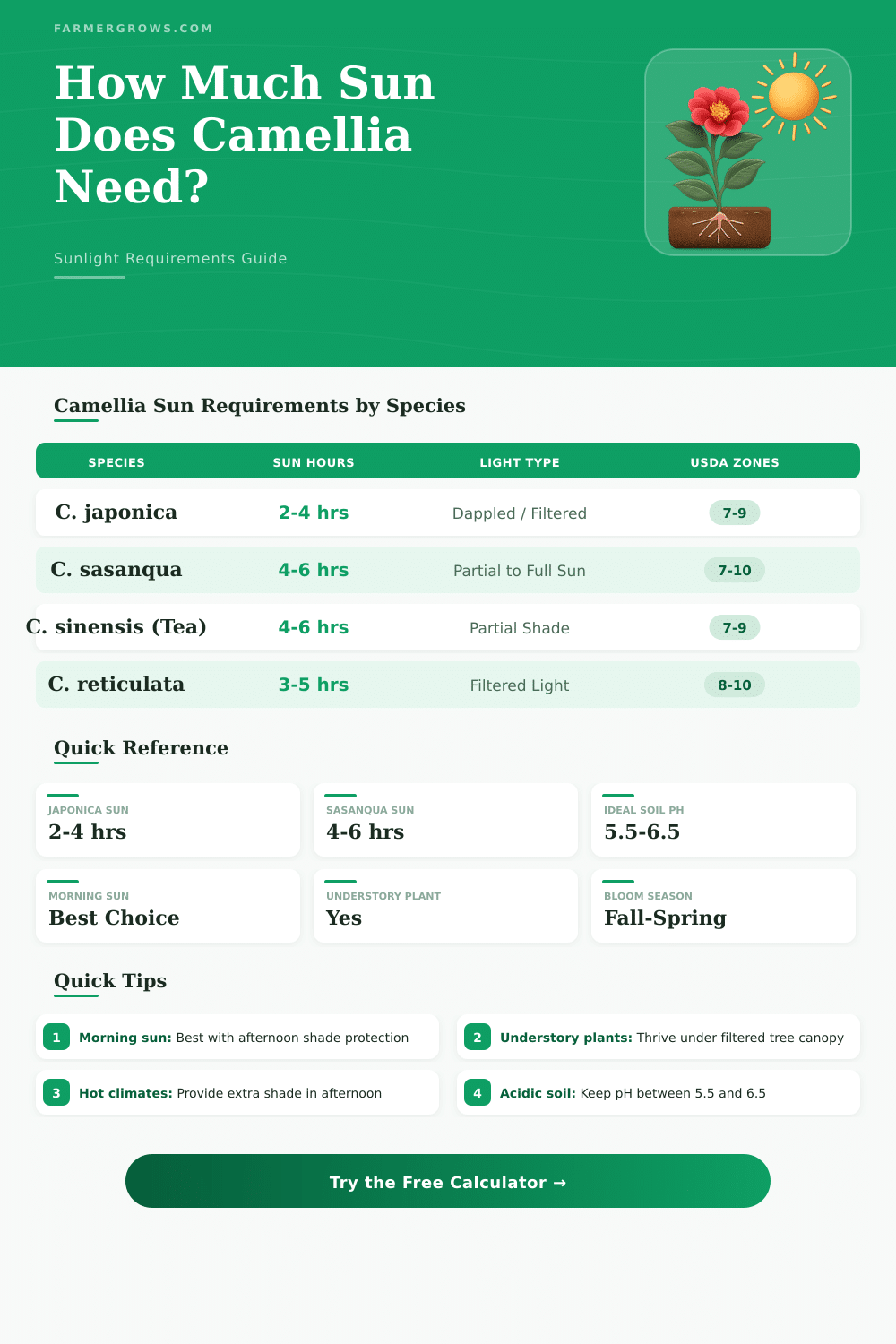
| Species | Sun Hours | Light Type | Spacing |
|---|---|---|---|
| C. japonica | 2–4 hrs | Dappled / Filtered | 6–10 ft |
| C. sasanqua | 4–6 hrs | Partial to Full Sun | 5–8 ft |
| C. sinensis (Tea) | 4–6 hrs | Partial Shade | 3–5 ft |
| C. reticulata | 3–5 hrs | Filtered Light | 6–10 ft |
| C. hybrid | 3–5 hrs | Varies by Cross | 5–8 ft |
| USDA Zone | Climate | Shade Adjustment | Best Practice |
|---|---|---|---|
| Zone 6 | Cold winters | Less shade needed | Max sun for winter warmth, shelter from wind |
| Zone 7 | Moderate | Standard recommendations | Morning sun with light afternoon shade |
| Zone 8 | Mild | Standard to more shade | Filtered light under deciduous trees |
| Zone 9 | Warm | More shade needed | Afternoon shade essential, north-east facing |
| Zone 10 | Hot | Maximum shade protection | Deep shade midday, morning-only direct sun |
| Species | Mature Height | Spacing | Bloom Season |
|---|---|---|---|
| C. japonica | 8–15 ft | 6–10 ft | Winter to Spring |
| C. sasanqua | 6–12 ft | 5–8 ft | Fall to Winter |
| C. sinensis (Tea) | 6–15 ft | 3–5 ft | Fall to Winter |
| C. reticulata | 10–20 ft | 6–10 ft | Late Winter to Spring |
| C. hybrid | 5–10 ft | 5–8 ft | Varies |
| Species | Bloom Start | Bloom End | Flower Size |
|---|---|---|---|
| C. japonica | January | April | 3–5 inches |
| C. sasanqua | October | January | 2–3 inches |
| C. sinensis (Tea) | October | December | 1–1.5 inches |
| C. reticulata | February | April | 4–7 inches |
| C. hybrid | November | March | 2–5 inches |
Camellia plants benefit when they receive a bit of sunshine, around three to six hours a day. The morning light usually is better for those plants than the heavy afternoon heat. Here is the problem: too much direct Sun truly can burn the leaves and hurt the whole plant.
In many gardens, spots with some bits of light or only half-day direct Sun work very well. If you go more far then you see those yellow, burned leaves.
How Much Sun Do Camellias Need
Even so there is another side of that coin. Camellia plants can suffer a lot because of too little light. They have fame as stars of shady gardens, but they are not truly shady plants, they do want a bit of Sun.
Without enough light, they become leggy and poor, and forget about flowers. At least four hours of good sunshine help to raech the nicest flowers. So it truly deals about finding that right balance between too much and too little.
The type of Camellia, that you grow, makes a big difference here. Japonica types like filtered light or almost full shade, and they mostly are taller plants that handle dark spots more well than others. Japonica would be quite happy in a bright place without direct Sun.
And about sasanqua Camellia plants? That is another case. They much more tolerate Sun and can handle more bright spots, even in warm south climates wear they still grow with more drying out.
East-facing spots hit that right place ideally. The morning Sun gives gentle warming without the force, that afternoon rays bring, and your green friend escapes getting cooked. Those plants truly do not like heat, so keeping them from those strong afternoon hours matters…
Specially in warmer regions. One thing, that surprises growers, is the reflected sunshine from windows or walls. Those mirror effects can be quite strong enough to hurt flowers and leaves, even in spots that get only partial Sun.
Winter changes everything about the issue of Camellia plants. Shade becomes natural during the resting season, specially in places where temperatures push the plants to limits. A bit of cover protects them from cold damage.
Even so, in Sun-scarce mountain areas or cloudy regions, extra shade is not that needed, because direct Sun naturally filters anyway. Tea crops use this method, usually tall trees spaced out cast moving shady marks during the day.
Yearly success with Camellia plants depends on adjusting to seasons. Those plants truly do best in gentle winters, mild summers and places with steady moisture. They respond specially to south climates.
Finding the right light is truly the base ofCamellia health and those wonderful flowers, that come later.