🫐 Blueberry Bush Sunlight Calculator
Find out exactly how much sun your blueberry bushes need based on variety, climate, and garden conditions
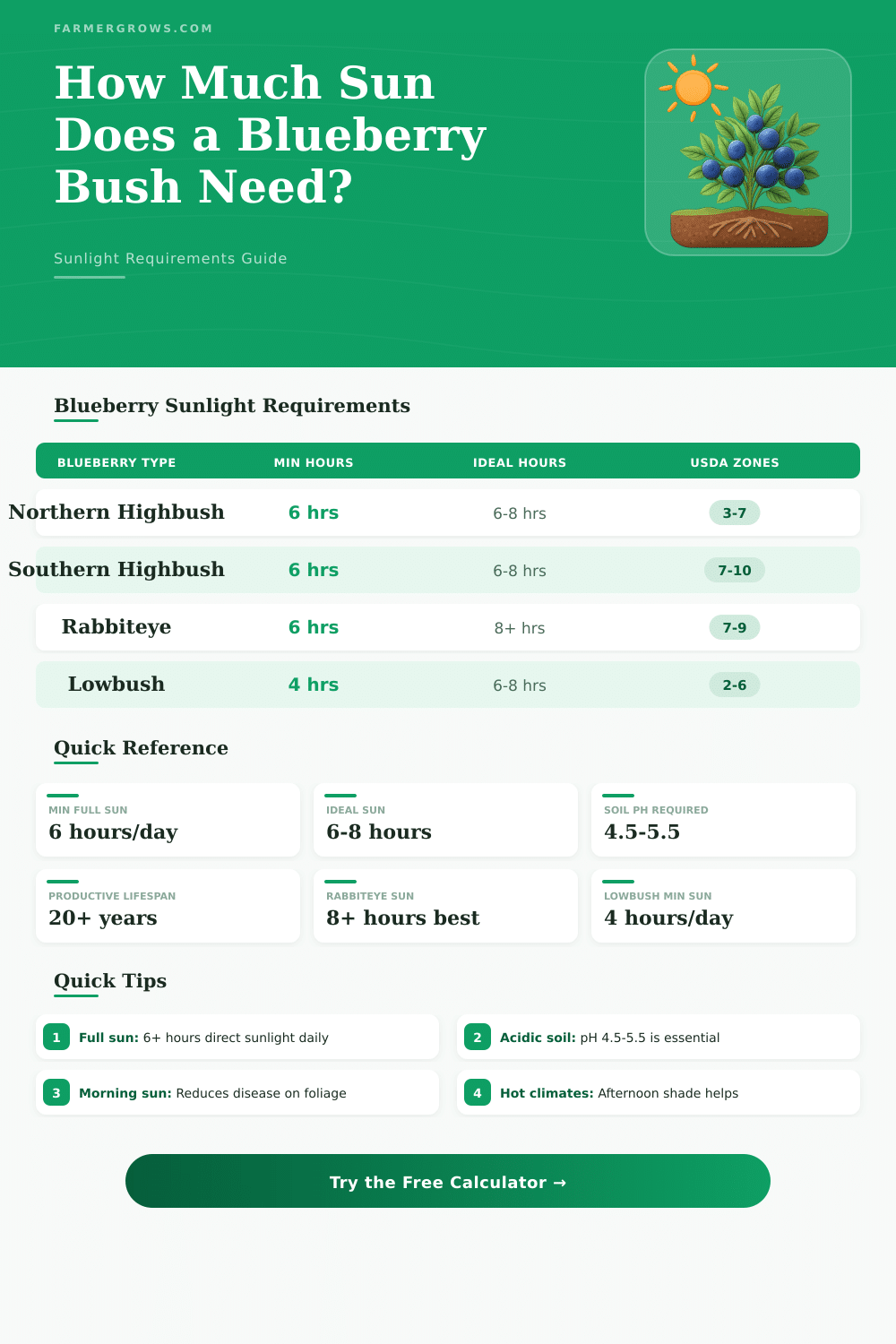
| Blueberry Type | Min Sun (hrs) | Ideal Sun (hrs) | USDA Zones |
|---|---|---|---|
| Northern Highbush | 6 | 6–8 | 3–7 |
| Southern Highbush | 6 | 6–8 | 7–10 |
| Rabbiteye | 6 | 8+ | 7–9 |
| Lowbush | 4 | 6–8 | 2–6 |
| Half-High | 6 | 6–8 | 3–5 |
| Climate Zone | Avg Summer Temp | Sun Adjustment | Notes |
|---|---|---|---|
| Hot (USDA 9–10) | 90°F+ / 32°C+ | Afternoon shade helps | Southern Highbush or Rabbiteye only; mulch heavily |
| Warm (USDA 7–8) | 80–90°F / 27–32°C | Full sun ideal | Great for Southern Highbush and Rabbiteye |
| Moderate (USDA 5–6) | 70–80°F / 21–27°C | Maximize sun exposure | Ideal for Northern Highbush varieties |
| Cool (USDA 3–4) | 60–70°F / 16–21°C | Full sun essential | Half-High or Lowbush recommended |
| Cold (USDA 2–3) | 55–65°F / 13–18°C | Full sun critical | Lowbush thrives; use south-facing slopes |
| Blueberry Type | Plant Spacing (ft) | Row Spacing (ft) | Area Per Plant (ft²) |
|---|---|---|---|
| Northern Highbush | 4–6 | 8–10 | 32–60 |
| Southern Highbush | 4–6 | 8–10 | 32–60 |
| Rabbiteye | 6–8 | 10–12 | 60–96 |
| Lowbush | 1–2 | 1–2 (groundcover) | 1–4 |
| Half-High | 3–4 | 6–8 | 18–32 |
| Blueberry Type | Year 1–2 | Year 3–5 | Mature (6+ yrs) |
|---|---|---|---|
| Northern Highbush | 0–1 lb | 2–5 lbs | 5–10 lbs |
| Southern Highbush | 0–1 lb | 2–5 lbs | 5–10 lbs |
| Rabbiteye | 0–1 lb | 3–6 lbs | 8–15 lbs |
| Lowbush | 0 lb | 0.25–0.5 lb | 0.5–1.5 lbs |
| Half-High | 0–0.5 lb | 1–3 lbs | 3–6 lbs |
Blueberry Bush plants truly need full Sun for best benefit. At least 6 to 8 hours of direct sunshine daily must reach the bushes. If some place in the field receives such amount of Sun, blueberries can grow here, whether in soil planted or in pots.
Enough sunshine is one of the main needs for healthy Blueberry Bush plants.
Blueberry bushes need 6 to 8 hours of sun and steady water
Sunshine helps also in other ways to keep the blueberry plants healthy. It dries the leaves, what reduces the risk of fungal diseases and other problems because of too much moisture staying on the bush. Like this the Sun strengthens the bush both ways, it feeds it and protects at the same time.
Blueberries can grow even in some shade. Only they will not reach the same size or will give so many fruits, compared to a bush in full Sun. As long as they recieve something of direct sunshine during the day, that will be enough for good growth.
However the results will not match those in best conditions.
Indirect sunshine does not have the same power. It is gentle light, that filters through clouds or reflects off nearby surfaces. Although it feeds the bush, it will not push the strong growth or rich fruit as direct Sun.
For best harvests, direct sunshine stays the top choice.
Even so too much Sun can create problems. Signs of too much sunshine are leaves burned, wilting and little growth. If that happens, the bush will need a bit of shade or transfer to another place.
Seasonal movements of the bushes can help protect against very strong Sun and wilting. Low blueberry bushes do best with 6 to 8 hours of daily sunshine.
Blueberries naturally are bushes of marshes. In natural state they grow in open spaces, fully stripped to Sun and without trees shading them. One finds them usually in cold and damp places.
So even with full sunshine, they don’t get too warm in their natural surroundings. In warmer regions, one must mind that carefully.
Water is also important. Blueberries like deep water and added organic material, what helps to keep the moisture. Moisture commonly is a bigger challenge then light to grow healthy bushes.
The soil must drain well.
Growing blueberries from cuttings needs another way about light. New cuttings stay in well lit place, but escape direct Sun. Cuttings with at least 15 cm of new green shoots work best.
The bottom part of the leaves should be removed before placing it in a pot with soil.
Sour soil, enough sunshine and steady water are themain needs. Blueberry Bush plants can care for themselves very well, if those basics are met.