Seed Planting Calculator
Plan a direct-seeding date, crop depth, row layout, plant spacing, seeds per hole, germination adjustment, thinning target, emergence window, and harvest schedule.
Use this planner for direct-seeded garden beds and small field blocks. The result is a practical sowing plan, not a seed catalog order sheet, so it focuses on holes, rows, depth, thinning, and dates.
Planting Plan Results
Seed count, stand estimate, thinning target, and sowing schedule are calculated from the selected crop and spacing.
| Sowing | Planting date | Emergence check | Thin by | Harvest estimate | Seeds to sow |
|---|---|---|---|---|---|
| 1 | - | - | - | - | - |
| Crop | Seed depth | Row spacing | Plant spacing | Days to emerge | Days to maturity |
|---|---|---|---|---|---|
| Lettuce | 1/8 in | 8 to 12 in | 6 to 10 in | 4 to 10 | 35 to 55 |
| Carrot | 1/4 in | 12 to 18 in | 2 to 3 in | 10 to 21 | 65 to 80 |
| Bush bean | 1 in | 18 to 30 in | 4 to 6 in | 6 to 10 | 50 to 60 |
| Sweet corn | 1 to 2 in | 30 to 36 in | 10 to 12 in | 5 to 10 | 70 to 90 |
| Pea | 1 to 1.5 in | 18 to 24 in | 2 to 3 in | 7 to 14 | 55 to 70 |
| Cucumber | 1 in | 36 to 60 in | 12 to 24 in | 4 to 10 | 50 to 70 |
| Radish | 1/4 to 1/2 in | 6 to 12 in | 2 in | 3 to 7 | 22 to 35 |
| Spinach | 1/2 in | 12 to 18 in | 4 to 6 in | 5 to 14 | 40 to 55 |
| Layout | How the calculator counts | Best use | Spacing note |
|---|---|---|---|
| Bed block | Rows fit across the bed width, then stations fit down each row | Raised beds, market beds, close greens | Use row spacing to estimate lanes across the bed. |
| Single rows | Entered row count multiplied by stations along the row length | Field rows, trellis rows, long strips | Use known row count when paths or tools set the layout. |
| Hill stations | Stations along each row, with several seeds planted at each hill | Cucumber, squash, melon, pumpkin | Plant spacing is hill spacing, not final vine spread. |
| Succession | Same seed count repeated at the chosen interval | Lettuce, radish, spinach, beans | Short intervals smooth harvest instead of one large flush. |
| Seed depth zone | Typical crops | Moisture risk | Planting adjustment |
|---|---|---|---|
| Surface to 1/8 in | Lettuce, celery, many herbs | Dries quickly | Press into firm soil and keep evenly moist. |
| 1/4 to 1/2 in | Carrot, radish, beet, spinach | Crusting can slow emergence | Use fine cover and water gently after sowing. |
| 3/4 to 1 in | Bean, pea, cucumber | Cold wet soil can rot seed | Wait for warmer soil before planting deeply. |
| 1 to 2 in | Corn, sunflower, larger beans | Too deep delays stands | Use the shallow end in heavy soil. |
| Crop group | Good succession interval | Thin timing | Schedule caution |
|---|---|---|---|
| Fast roots | 7 to 10 days | First true leaves | Radish can become pithy if harvest is late. |
| Leaf greens | 10 to 14 days | 2 to 3 true leaves | Heat can shorten the harvest window. |
| Beans and peas | 14 to 21 days | After full emergence | Stop successions before expected heat or frost. |
| Corn blocks | 10 to 14 days | At 4 to 6 inches tall | Keep each sowing in a block for pollination. |
| Vining cucurbits | 21 to 28 days | After 2 true leaves | Thin hills to the strongest plants. |
Match depth to soil: Use the shallow end of the depth range in heavy clay or cool spring soil, and the deeper end only when the surface is warm and drying fast.
Thin with a target: Thinning is easiest when you know the final plant spacing first. Snip extra seedlings instead of pulling when roots are close together.
Planting dates and plant spacing are two essential component of gardening. The dates on which you plant your crops and the distance between each plant will ultimately determine whether you have a steady harvest from your garden or whether you have empty plots within your vegetable garden. To ensure that your garden yield the desired harvest, it is important for each individual to understand how planting dates and plant spacing affect the crops within the garden.
For instance, the depth to which you plant your seeds will ultimately determine both how quickly the crop will emerge from the soil and if it will dry out before the crop can begin to grow. Additionally, the distance between the rows within your garden will determine both how much airflow will reach your plants as well as how easy it will be to reach each of your plants during there growing period. The distance between each plant within a row will determine whether the crop’s roots will have enough room to expand, as well as if the leaves of each plant will be shading the leaves of the other plants within that same row.
When to Plant and How Far to Space Plants
Finally, because each of these spacing measurements are interconnected, changes made to one will require adjustment made to another. The calculator included on this page can assist in making the mathematical calculations necessary to determine how many individual seedlings should be planted into each area of your vegetable garden. The calculator will provide you with an estimate of the total number of stations within your vegetable garden that you will create with your planting, as well as the total number of seeds that should be planted into each of these stations.
This total number of seeds will account for the germination rates of the seeds that will be planted into the stations within the vegetable garden. Furthermore, the calculator will also provide an estimate of how many of the newly emerged seedlings will need to be thinned out of each station to allow for each remaining plant to have enough space to grow to its full potential. In addition, the total number of seeds will be evened out across the number of successions that you choose to rotate within your vegetable garden.
By even out the total number of seeds that will be planted into each succession, you will help to ensure that your harvest will not arrive all at once. It is helpful to even out the seeds across the successions in order to provide humans with an even supply of certain crops, like lettuce, each week rather than providing an oversized amount of lettuce at once. Many individuals will choose to plant their seeds too deep into the soil.
This is due to the belief of many individuals that planting the seeds deep into the soil will better provide for the growth of the plants. However, the tiny seeds will begin to lose the energy that they require in order to perform the processes necessary for the emergence of the plant from the seed. Additionally, if the seeds are large in size, they have the potential to rot within the soil in which they are planted.
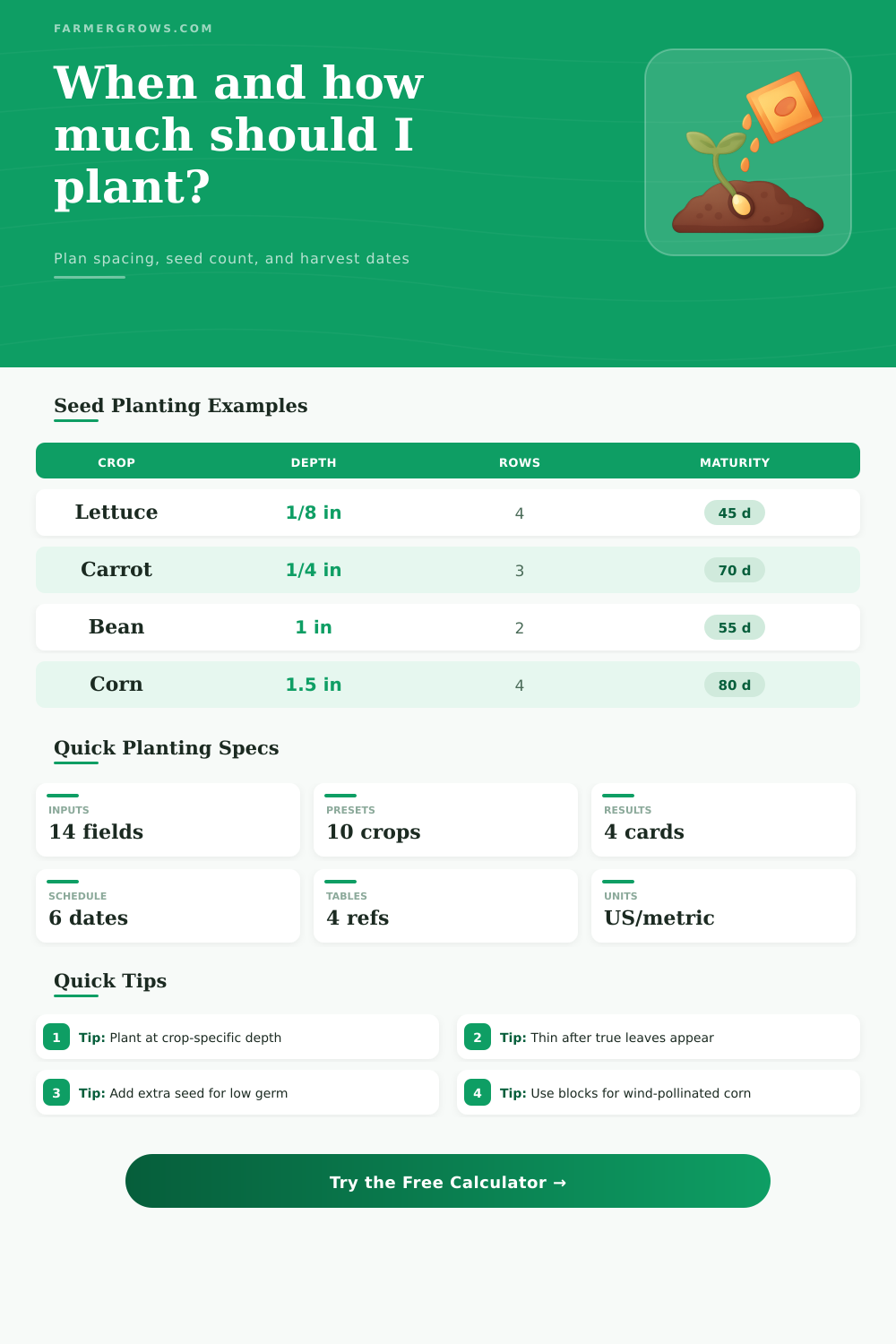
A reference table has been created with the different types of crops and the depths at which their seeds should be planted into the soil. For instance,lettuce seeds should be planted almost on the surface of the soil whereas corn seeds should only be planted into the soil to a depth of one and a half inch. Additionally, the reference table includes the time within which each of the planted seeds will emerge from the soil.
These emergence dates will allow for gardeners to monitor the progress of the emergence of the plants within the vegetable garden. Thinning is the process in which excess seedlings is removed from each station within the vegetable garden. Additionally, thinning is performed when the established seedlings begin to encroach upon the root or growing systems of other established seedlings.
The calculator that is included on this page can calculate the number of excess seedlings that will emerge from the vegetable garden. By knowing the number of excess seedlings that will emerge from the vegetable garden, gardeners can better determine in what ways they should sow the remaining seeds for the area. Gardeners are not to throw away excess seedlings; rather, they are to be planted with the intention of providing the same amount of coverage to the area within which they are planted as the seedlings that will remain in each station within the vegetable garden.
Succession planting is the process in which crops are planted at various intervals within the vegetable garden. Succession planting allows for the creation of a rolling succession schedule that determines the various dates at which the crops should be planted into each station within the vegetable garden. The calculator on this page can create such a rolling schedule by entering the length of time between each succession of planting of crops into the vegetable garden, as well as the total number of sowings for each type of vegetable within the vegetable garden.
Fast growing vegetables, such as radishes, can be sown into the vegetable garden every week, for instance, while slower growing plants, such as corn, can be sown every few weeks. Additionally, each of the dates that will be used to create the rolling succession schedule for the vegetable garden will be visible to vegetable gardeners using the calculator. These dates will help gardeners to understand how the various sowing dates will relate to one another and to the use of the vegetable garden space.
In addition to the factors that the calculator calculates, factors such as weather can still have an impact upon the vegetables that are grown in the vegetable garden. Factors that can impact the vegetable garden include the soil temperature, the amount of rain that falls within the garden, and the dates at which frost can be encountered within the garden. These factors can alter the dates upon which the vegetables will emerge from the soil.
While the vegetable garden calculator cannot account for these variables, it does provide a baseline upon which gardeners can adjust the dates of their next succession of sowing of vegetable seeds. Finally, the value of planning your vegetable garden first becomes apparent many weeks after you have initially planted the seeds into your vegetable garden. The value becomes apparent when the individual rows within the vegetable garden have evened out in their growth of the plants as well as with the thinning of those established plants.
The initial planning of the vegetable garden will help to ensure that the harvest from the vegetable garden continues throughout the season. It’s helpful to plan ahead so you dont have alot of empty space. You should of checked the weather first.