Conveyor Motor Sizing Calculator
Estimate running power, startup demand, shaft torque, and motor size for grain, feed, fertilizer, and other bulk material runs. Test presets, then fine tune the drive.
Pick a real layout first. Each preset sets width, speed, length, lift, trough, fill factor, and startup margin for a common conveyor.
This calculator is tuned for agricultural and yard conveyors, so it prioritizes pull, density, lift, torque, and startup demand instead of cost or purchase guidance.
Motor Sizing Output
Estimated running power, startup demand, motor size, and shaft torque from the settings above.
| Belt width | Practical speed | Typical use | Notes |
|---|---|---|---|
| 18 in | 1.6 m/s | Small feed line | Gentle loading |
| 24 in | 2.0 m/s | Grain transfer | Balanced duty |
| 30 in | 2.4 m/s | Fertilizer run | Higher output |
| 36 in | 2.8 m/s | Bulk handling | Heavy service |
| Width | Trough | Flow band | Common use |
|---|---|---|---|
| 18 in | 35° | 35-55 t/h | Seed line |
| 24 in | 35° | 55-85 t/h | Bin unload |
| 30 in | 35° | 90-135 t/h | Feed mill |
| 36 in | 35° | 130-190 t/h | Bulk yard |
| Pulley | Speed at 2 m/s | Best for | Note |
|---|---|---|---|
| 12 in | 318 rpm | Fast feed | Higher belt wear |
| 16 in | 239 rpm | Balanced run | Common choice |
| 20 in | 191 rpm | Gentle load | Lower belt stress |
| 24 in | 159 rpm | Slow bulk | Good for lift |
Selecting an correct motor size for a conveyor system is a necessary task; the wrong size of motor for a conveyor system will result in the conveyor system failing. Should the motor be too small for the needs of the system, the motor will eventually burn out due to the amount of torque that it have to exert in order to move the load of the conveyor system. In order to calculate the necessary power requirements of the motor, the conveyor system must take into consideration the type of load that have to be moved and the incline of the conveyor system.
Conveyor power is not just necessary to move the belt of the conveyor system, but it is also necessary to overcome the weight of the materials that has to be moved by the conveyor system as well as the friction that develops within the components of the system. The type of material that the conveyor system has to move will impact the power requirements of the conveyor system. Materials like corn will have a different weight and resistance to movement then materials like sand.
How to Choose the Right Motor Size for a Conveyor
Additionally, materials that are more denser than others will create more friction within the system, requiring more torque to move those dense materials. Furthermore, the type of wear that the components of the conveyor system will experience will impact the power requirements of that conveyor system. Materials that are abrasive will create more wear on the components of the conveyor system, requiring the conveyor system to exert more power to compensate for the wear of those components.
The dimensions of the conveyor system will also impact the requirements of the system. The width of the belt and the angle of the trough will impact the volume of material that the system can move, but the fill factor will impact the amount of materials that is actualy on the belt. If the system attempt to move at the maximum capacity of the belt, some of the material may spill from the system.
Furthermore, the speed at which the belt moves will have an impact on the system; if the belt moves too fast, it may create dust within the system. However, if the operator decreases the speed of the belt, the capacity of the system will drop. Another factor that you must consider in the calculation of the power requirements of the conveyor system is the height of the lift that the system must perform.
The higher the lift of the system, the more load will be placed upon the motor that drive the system. Furthermore, the incline that is created by the lift will increase the load upon the system; the higher the load, the more power that will be required to move that load at an efficient rate. For instance, a steep incline will reduce the throughput of the system.
Furthermore, torque is applied to the pulley that moves the system; the diameter of that pulley will also have an impact upon the systems requirements. In addition to the factors mentioned above, it is necessary to include a buffer margin into the calculation of the motor size for the conveyor system. A buffer margin will account for unexpected changes to the load of the system.
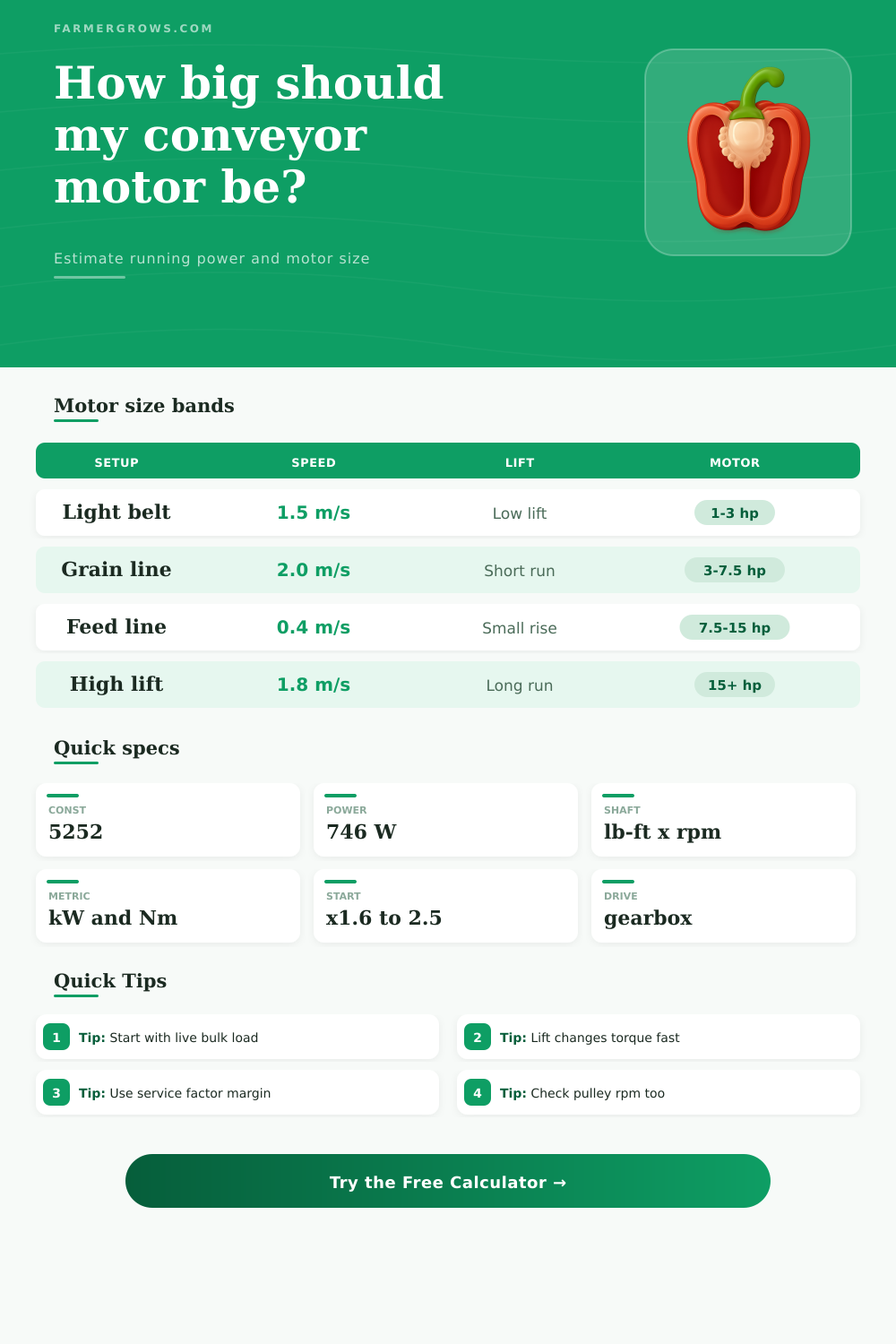
For example, a 10 to 20 percent buffer margin will allow for the system to compensate for wet grain, which is more dense than dry grain. Furthermore, if the conveyor system components are exposed to colder temperatures, the belts will become stiffer, which will increase the torque that is required to move the load of the system at the start-up of the system. Because the start-up of the conveyor system is a shock load to the components, the motor will have to be able to handle a start-up torque that is 1.6 to 2.5 times that of the running torque of the system.
Some of the mistakes that you should avoid in the sizing of a conveyor system includes undersizing the motor to accommodate for the incline of the system and neglecting to account for the mass of the belt that is used within the system. An undersized motor will result in the conveyor system failing when it is on an incline. The incline will increase the weight of the load that the system has to move as well as the friction between those components.
Furthermore, it is also necessary to account for the mass of the empty belt, as the empty belt will create a load upon the system as it runs back along the return side of the conveyor system. Finally, it is also necessary to include a gearbox within the system that allow for the high speed of the motor to be converted into a low torque at the pulley. By accounting for each of these factors appropriately, the conveyor system will be able to move at a steady rate without straining against the load of the system.